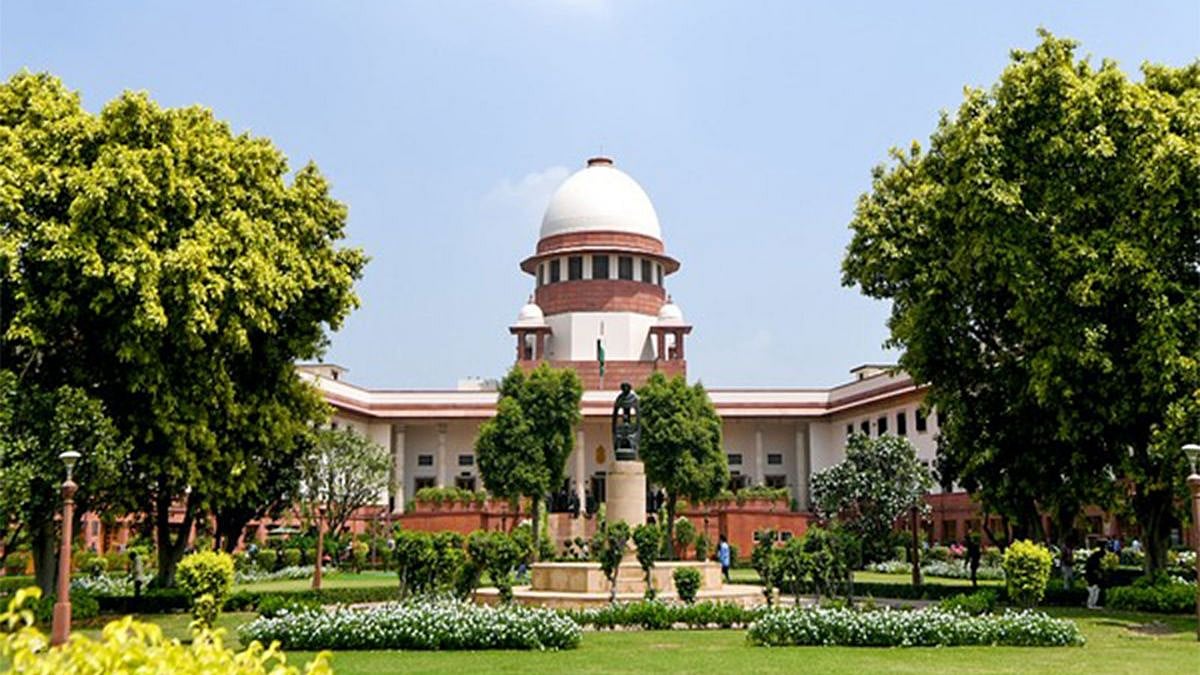
New Delhi: The Supreme Court on Thursday ruled that the 24-hour constitutional deadline for producing an arrested person before a magistrate begins from the moment he is detained, and not from the time the police formally makes the arrest.
Also Watch:
Holding that there can be no artificial distinction between 'arrest' and 'detention' for the purpose of Article 22(2) of the Constitution, a bench of Justices Ujjal Bhuyan and Atul S Chandurkar said any interpretation allowing the police to exclude the period of pre-arrest detention would be contrary to the constitutional mandate.
"The view that 24 hours begin only from the formal arrest is contrary to the constitutional mandate of Article 22(2) and Section 56 of the BNSS," the bench observed.

The verdict that the only period that can be excluded while computing the 24-hour deadline is the time reasonably required to travel from the place of arrest to the magistrate's court.
The time spent on inquiry, investigation, search or seizure before formal arrest cannot be excluded, it added.
Article 22(2) provides that every person, who is arrested and detained in custody must be produced before the nearest magistrate within 24 hours of arrest, excluding the time necessary for the journey from the place of arrest to the court.

The top court disapproved of the views taken by the Orissa High Court in the Aryaman Pattanaik case, the Madras High Court in the Kannan case and the Kerala High Court in the Arun K Thomas case, which had permitted the period of detention before formal arrest to be excluded while calculating the 24-hour deadline.
The bench said that no period can be excluded while computing the deadline, except the time necessary for the journey from the place of arrest to the magistrate's court.
A person detained beyond the permissible 24-hour period without being produced before a magistrate must be released forthwith, it said.
The detaining authority must ensure that detention does not exceed a reasonable period, even within the constitutional 24-hour limit, it added.
The judicial magistrates must record the actual date and time of detention and independently examine compliance with the constitutional deadline, the verdict said.
The magistrates must also assess whether the duration of detention is reasonable in the circumstances and may decline remand if it is excessive, the bench said.
The detailed judgment is awaited.
(Except for the headline, this article has not been edited by FPJ's editorial team and is auto-generated from an agency feed.)

