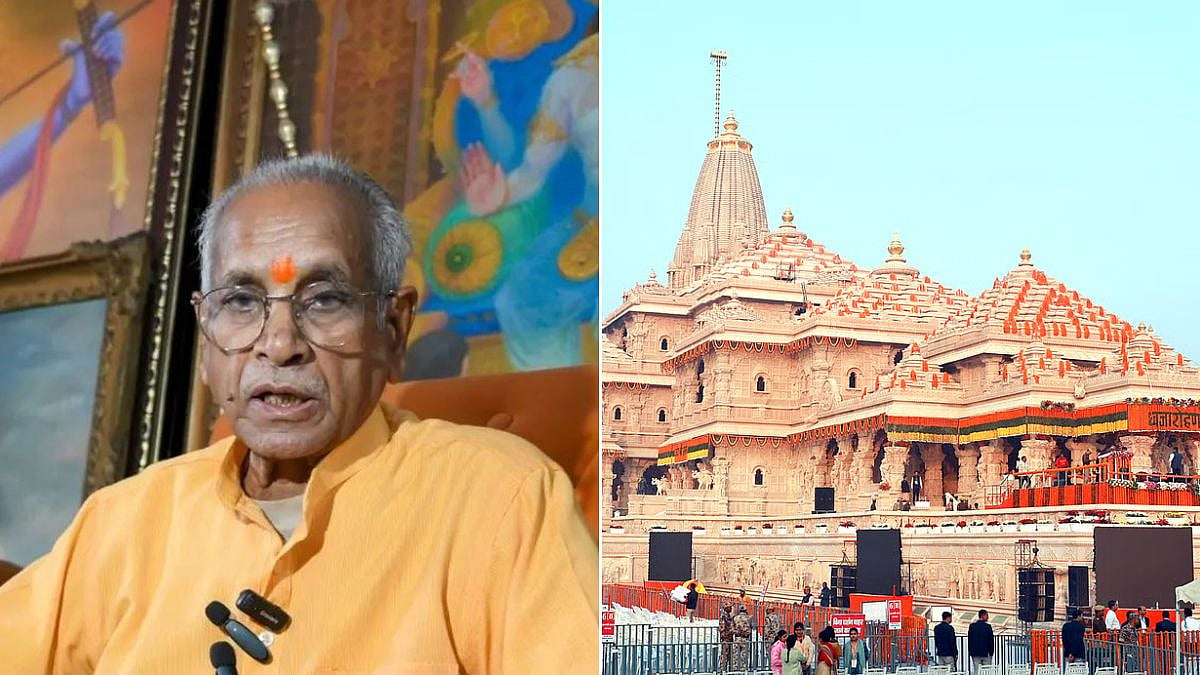
Ayodhya: The Special Investigation Team (SIT) probing the alleged theft of donations at the Ram Temple in Ayodhya has reportedly held former Shri Ram Janmabhoomi Teerth Kshetra Trust General Secretary Champat Rai responsible for administrative negligence and failure of oversight, according to sources familiar with the investigation.
The detailed SIT report, which is expected to be submitted to the Uttar Pradesh government soon, stops short of accusing Rai of any criminal conspiracy. However, it reportedly concludes that weak supervision and dilution of recruitment procedures and standard operating protocols created conditions that enabled the alleged theft.
Sources said the report identifies former trustee Anil Mishra as bearing the highest level of responsibility for changes in recruitment practices and relaxation of operational norms. The SIT has reportedly described these changes as one of the key reasons behind the security and financial lapses.
The state government had given the SIT time until July 15 to complete its detailed investigation. The report is understood to be in its final stage and may be submitted at any time.

According to sources, the investigation found that Rai, who was overseeing the temple's day-to-day administration, cannot be given a complete clean chit. While the report does not attribute any criminal role to him, it reportedly holds him accountable for negligence in monitoring the temple's management. The question of criminal conspiracy has been left to the ongoing police investigation.
The SIT is also learnt to have raised serious concerns over the recruitment process. Most of the employees arrested in the case were outsourced housekeeping staff who had been assigned the sensitive task of counting donations. Sources said many of them were recruited on the recommendations of trust functionaries instead of through a transparent selection process. The report reportedly concludes that deviation from established recruitment norms significantly contributed to the alleged theft.
The investigation has also highlighted changes made to the temple's standard operating procedures. According to sources, the dilution of these protocols weakened internal checks and created opportunities for financial irregularities.

The SIT has further examined the role of Ramshankar Yadav alias Tinnu Yadav, whose influence within the temple administration was found to be much greater than his official position. Although he did not hold a formal administrative post, the report reportedly notes that he had access to sensitive operational information and played an active role in temple management. It also points out that he had custody of the donation box keys, a responsibility for which Rai has been held indirectly accountable.
The report has also flagged shortcomings in the trust's audit mechanism and recommended greater transparency in financial oversight, particularly in the handling and accounting of jewellery offered by devotees.
Among its key recommendations are transparent recruitment strictly in accordance with established rules, an end to appointments based on recommendations, periodic third-party audits, rotation of donation counting staff, strict adherence to standard operating procedures, and stronger monitoring by control room personnel and supervisory officials.
The SIT's preliminary report had earlier recommended the registration of an FIR and appointment of a full-time Chief Executive Officer for the temple trust, both of which have already been acted upon. The detailed report is expected to form the basis for further administrative reforms in the temple's management system.

