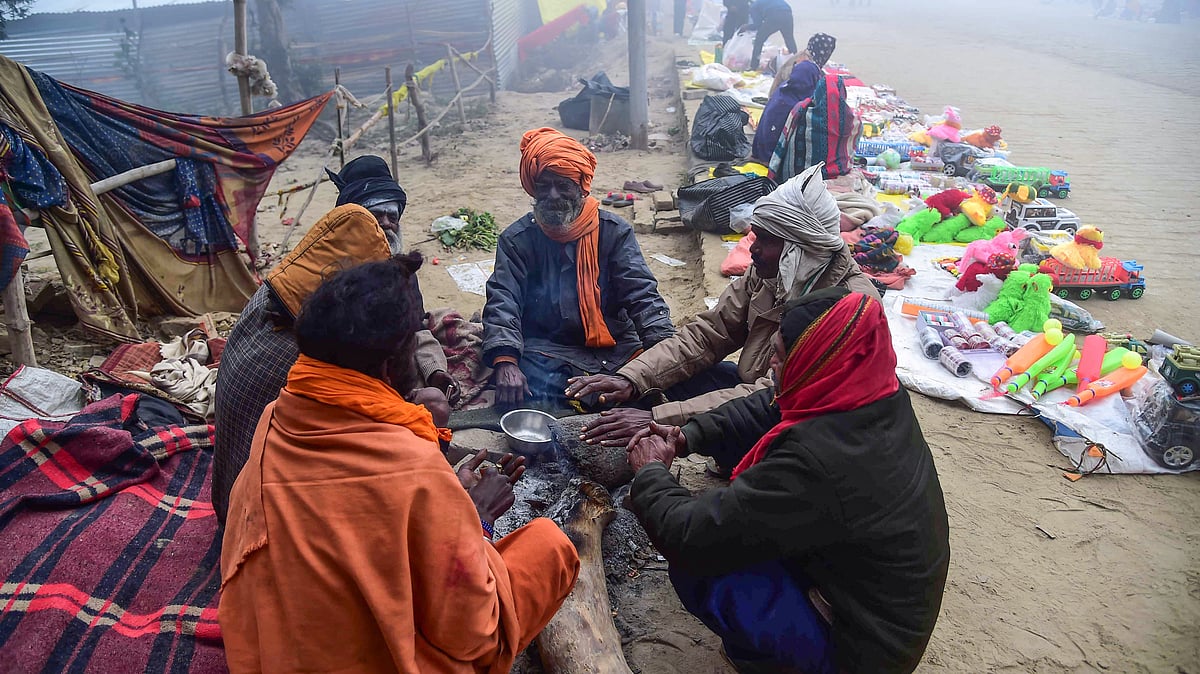
Prayagraj: The cold is at its harshest between 4 am and 6 am. It is at this very hour that nearly one million devotees step into the icy waters of the Ganga at the Sangam during the Magh Mela. This is not a one day ritual. For an entire month, Kalpvasis repeat the same routine, beginning their days with a holy dip, returning to their tents, immersing themselves in prayer and devotion, and eating only once a day.
Many of them say the peace they find here cannot be matched anywhere else. When the month ends and they return home, they begin waiting for the next Magh when they can once again come back to the sands of the Sangam.
Kalpvasis stay on the riverbanks from Paush Purnima to Magh Purnima, following a lifestyle completely different from their everyday lives. The Magh Mela begins in Prayagraj with Paush Purnima, and with it starts Kalpvas. Ancient scriptures say that during this month, gods and goddesses reside in Prayagraj. Believing this, nearly one million devotees settle on the river sands to pray and seek blessings, spending the entire month immersed in spiritual discipline.
Spread across nearly 800 hectares, more than half of the fair area is occupied by the tents of Kalpvasis. Last year, due to the Maha Kumbh and an unprecedented rush of pilgrims, Kalpvasis were not accommodated close to the Sangam. This year, however, tents have come up again in and around the Sangam area.

About 300 metres from the confluence, groups of women were seen sitting together inside tents, singing bhajans and performing kirtan. Almost every tent had a tulsi plant placed in front. Many had prepared small patches of soil to grow barley brought from their homes.
In one tent sat Manohar Rajput, dressed as a sadhu. He is a businessman but during this auspicious month he lives as Kalpvasi. “There is a deep sense of peace here,” he said.
Manisha, who hails from Bahraich said only those who are content with their lives are drawn here. “We feel so good here that when we leave, we start waiting for the next Magh to return to this land of the Sangam,” she said.
In Sector 4, tents of Kalpvasis stretch as far as the eye can see. From one of them came the continuous sound of Ramayana recitation. Inside, a woman Kalpvasi was reading the Ramayana. No one interrupted her. She recites daily from 5 am to 9 am and again from 4 pm to 8 pm. Different devotees are assigned different days, and this cycle of recitation will continue throughout the month.
Kalpvasis follow strict rules. Celibacy is mandatory throughout the month. Food is taken only once a day. Daily worship, meditation and listening to religious discourses are compulsory. Where no arrangements for discourses exist, Kalpvasis walk to other camps to attend them.
According to religious belief, a Kalpvasi completes a full cycle after observing Kalpvas continuously for 12 years, often beginning with one Kumbh and ending with another. It is believed that this 12 year penance leads to spiritual liberation.
Every ritual, from worship to daily routines, begins with a solemn resolve, invoking “Shri Shwet Varaha Kalpe.” In Hindu cosmology, this refers to the present cosmic era, believed to be the twelfth Kalpa since the creation of the universe.
As the cold winds sweep across the Sangam at dawn, the Kalpvasis continue their month-long pursuit of faith, discipline and inner peace, largely untouched by the world they have temporarily left behind.

