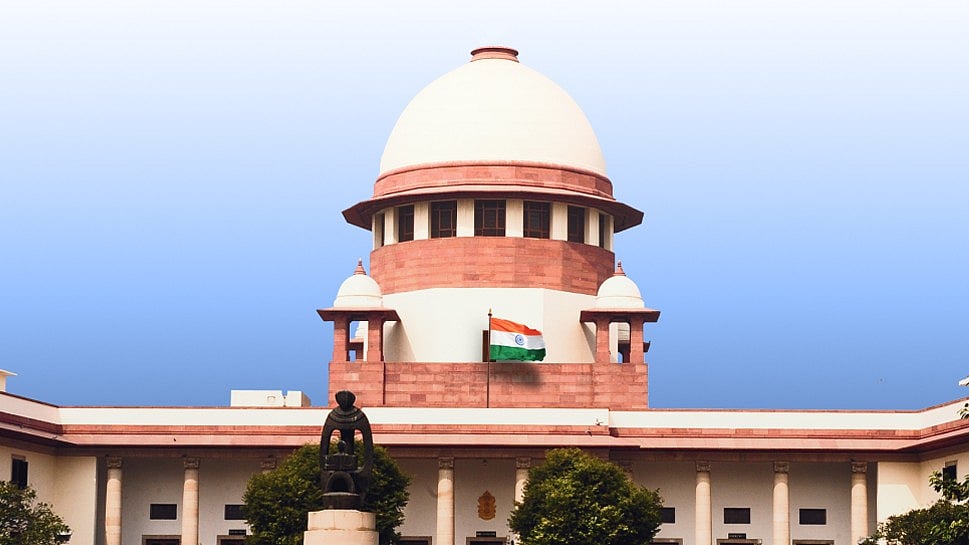
A Supreme Court bench led by Chief Justice of India (CJI) Surya Kant came down heavily on the Gurugram Police in a four-year-old’s sexual assault case on Wednesday. The bench observed that the conduct of the officers towards the child and her parents reflected the “heights of insensitivity.”
Criticising the police for cross-examining the child, the court said this amounted to the “worst form of secondary victimisation” and showed “disrespect.”
The strong remarks came while a bench of CJI Surya Kant and Justice Joymalya Bagchi was hearing a petition filed by the victim’s parents, alleging police inaction.
Earlier, the court had sought responses from the police and the district judiciary on why the victim was questioned in the presence of the accused.
“Why can’t the police go to the victim’s house? Are they kings?” the Chief Justice asked. The bench also questioned why the accused was charged under Section 10 of the Protection of Children from Sexual Offences (POCSO) Act instead of Section 6. Under Section 6, the accused faces a minimum of 20 years in jail if convicted, compared to 10 years under Section 10.
When the Haryana government’s counsel attempted to justify the change in charges based on a Child Welfare Committee report, the court asked him “not to defend the indefensible.”
Justice Bagchi remarked that senior officers had failed to understand the gravity of the offence, calling it “deeply distressing.” The Chief Justice added that the officers had “not even read the bare Act” and criticised them for doubting the child’s account.

The court also objected to the victim’s name being disclosed in an affidavit, reiterating that her identity must be protected.
The bench noted that the child’s trauma was aggravated by the police’s insensitive, reckless, and unlawful investigation, and observed that the force appeared to focus on discrediting the victim and her parents while downgrading the offence without clear reasons.
