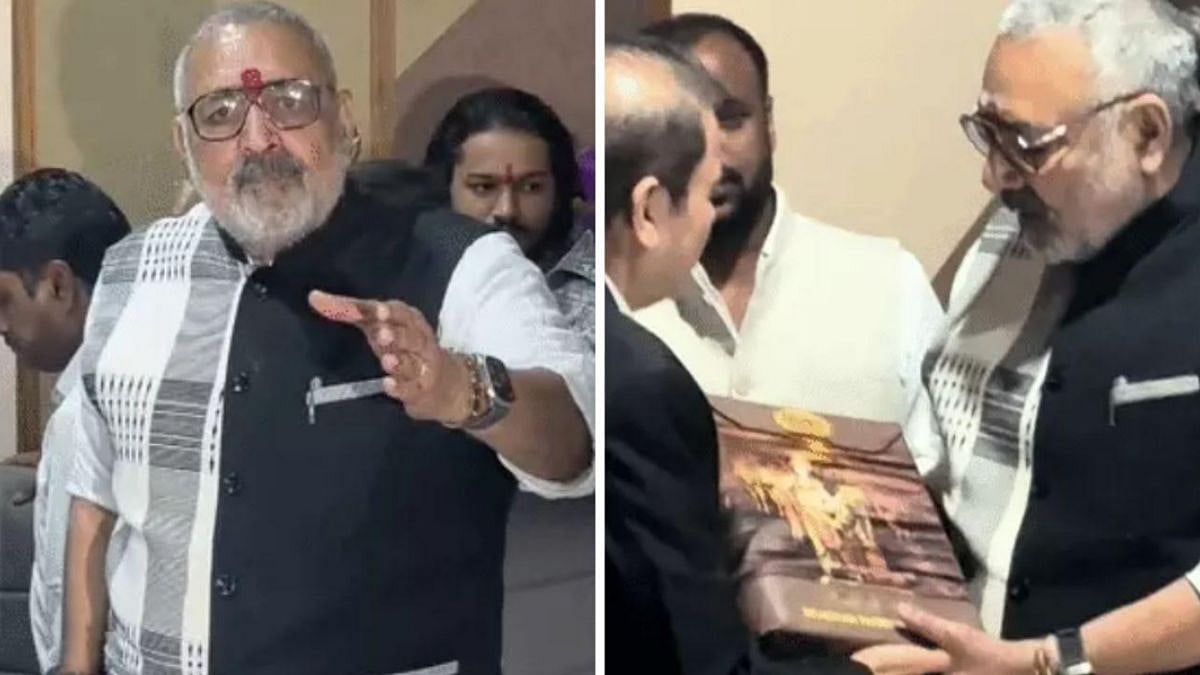
Surat: Union Textile Minister Giriraj Singh on Friday rejected demands for Chief Election Commissioner Gyanesh Kumar’s resignation and dismissed opposition claims of a mass exodus of workers from Surat. However, he stopped short of offering immediate relief to textile workers who allege long shifts, denial of weekly holidays and dismissal threats for seeking leave.
Singh arrived in Surat on October 9 for a three-day visit to the city’s textile industry. Speaking to the media at the Surat Circuit House, he launched a sharp attack on Congress leader Rahul Gandhi and defended the Narendra Modi government’s economic record.
‘Rahul Gandhi should resign first’
Reacting to demands for Gyanesh Kumar’s resignation, Singh said the opposition was following a selective approach.
“Why should Gyanesh Kumar resign? It is a case of ‘sweet for me, bitter for you’. First, Rahul Gandhi should resign from the Lok Sabha if the situation is indeed illegitimate,” he said.

He also challenged Gandhi to seek the resignation of the governments in Karnataka and Telangana. Singh asserted that Gyanesh Kumar would not resign.
The minister also accused the opposition of trying to create unrest in the country.
“People like Rahul Gandhi want to create an atmosphere of anarchy in the country, similar to what is seen in Bangladesh and Nepal,” Singh said, criticising the opposition’s protests and its ‘Delhi Chalo’ call.
Surat textile workers’ concerns remain
Singh’s visit comes amid concerns over working conditions in Surat’s textile industry. Workers have alleged that some units deny statutory weekly holidays, impose 12-hour shifts and threaten dismissal when employees request leave.
Asked about these complaints, Singh said mill owners and workers should work together.
“We are not adversaries like the Communists. Mill owners and workers are two sides of the same coin,” he said.
He added that employers should treat workers as family and workers should view mill owners in the same way. However, he said he would address the specific concerns in greater detail later.
Minister rejects ‘worker exodus’ claims
Singh also dismissed opposition allegations that workers were leaving Surat in large numbers.
“‘Exodus’ is a very dangerous term. It is a narrative created by certain people,” he said.
He argued that job opportunities had improved in states such as Bihar and Uttar Pradesh under the BJP-led governments. If workers find better opportunities in their native places, he said, their decision should not be described as an exodus.
Defends India’s economic growth
On concerns about the economic slowdown and the textile sector, Singh defended the Centre’s record under Prime Minister Narendra Modi.
He said India’s global economic standing had improved and exports had grown. On questions about companies raising prices, he said the Gulf conflict had affected economies worldwide but added that he would examine the specific concerns before responding.
Singh’s three-day visit comes as Surat’s textile industry faces questions over labour welfare, employment and business conditions. His response to workers’ complaints will remain a key point of interest during the visit.

