New Delhi: IIT Madras allegedly asked a recognised independent student body, ChintaBAR, to delete an Instagram video expressing solidarity with students protesting over examination irregularities and denied permission to organise a peaceful gathering on campus.
According to the Hindustan report, ChintaBAR had sought permission on July 20 to hold a peaceful gathering supporting students affected by alleged paper leaks and exam irregularities, including NEET-UG and UGC-NET. In its email to the administration, the group said repeated cancellations, re-examinations and irregularities had caused severe academic, emotional and financial stress, while assuring the event would remain peaceful and not disrupt academic activities.
Students associated with the group alleged that during a meeting with Dean of Students Prof. Sathyanarayana N. Gummadi, they were asked to remove an Instagram video posted on July 17 supporting the protests and were denied permission for the gathering. They further claimed IIT Madras cited concerns that they did not want to disturb and disrupt its relations with the centre.
Another student stated that the alleged officials told them they were not allowed to protest because it would “tarnish the image” of the IIT institute.
Following the meeting, ChintaBAR removed the video, which reportedly showed students holding placards against paper leaks and examination irregularities. A separate request by another group of BTech and MTech students to organise a protest was also rejected, the report said.
As per the reports, IIT Madras Director V. Kamakoti, the Dean of Students and the students' general secretary did not respond to requests for comment.
Despite the denial of permission, Hindustan Times reported that over 150 IIT Madras students gathered independently at Himalaya Lawns on Wednesday to express solidarity with students protesting in Delhi over examination-related issues.
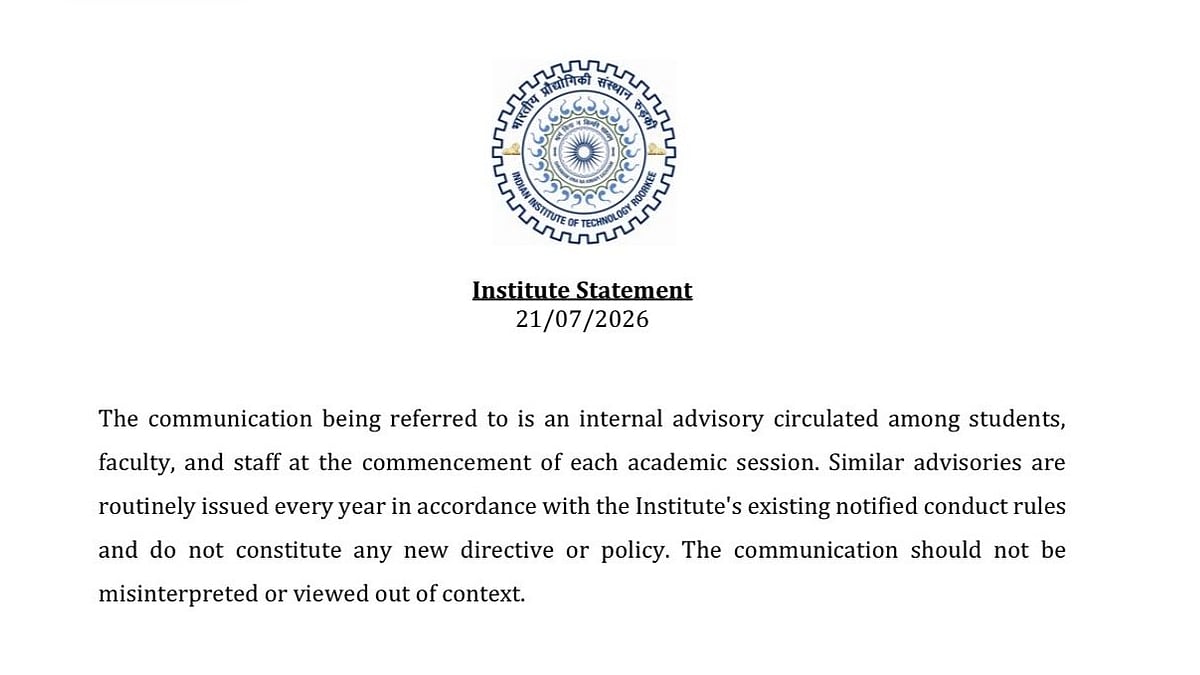
The development comes days after IIT Roorkee clarified that a viral advisory asking students not to support protests online was not a new directive but a routine communication issued at the start of every academic session under existing conduct rules.

