Mumbai: Shares of aluminium companies remained under pressure on Tuesday as global aluminium prices continued to decline from recent highs.
Vedanta Aluminium, Hindalco Industries and National Aluminium Company Limited (NALCO) were among the major losers. Investors reacted to the sharp correction in international aluminium prices, leading to selling across the sector.
Vedanta Aluminium Hits Lower Circuit Again
Vedanta Aluminium, which was recently listed after being demerged from Vedanta Ltd, remained locked in the 5 percent lower circuit for the second straight trading session.
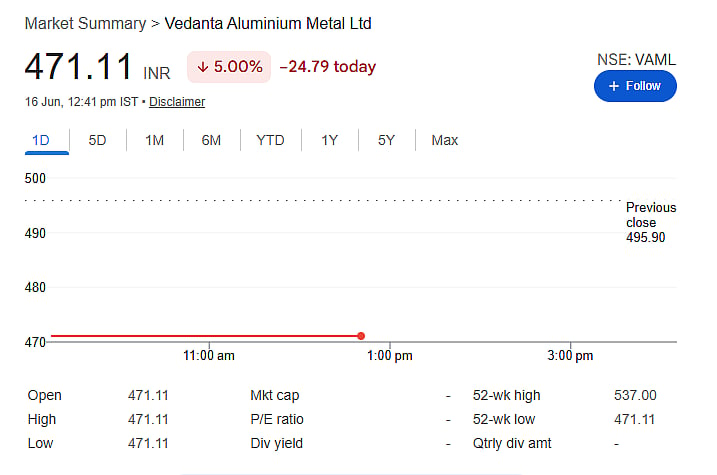
The stock has witnessed heavy selling since its market debut, reflecting weak sentiment in the aluminium sector.
Hindalco and NALCO Also Under Pressure
Hindalco Industries fell more than 3.81 percent during trading.
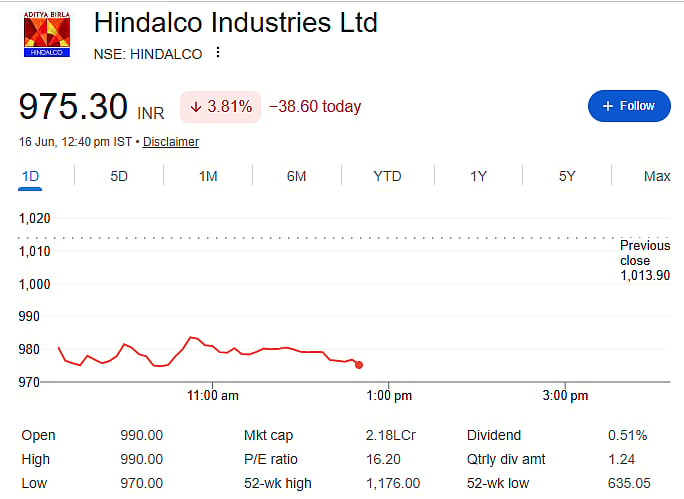
The stock has been facing continuous selling pressure and has declined in most trading sessions over the past two weeks despite positive developments at its subsidiary, Novelis, which recently resumed operations at its Oswego Hot Mill facility.
NALCO was among the worst-performing metal stocks and dropped nearly 5 percent.
The company's shares have also been under pressure in recent sessions as investors reduced exposure to aluminium-related stocks.
Why Are Aluminium Prices Falling?
The main reason behind the weakness is the correction in global aluminium prices.
Following the announcement of an interim peace agreement between the United States and Iran, markets began removing the geopolitical risk premium that had pushed metal prices higher.
As a result, aluminium prices have fallen nearly 10 percent from their recent peak. Prices touched their highest level in almost four years at the end of May.
What Could Support Prices Ahead?
Despite the recent correction, analysts remain positive about the medium-term outlook.
They expect aluminium prices to average around USD 3,200-USD 3,300 per tonne over the next two years.
Supply growth remains limited as China is already operating near its aluminium production capacity ceiling. At the same time, some smelters in the Gulf region are still recovering from damage caused during the conflict period.
Strong demand from artificial intelligence infrastructure, data centres, renewable energy projects and energy transition initiatives is also expected to support aluminium consumption, helping keep the global market in a supply deficit over the next two years.
Disclaimer: This article is for informational purposes only and not investment advice. Investors should consult financial advisors before making decisions.

