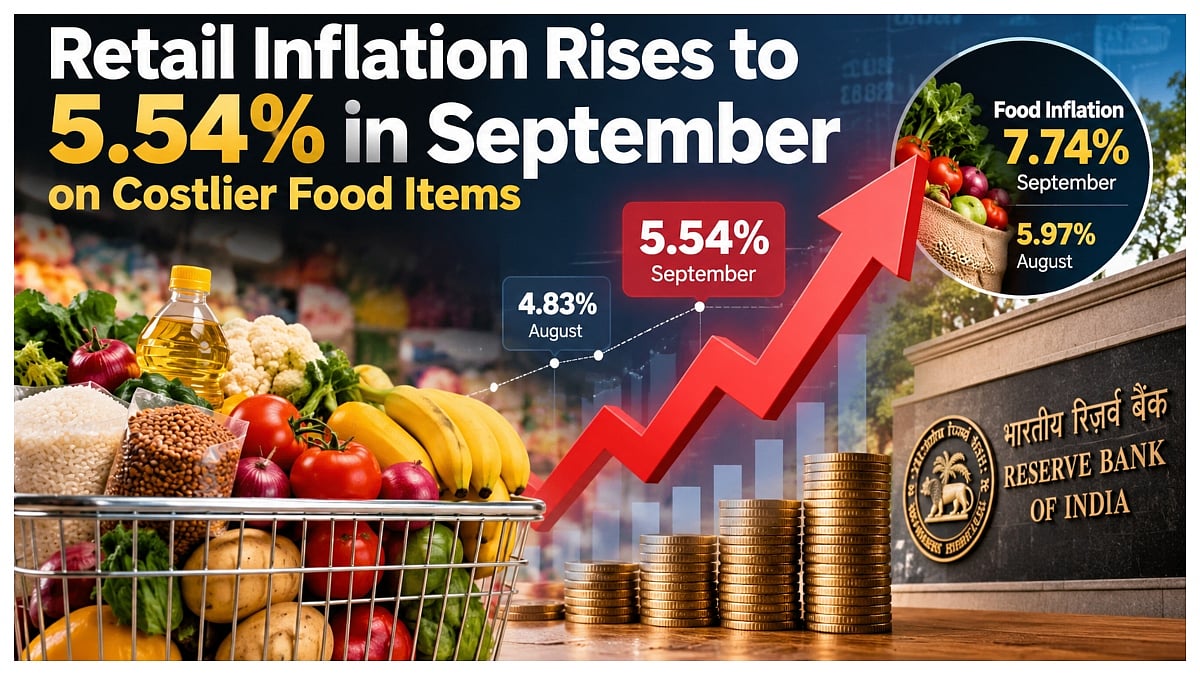
New Delhi: India's retail inflation climbed to 5.54 per cent in September 2026, driven mainly by rising food prices, according to government data released on Monday, October 12.
The latest reading marks a sharp increase from 4.83 per cent in August and is the highest inflation figure recorded under the new Consumer Price Index (CPI) series introduced in January.
The rise highlights growing pressure on household budgets as consumers face higher costs for essential food items and other daily necessities.
Food Inflation Surges
Food inflation increased to 7.74 per cent in September from 5.97 per cent in August, indicating a significant acceleration in prices across the food basket.
The sharp increase in food inflation was the primary driver behind the rise in overall retail inflation.
Higher food prices can particularly affect lower- and middle-income households, which spend a substantial portion of their monthly budgets on groceries and essential commodities.
RBI Raises Interest Rates
The inflation data comes days after the Reserve Bank of India (RBI) raised its benchmark repo rate by 25 basis points to 5.50 per cent.
The central bank's decision last week reflected concerns over rising inflationary pressures and the need to contain price increases.
Higher interest rates generally make borrowing more expensive for businesses and consumers, potentially affecting housing loans, vehicle financing and other credit-linked spending.
Pressure On Household Budgets
The increase in inflation could complicate household spending decisions, particularly as families manage rising expenses alongside existing financial commitments.
Persistent food inflation may also influence consumer demand, especially for discretionary products and services.
For businesses, rising costs could create additional pressure on pricing strategies and operating margins.
Focus On Upcoming Inflation Data
The September reading is likely to keep inflation concerns at the centre of economic discussions.
Market participants will closely monitor upcoming inflation figures, food price trends and the RBI's policy outlook.
A sustained rise in prices could influence future monetary policy decisions, while any moderation in food inflation may provide relief to households and policymakers.

