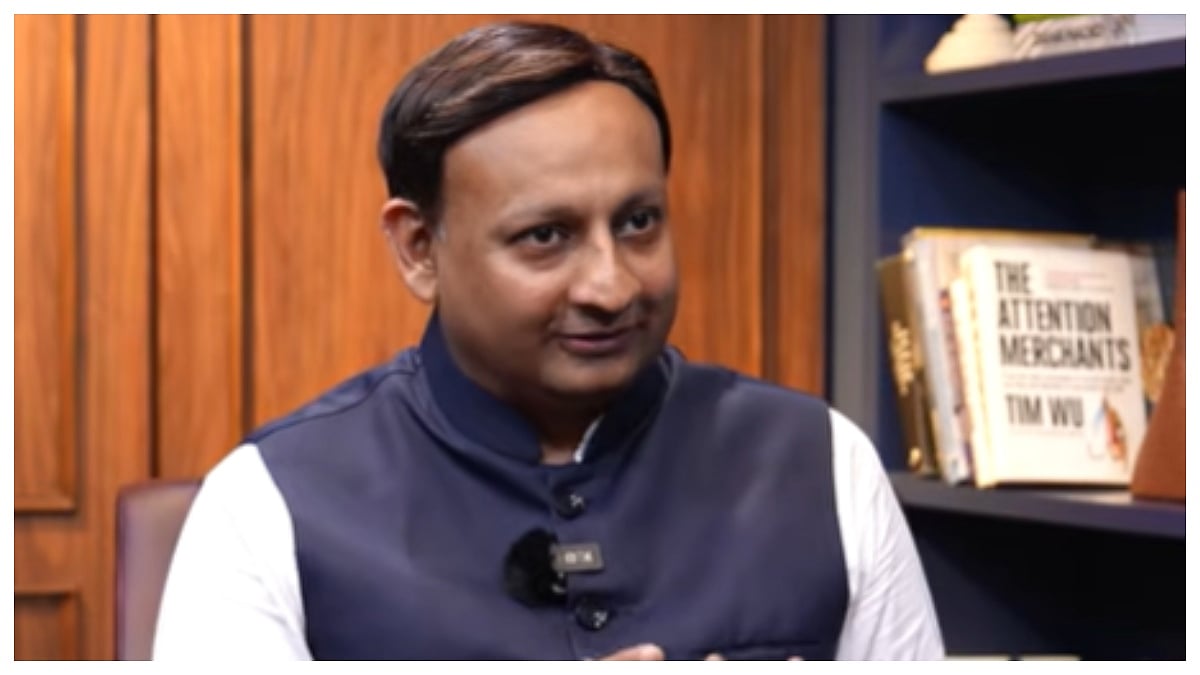
In an exclusive interaction with The Free Press Journal, Sheryll D’Souza, Consulting Editor – Business, spoke to Rahul Veera of Nippon India AIF on the current state of the equity markets and the investment themes shaping the future. Sharing his insights on market volatility and sectoral trends, Veera emphasised the importance of disciplined investing, strong fundamentals and long-term wealth creation. He also discussed opportunities in small caps, private banking, AI-linked businesses, power, IPOs and the evolving outlook for Indian markets.
Markets are highly volatile right now. Is this market cycle different from earlier ones?
Every market cycle looks different at first. Earlier, we had the 2008 global financial crisis, demonetisation and GST-related disruptions. This time, markets are facing geopolitical tensions, tariff wars and uncertainty.
But one thing remains common in every cycle — valuations and business fundamentals matter the most. Investors who focus on strong businesses usually recover well over time.

Are valuations in Indian markets still expensive?
Large-cap valuations are now close to their long-term average levels. Small caps may look expensive at first glance, but many new-age startups in indices are still loss-making, which affects valuation numbers.
If we remove such companies, quality small caps are trading at more reasonable valuations and earnings growth is stronger there.
Why are you positive on small-cap companies?
The quality of small-cap companies has improved a lot over the years.
Management teams are more professional now. Many companies raised funds through equity instead of taking too much debt. Because of this, balance sheet risks are lower compared to earlier cycles.
That is why this small-cap cycle could be stronger than previous ones.
Which sectors look attractive right now?
The power sector looks very strong. India is seeing huge investments in data centres, AI infrastructure and electricity demand.
Many small companies making transformers, cables and other power equipment may benefit from this trend over the next three to five years.

Private banks also look attractive. Credit growth is improving again and balance sheets are healthier. We believe private banks may regain market share after lagging behind PSU banks recently.
Building material companies also look interesting, especially plywood and wood-based businesses.
How is AI creating opportunities in India?
AI needs large data centres, and data centres need massive power infrastructure.
India’s data centre capacity is expected to rise sharply in coming years. This creates opportunities for power-related companies, cooling system makers and equipment suppliers.
I also believe AI will create new businesses and entrepreneurship opportunities in India instead of only replacing jobs.
What is your view on the IT sector?
There is uncertainty around AI’s impact on IT companies, but core banking and enterprise systems cannot be replaced overnight.
Growth rates may slow slightly, but many IT businesses will continue doing well in the long term.
Which sector are you cautious about?
We are slightly cautious on real estate.
Luxury housing demand remains strong, but affordable housing demand is weaker. Sales growth and cash collections may slow down going forward.
Risk-reward in the sector is not very attractive right now.
How should investors look at IPOs and new-age tech companies?
Investors should avoid blindly following hype.
Many IPOs launched in recent years are still trading below issue price. Before investing, people should check valuations, business quality, management strength and future cash flows.
For platform and tech companies, the key question is whether they can become profitable and stop burning cash.
What is your final advice for investors?
Investors must stay patient and think long term.
Markets will always go through ups and downs. Equity investing should be done with a three-to-five-year view, not for quick profits.
Reasonable return expectations are important. The extraordinary gains seen after Covid were unusual and may not repeat soon.
Focus on strong businesses, healthy balance sheets and sensible valuations. That is the safest way to build wealth over time.

