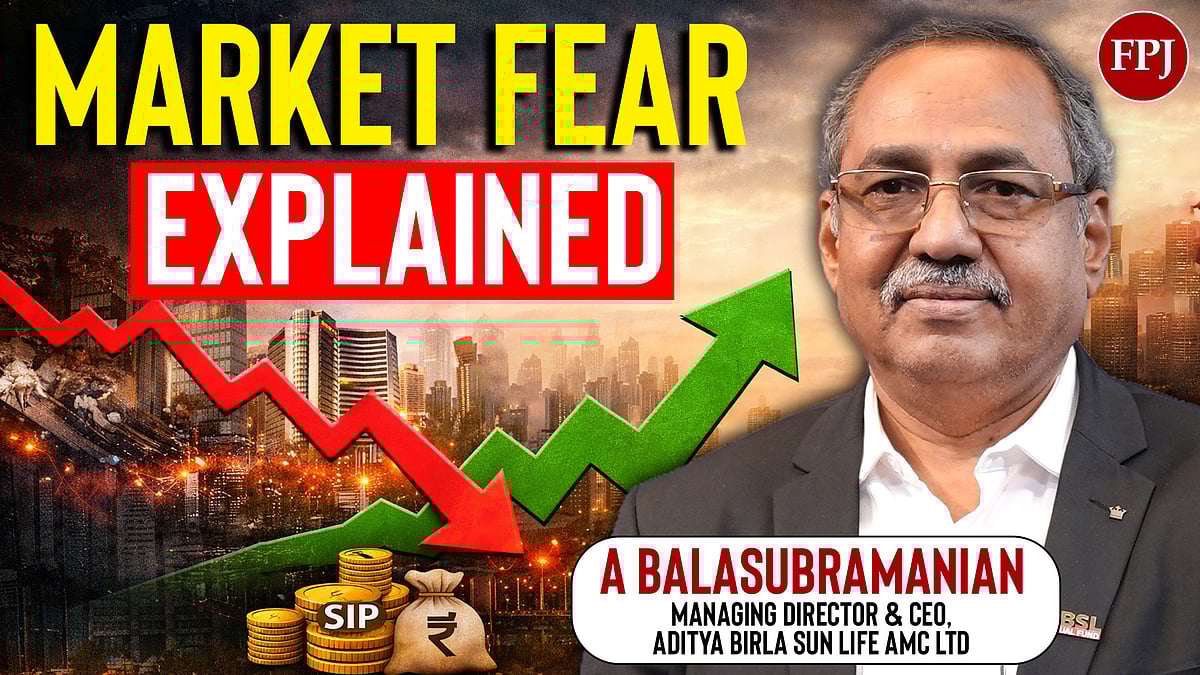
In a wide-ranging conversation with The Free Press Journal, A. Balasubramanian, a veteran of India’s mutual fund industry and a long-time leader at Aditya Birla Sun Life AMC, spoke with Sheryll D’Souza, FPJ Consulting Business Editor, sharing insights from over three decades in the markets. From navigating crises like the dot-com bubble and Lehman collapse to today’s volatile global environment, he reflected on investor behavior, market cycles, and the evolving role of technology-while reinforcing one core message: long-term discipline remains the foundation of wealth creation.
You’ve seen multiple market cycles. What’s your biggest learning?
Markets move in cycles-good times and bad times are both temporary. Over decades, I’ve seen crises come and go, from the dot-com bust to the Lehman collapse and even Covid. The biggest lesson is to stay calm and focused on long-term investing. Investors who remain disciplined through cycles tend to benefit the most, while those reacting emotionally often miss out on long-term gains.
Have Indian investors become more mature over time?
Absolutely. Earlier, a lot of effort went into educating investors about mutual funds and long-term investing. It was not easy to convince people. But over time-especially post-2016-there’s been a clear shift. Today, investors understand concepts like SIPs and long-term wealth creation better. Exposure to market cycles has improved their maturity, and fewer investors panic compared to earlier years.
What advice do you give during volatile market phases?
Volatility is inevitable and often unpredictable. Bad news tends to arrive suddenly, catching people off guard. The key is to stay calm and not react impulsively. Markets correct excesses and eventually stabilize. Investors should accept that both bull and bear phases are part of the journey and avoid trying to time the market, which rarely works in practice.
Should investors stop SIPs when markets fall?
Definitely not. Stopping SIPs during downturns is one of the biggest mistakes investors make. Market declines are actually accumulation phases. When prices fall, investors acquire more units at lower levels. Over time, this builds a stronger portfolio. Wealth creation happens when you stay invested through both good and bad periods-not by jumping in and out.
Domestic investors have stayed invested despite FII outflows. Is that a positive sign?
Yes, it reflects growing confidence in India’s growth story. Domestic participation is increasing, and investors are recognizing equities as a key asset class. Limited alternatives and stronger belief in India’s long-term economic trajectory have also contributed. This shift signals maturity and a structural change in how Indians approach investing.
What drove the recent turnaround at Aditya Birla Sun Life AMC?
The turnaround was driven by a mix of people, processes, and strategy. We strengthened our talent pool, brought in new expertise, and empowered existing teams. We also refined our investment processes and expanded our distribution network. A strong focus on leadership development and aligning teams with long-term goals played a key role in improving performance.
Are alternative investments becoming more important?
Yes, but they will coexist with traditional mutual funds. Investors today want a wider range of products-from equities and fixed income to alternatives like private credit and real estate. We are expanding our offerings to meet these diverse needs. At the same time, passive investing and global exposure are also gaining traction, reflecting evolving investor preferences.
How has technology changed investing?
Technology has made data and information easily accessible, improving efficiency. Earlier, we spent significant time gathering information; today, it’s available instantly. However, technology cannot replace human judgment. Investment decisions still require experience, intuition, and interpretation. Machines can assist with analysis, but final decisions rely on human insight.
How do you balance technology with human decision-making?
Technology can handle 70–80 percent of routine tasks, freeing up time for higher-value decision-making. But the final call-especially in investing-must involve human judgment. Risk management, portfolio construction, and strategic thinking require experience and intuition, which machines cannot fully replicate.
What is your core message to investors today?
Stay invested and stay disciplined. Every bad phase eventually ends, just as every good phase does. Avoid trying to time the market or reacting emotionally to short-term volatility. Maintain a balanced portfolio across asset classes and focus on long-term goals. If you stay patient and committed, wealth creation will follow.

