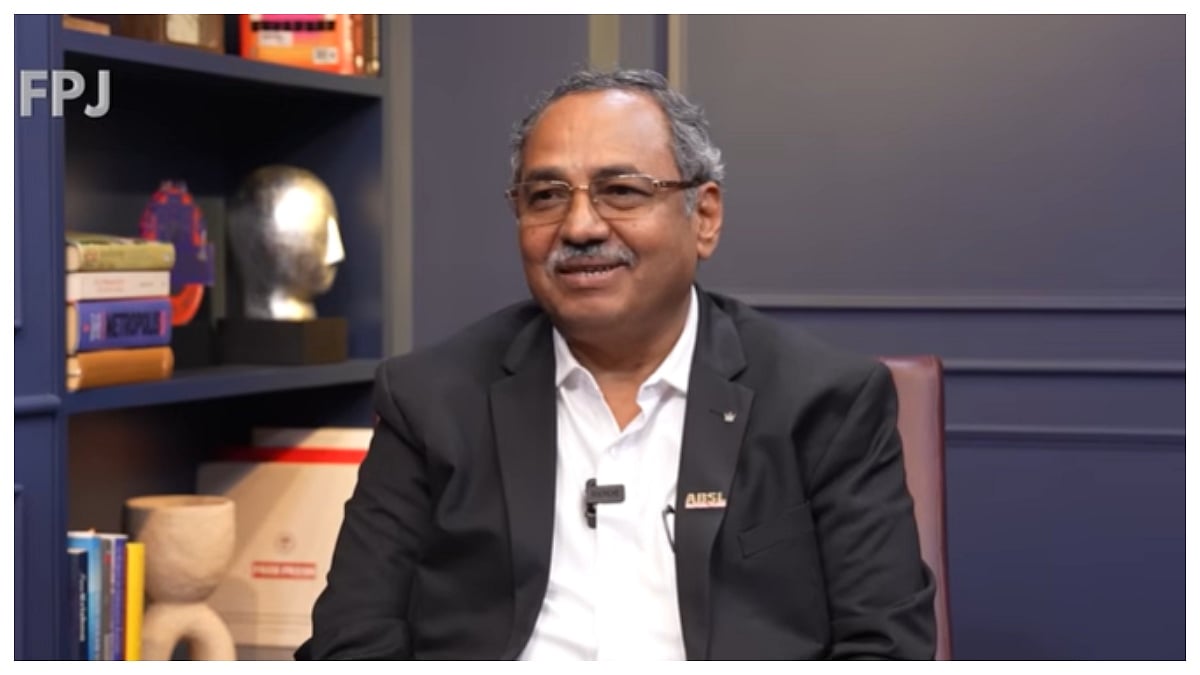
Market volatility is once again shaking investor confidence, particularly among those new to equity markets. Amid global uncertainty and sharp corrections, anxiety is rising across portfolios. In an interview with FPJ Consulting Editor-Business Sherryl D’Souza, A. Balasubramanian, MD & CEO of Aditya Birla Sun Life AMC, draws on over 35 years of experience to compare the current phase with past crises like the dotcom bubble, GFC and Covid, stressing the importance of patience and long-term investing.
You have over 35 years of experience in the mutual fund industry. Have you seen such troubled times before?
Yes, I have seen several crises over the decades—like the dotcom bubble, the Global Financial Crisis (GFC), 9/11, and even the Covid period. Every time, markets were hit suddenly and sharply. What makes the current phase different is that many new investors are experiencing such volatility for the first time.
What is your key advice to investors during such uncertain times?
My advice is simple: understand that volatility is a part of the market. Risks do not come with warnings—they appear suddenly. Investors must accept this reality instead of fearing it. Every crisis eventually passes, and markets recover.
Do you believe this current crisis will last long?
It may last for some time, but it is not permanent. Every economic disruption—no matter how severe—has historically been temporary. Markets go through cycles of ups and downs, but they always stabilise and recover over time.
How is the current situation impacting the Indian economy?
There is definitely some impact. It may slow down growth slightly—possibly shaving off 20–30 basis points from GDP if the situation persists. However, India’s long-term growth story remains intact. Short-term disruptions should not be mistaken for long-term weakness.
Many small investors are worried as their portfolios are falling. Should they stop their SIPs?
No, they should not stop their SIPs. In fact, they should continue investing. If they have extra funds, they can even increase their investments. The best returns are often made when markets are down, not when they are rising.
Why is continuing SIP important during market downturns?
Because downturns allow investors to buy at lower prices. Over time, this improves overall returns. Market corrections are opportunities, not threats. Investors should avoid reacting emotionally to short-term losses.
Should investors check their portfolios frequently during such times?
No. Constantly checking portfolios can increase anxiety. Valuations and market movements are temporary. Both sharp gains and steep losses do not last forever. What matters is long-term growth, which remains steady over time.
What about lump sum investments? Is this a good time to invest?
Yes, this can be a good time for lump sum investments. When markets fall, it creates attractive entry points. However, investors can also stagger their investments through systematic transfer plans (STPs) or phased investing to manage volatility.
Should investors try to time the market before investing?
Timing the market is very difficult. No one can predict exactly when the market will hit its lowest point. Instead of waiting, investors should focus on disciplined investing. When opportunities appear, they should act rather than delay.
Are there specific sectors that look attractive right now?
Broadly, sectors linked to the domestic economy—such as banking, financial services, pharmaceuticals, agriculture, and alternative energy—offer potential. However, it is difficult to pick one winning sector. Diversification remains the best strategy.
What type of investment approach would you recommend now?
A diversified portfolio is key. Investors can consider flexi-cap, multi-cap, or balanced funds. These funds adjust allocations across sectors and market caps, helping manage risk during uncertain times.
Should conservative investors avoid equity markets completely?
No. Even conservative investors can participate through balanced or hybrid funds. These offer exposure to equities while reducing risk through debt allocation.
What is the biggest mistake investors make during volatile markets?
The biggest mistake is reacting emotionally—either by stopping investments or selling at a loss. Investors must remember that both market highs and lows are temporary. Long-term discipline is the key to wealth creation.
Do you believe India will emerge stronger after this phase?
Absolutely. India has strong structural growth drivers—manufacturing, infrastructure, defence, electronics, and tourism. Policy initiatives and long-term planning are positioning India for sustained growth.
What is your final message to investors?
Stay calm, stay patient, and continue investing. Market volatility is temporary, but disciplined investing creates long-term wealth. Faith, patience, and consistency are the most important tools for any investor.

