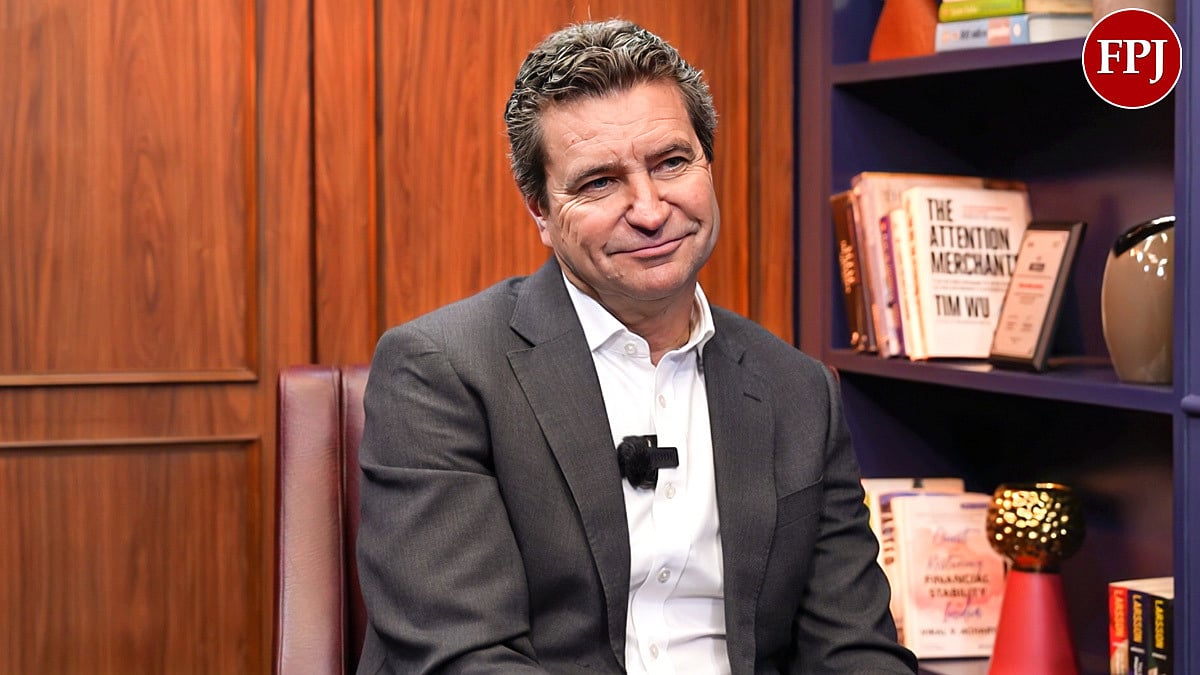
India’s strong long-term growth outlook, rising domestic investor participation and expanding financial markets make it difficult for global investors to ignore, despite rich valuations, says Carl Roothman, Chief Executive Officer of Sanlam Investment Group. In a discussion with Sheryll D’Souza of The Free Press Journal, he explains Sanlam’s India strategy, its partnership with Shriram Group, portfolio diversification, retirement planning and why Indian investors should gradually increase their exposure to overseas assets.
What attracted Sanlam to India and the Shriram Group?
Sanlam Investment Group is part of Sanlam Group, one of Africa’s biggest non-banking financial services and insurance groups. We manage roughly USD 80 billion in assets and offer asset management, wealth management and stockbroking services.
We are primarily an emerging-market business, which gives us a natural understanding of the questions investors in these markets face. In South Africa and India, for instance, investors are thinking about similar issues around domestic investment, overseas exposure and diversification.
Our relationship with the Shriram Group goes back more than two decades, beginning with Shriram Finance. Over that period, we have seen India’s financial markets evolve significantly, particularly over the last decade. Given the strength of our relationship and our shared understanding of the Indian market, expanding together into wealth management, asset management and stockbroking was a natural next step. India’s structural economic transformation and its growing financial ecosystem make it a very exciting long-term growth market for us.
How has the Indian investor’s mindset changed?
Household savings were traditionally concentrated in cash, bank deposits, gold and property. Investors are now moving towards equities, bonds, mutual funds and other financial products.

Systematic investment plans have made markets more accessible and driven strong participation. As people become financially aware, they think more seriously about asset allocation and diversification. This creates opportunities to introduce products already developed in other markets.
Are Indian equities too expensive for global investors?
Investors must take a long-term view and separate India’s economic prospects from its current stock market valuations. India remains one of the world’s fastest-growing major economies, and global investors must have some allocation to it.
However, strong market performance has pushed India’s forward price-to-earnings multiple to around 20 times, making it more expensive than several emerging markets. Global volatility, wars and higher energy prices have also encouraged a flight towards developed markets.

With India growing at around 6 percent to 7 percent, foreign capital should return as energy prices ease and valuations become more comfortable. Corporate earnings must catch up, and there are signs of improvement among larger companies. India cannot be ignored, but investors should remain selective and valuation-conscious.
What distinguishes India from other emerging markets?
India offers strong growth, economic and political stability, large infrastructure investments, an active IPO market and a steady pipeline of new companies.
Domestic capital is another major advantage. Many emerging markets depend heavily on foreign money, while India’s expanding investor base and improving financial awareness are directing substantial local savings into markets.
India also benefits from a young and innovative population, creating opportunities well beyond listed equities, including private credit, alternative assets and infrastructure. This breadth of opportunity, supported by structural reforms and strong domestic demand, gives India a distinct advantage over markets such as South Africa and Brazil.
What synergies do you see between India and Africa?
Investors in both markets have traditionally displayed a strong home bias. South African investors are increasingly looking abroad for diversification, and Indian investors are beginning a similar journey.
South Africa is rich in commodities, including gold and other minerals, while India is a major consumer of these resources.
Infrastructure presents another opportunity. India has developed significant expertise in building infrastructure, while Africa needs large-scale investment. Stronger commercial links could enable Indian businesses and capital to support Africa’s development.
Should Indian investors increase their overseas exposure?
India’s growth and active IPO market have given investors compelling domestic opportunities, so many have not seriously considered investing abroad. However, international diversification becomes more relevant as wealth rises and domestic valuations become expensive.

Under the Liberalised Remittance Scheme, an individual can remit up to USD 250,000 overseas in a financial year. While a significant portion of these remittances is used for education and travel, investments are gradually becoming a larger component.
India remains a fantastic opportunity, but investors should hold some international assets to reduce concentration risk and access industries unavailable domestically. I expect overseas investing to become more relevant over the next four to six years.
What asset allocation would you suggest?
Allocation depends on age, wealth, objectives and risk tolerance. The more wealth investors accumulate, the greater their focus should be on protecting capital. They may therefore hold less in equities and more in assets offering predictable returns and lower volatility.
Compounding is equally important. A portfolio earning around 13% to 14% annually can roughly double in five years. Investors should focus on long-term compounding instead of short-term gains.
For an Indian investor with a long horizon, equities could form about two-thirds of the portfolio. Fixed income may account for 10 percent to 20 percent, with the balance spread across property, gold and alternatives such as private credit.
Geographically, investors could initially keep around 80 percent in India and gradually build a 20 percent overseas allocation. Every portfolio, however, must be tailored to the individual.
Are Indians paying enough attention to retirement?
Individuals must take greater responsibility for retirement as families become smaller and lifespans increase. Depending entirely on children for financial support may no longer be practical.
India needs stronger pension, annuity, insurance, preservation and retirement-focused products. These encourage disciplined investment and prevent long-term savings from being diverted towards property, cars or immediate spending. Tax incentives can also support participation.

India has done well in expanding equity investing. The next step should be retirement products providing dependable income after people stop working. The government, regulators and private sector must work together to deepen this market.
What are Sanlam’s immediate priorities in India?
Our priority is to help build Shriram Wealth into one of India’s leading wealth management businesses. We want to use Sanlam’s global experience to create a trusted, independent platform offering domestic and offshore products.
We want the business to grow to between USD 6 billion and USD 10 billion and become a recognised name in Indian wealth management.
We will also continue investing in the Group’s asset management and stockbroking businesses. A leading financial services player needs strong capabilities across all three areas. Our ambition is to build an enduring business with the Shriram Group over the next five to 10 years.

