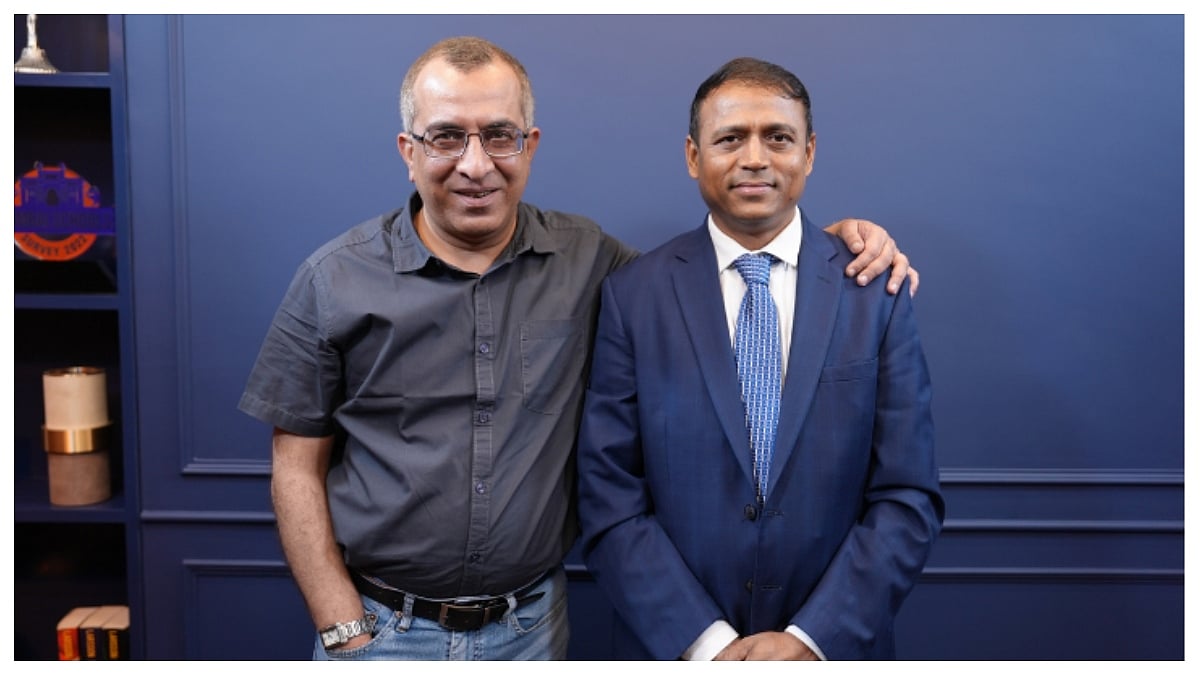
In a conversation with Vivek Law on Simple Hai! Dr. Arun Singh, Chief Economist at Dun & Bradstreet India, discussed how geopolitical tensions, trade realignments, artificial intelligence (AI) and climate-related disruptions are reshaping the global economy. He said India has important structural advantages, including its demographic dividend, rising investment and export diversification and India could grow at 6.5% to 7% over the next two to three years, but sustaining that momentum will require stronger private investment, better employment opportunities and faster technology adoption. However, he cautioned that the country must address persistent employment challenges and improve productivity to sustain long-term growth.
A New Normal of Economic Disruption
Singh said economic cycles have always shaped growth, with periods of expansion followed by slowdowns. Past shocks, including the 1971 oil crisis and the 2008 financial crisis, demonstrate how global events can affect economies over time.
Today, geopolitical tensions, the Russia-Ukraine war, tariff disputes and technological change have made disruptions more frequent. Faster information flows also mean that economic developments can influence businesses, markets and households almost immediately.
However, this speed has a downside. Information overload can fuel market hype and anxiety, affecting business decisions and economic activity.
Singh described the current environment as a “hyper-disrupted world”, where governments, businesses and individuals must continually adapt to avoid falling behind.
India’s Growth Outlook Depends on Investment
Despite global uncertainty, Singh expects India's GDP to grow between 6.5% and 7% over the next two to three years. He said temporary pressures, such as geopolitical tensions and oil price volatility, must be distinguished from longer-term economic strengths.
India's demographic dividend, export diversification, improving investment rates and household savings provide a foundation for future growth. Singh also highlighted an increase in gross fixed capital formation from around 7% to 12%, as discussed during the interview.

However, growth above 7% will require stronger private investment and a reduction in temporary economic pressures.
Singh stressed that investment matters beyond headline GDP figures. New investment expands productive capacity, creates jobs and raises household incomes. These gains can then support consumption and generate further economic activity.
Inflation Leaves Limited Room for Interest Rate Changes
Singh said policymakers face a difficult balance between controlling inflation and supporting economic growth.

He distinguished cost-push inflation, driven by higher input costs such as oil, from demand-pull inflation, which occurs when demand outpaces supply. He argued that India's current inflationary pressures are largely cost-driven, making interest rate increases less effective.
Food inflation above 6%, as cited in the discussion, particularly affects rural households. Meanwhile, producers face higher input costs but cannot always pass the full increase on to consumers, putting pressure on profit margins.
Higher interest rates could further increase borrowing costs and slow the recovery in private investment.
Singh therefore favoured a cautious “wait and watch” approach to monetary policy, alongside government efforts to strengthen supply chains and sustain demand.
Rupee Volatility and Foreign Capital Flows
Law also raised concerns about the rupee's weakness and foreign capital outflows.
Singh attributed the pressure partly to India's dependence on imported oil, which he said accounts for around 85% of consumption, and to global capital flows responding to differences in interest rates.
He argued that India does not face a fundamental internal balance of payments crisis, but its import-heavy trade deficit and changing capital flows create challenges.
Sharp currency movements can also affect business confidence and complicate foreign currency funding for Indian companies.
Singh called for faster reforms to attract long-term global capital. Improvements in infrastructure, ease of doing business and workforce skills, he said, will be important as countries compete for investment.
AI and Innovation Need Better Commercialisation
India has considerable potential in technology and innovation, but Singh believes it must do more to turn ideas into commercially successful products.
He noted that India ranks sixth globally in patents, as cited during the conversation, but faces gaps in commercialisation, testing, prototyping and scaling new technologies.
These weaknesses could limit India's ability to compete in strategic industries such as semiconductors, where countries including China and Taiwan have developed strong capabilities.
Singh called for greater investment in skills and technology adoption, with businesses taking a long-term view of returns. He warned that failing to adapt to AI and the fourth industrial revolution could leave India behind during a major period of technological change.
Employment and Women’s Participation Remain Concerns
Employment emerged as one of the biggest challenges in India's growth story.
Singh put India's labour force participation rate at around 55%, meaning a substantial share of working-age people do not participate in the labour market. He highlighted a sharp gender gap: male participation stands at around 75%, while female participation is approximately 33%.
He described this imbalance as effectively running the economy on “one engine”.
Youth unemployment, which Singh cited at around 9.9%, also reflects difficulties in moving from education to employment. He called for targeted training that helps young people develop skills relevant to available jobs.
Singh said governments, businesses and individuals all have a role in addressing these challenges. Private investment and infrastructure development must create sustainable employment, while individuals need opportunities to enter and progress in the labour market.
He also called for workers to move from lower-productivity agriculture towards manufacturing and construction. Agriculture employs around 40% of workers but grows at approximately 3.6%, while manufacturing growth was cited at around 9% to 12%.
Increasing women's participation in paid work could further raise household incomes and consumption, strengthening the broader economy.
India Must Adapt to a Changing Global Order
Discussing US-China tensions and shifting global trade relationships, Singh said countries are competing to position themselves within emerging growth centres as mature economies face slower growth.
India must expand trade partnerships, diversify exports, reduce import dependence and continue modernising infrastructure. Singh also emphasised the need to prepare industries and workers for AI-driven technological change.
He cautioned against copying older growth models without adapting them to current geopolitical and technological realities.
Without deeper structural reforms, India risks settling into a low-growth trajectory of around 6.5% to 7%, limiting improvements in per capita income. Sustained progress will require balancing domestic reforms with changing global supply chains and deglobalisation pressures.
Sustaining Growth Beyond the Headline Numbers
Singh's outlook combines confidence in India's long-term potential with caution about the challenges ahead. Demographics, investment and export diversification offer important advantages, but their benefits depend on creating productive jobs, improving skills and helping businesses adopt new technologies.
For India, the task is not simply to maintain a strong GDP growth rate. It is to translate economic expansion into higher household incomes, wider employment opportunities and more inclusive prosperity.
As Singh explained during the conversation, economic change affects everyone. How governments, companies and individuals respond to a hyper-disrupted world will help determine India's growth trajectory in the years ahead.

