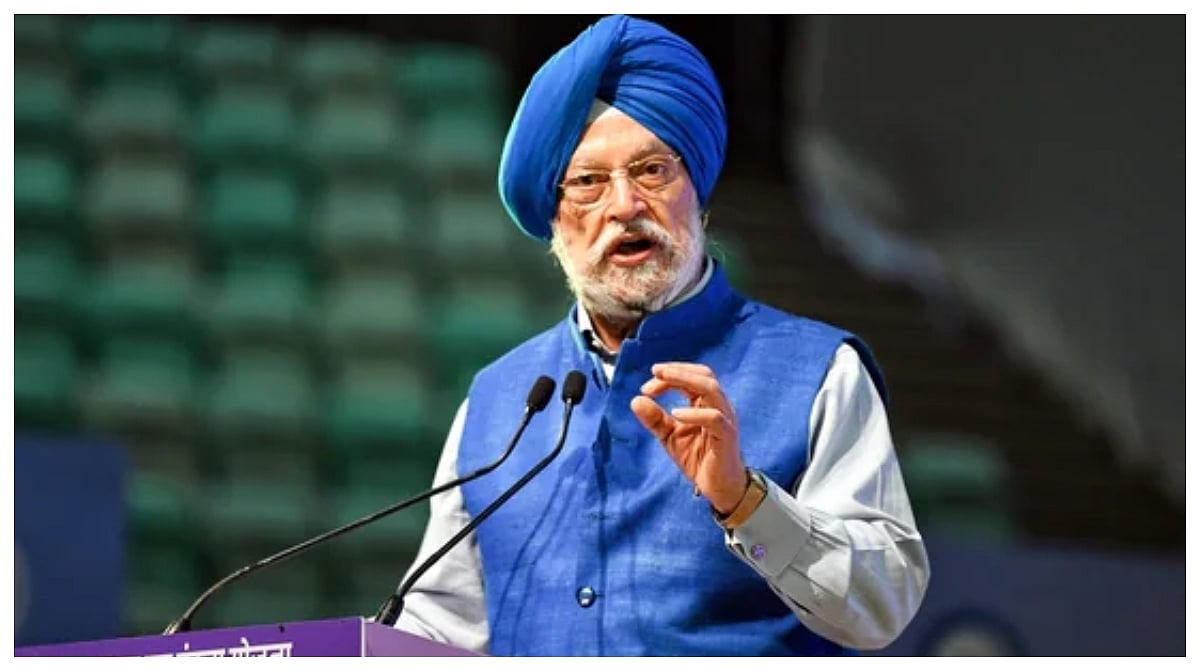
BETUL (GOA): India is aiming for 100 gigawatts of nuclear power by 2047 as part of a strategy that blends clean energy expansion with continued reliance on oil and gas, the Union Petroleum Minister Hardeep Singh Puri said on Tuesday, warning that abrupt withdrawal from conventional fuels could destabilise global supply.
He cautioned that if investment in existing oil and gas production were halted today, global output would fall by about 8% a year over the next decade — a loss equivalent to more than the combined annual production of Brazil and Norway. The transition to low-carbon energy, he argued, must be managed alongside energy security and economic growth. Speaking on the sidelines of India Energy Week 2026, Puri said the newly approved Atomic Energy Bill 2025, known as SHANTI, modernises India’s nuclear framework and underpins its long-term ambition. “Energy history has never been about replacement alone,” he said. “It has been about addition.”

The minister noted that nearly 80% of incremental global energy demand now comes from emerging and developing economies, with about 60% originating in developing Asia. At the same time, around 730 million people worldwide still lack access to electricity, while almost two billion rely on harmful cooking fuels — a reminder, he said, that affordability and access remain central challenges.
“Renewables have expanded rapidly, with their share of global electricity generation rising from about one-fifth to nearly one-third over the past decade. Yet India, as the world’s third-largest energy consumer, will require growth across all sources. By 2050, its share of global energy demand is projected to reach around 10%, even though per capita consumption remains roughly 40% of the world average,” Puri told The Free Press Journal.
The government is seeking to encourage investment through regulatory reform, including new petroleum and natural gas rules and a series of bidding rounds for exploration acreage. Early seismic surveys in deep and ultra-deep-water blocks have shown promising results, officials said. India has also moved to cushion households from global price shocks. Fuel prices in Delhi in 2025 were lower than in 2021, while subsidised liquefied petroleum gas for more than 100 million beneficiaries has been kept among the cheapest in the world.
Alongside hydrocarbons, the country is pressing ahead with biofuels and clean technologies. Nearly 20% ethanol blending has been achieved, delivering significant foreign exchange savings and higher farm incomes. Puri said India’s approach — combining nuclear ambition, renewable expansion and conventional energy security — reflects a pragmatic path for fast-growing economies. “The choices we make today,” he said, “will shape resilience, prosperity and sustainability for decades.”

