Mumbai: Global ratings agency Moody's Ratings has said India and several other major oil-importing countries may negotiate directly with Iran to secure safe energy supply routes.
According to Moody’s, countries such as India, China, Japan and South Korea are expected to work on bilateral transit arrangements to continue importing crude oil amid ongoing tensions in West Asia.
The agency said these routes may include special transit corridors near Iran’s Larak Island and through Oman’s territorial waters.
Strait of Hormuz Crisis Continues
The warning comes as the conflict involving the US, Israel and Iran continues to disrupt shipping through the Strait of Hormuz, one of the world’s most important oil trade routes.
Nearly one-fifth of global crude oil and LNG trade normally passes through this narrow sea route.
Moody’s said maritime traffic through the Strait has fallen by more than 90 per cent compared to normal levels because of security risks, high insurance costs and sea mines.
Oil Prices Likely to Stay High
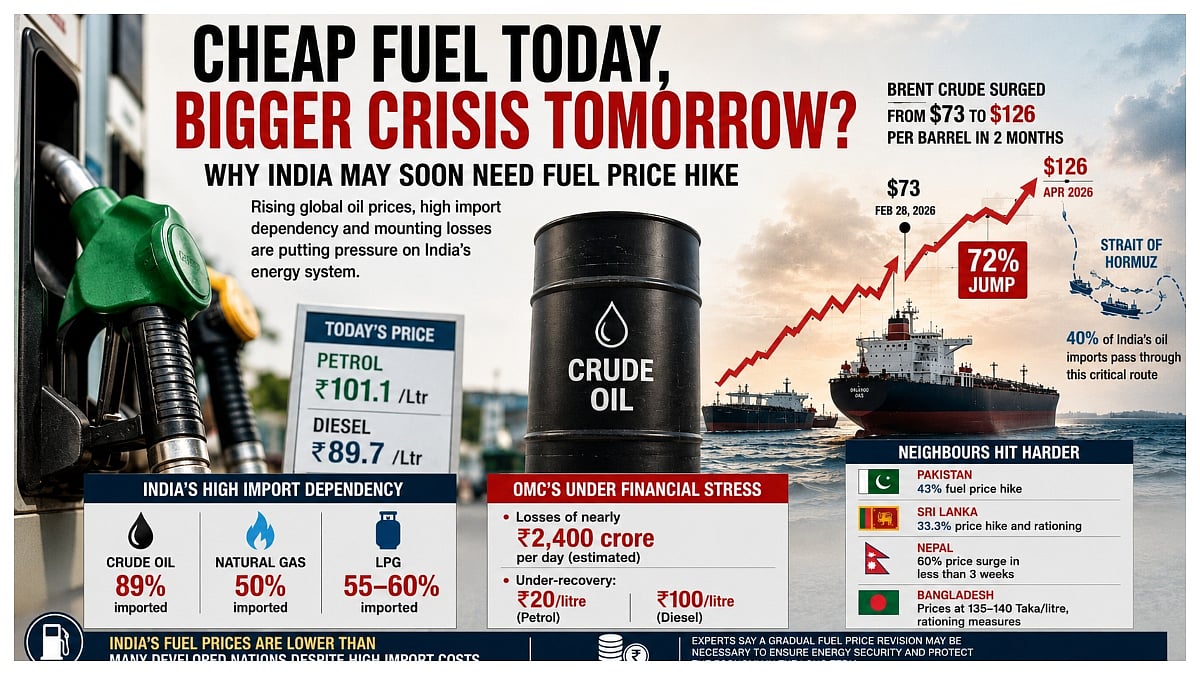
Moody’s expects Brent crude oil prices to remain between $90 and $110 per barrel for most of this year.
The agency also warned that oil prices may remain highly volatile and could move outside this range if tensions increase further.
Even if some shipping resumes within the next six months, Moody’s believes the global oil market will continue to face supply shortages in 2026.
India Among Most Affected Countries
Moody’s said India is one of the countries most exposed to the crisis because nearly 46 per cent of its crude oil imports come from the Middle East.
The agency warned that higher oil prices could increase pressure on India’s currency, current account deficit and government finances.
Because of these concerns, Moody’s reduced India’s 2026 GDP growth forecast by 0.8 percentage points to 6 per cent.

Inflation Risks Also Rising
The ratings agency also warned that costly energy supplies could push inflation higher across major economies.
For India, Moody’s now expects average inflation to reach 4.5 per cent in 2026, one percentage point higher than its earlier estimate.
Higher fuel costs may also increase production expenses for industries and reduce household spending power, the report added.

