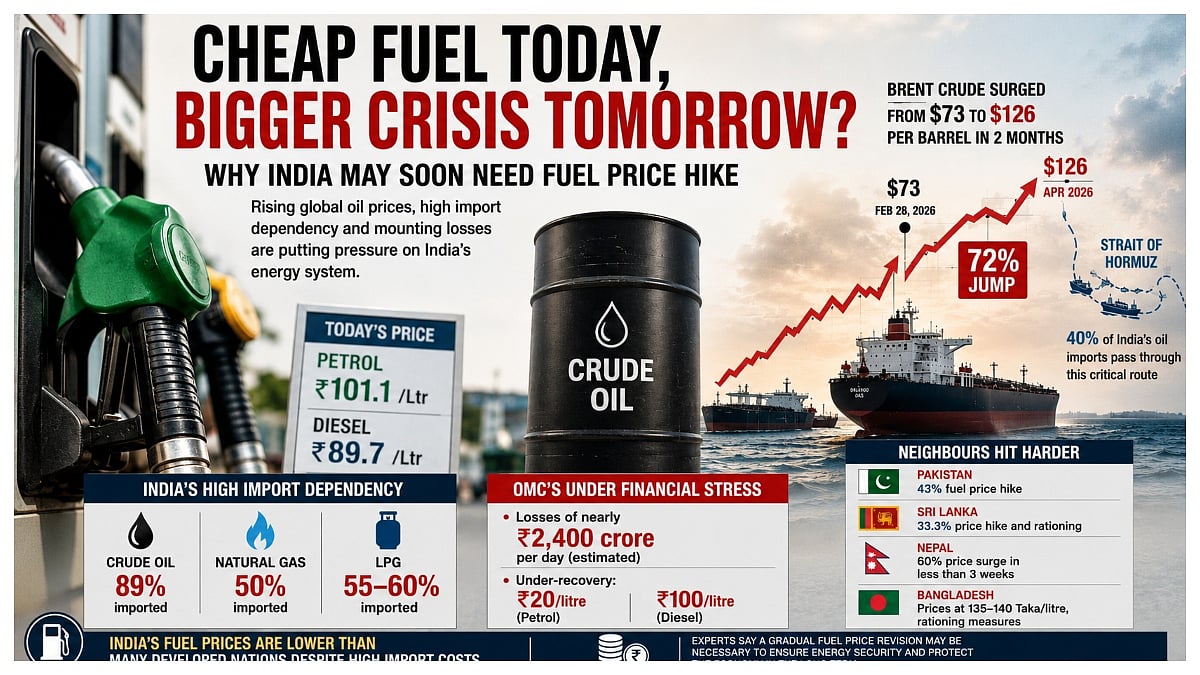
Mumbai: India has managed to keep petrol and diesel prices relatively stable despite a sharp jump in global crude oil prices, but experts believe this situation may not remain sustainable for long. Geopolitical tensions, rising crude prices, depreciating Indian Rupee and growing fuel demand are increasing pressure on the country’s energy system.
India currently imports nearly 89% of its crude oil needs, making the country highly dependent on international markets. Domestic production remains far below consumption levels. India also imports around 50% of its natural gas requirements and nearly 55-60% of LPG demand. At the same time, fuel consumption in the country continues to rise steadily. Petrol demand grew 6.5% during FY26, while diesel consumption rose 3.6%. LPG demand also increased by 6%.
Although fuel prices at petrol pumps have remained largely unchanged, oil companies are reportedly facing heavy financial pressure. According to estimates, state-run oil marketing companies (OMCs) absorbed combined losses of nearly ₹2,400 crore daily for a certain period because retail prices did not fully match import costs. Under-recoveries are estimated at around ₹20 per litre for petrol and nearly ₹100 per litre for diesel.
The biggest trigger behind this pressure has been the sharp rise in global crude prices after the West Asia conflict that began in February 2026. Brent crude prices jumped from around $73 per barrel to as high as $126 per barrel within two months, marking a rise of over 72%.
India faces an additional risk because around 40% of its oil imports pass through the Strait of Hormuz, one of the world’s most important oil shipping routes. Disruptions in the region have increased freight charges and marine insurance costs, making imported oil even more expensive.
Several neighbouring countries have already taken harsh measures due to the fuel crisis. Pakistan raised fuel prices by 43%, while Sri Lanka, Nepal, and Bangladesh also implemented sharp price hikes and rationing measures.
Despite importing most of its crude oil, India’s fuel prices remain lower than many developed countries, including Germany, France, and the United Kingdom. Analysts believe that keeping prices artificially low for too long may increase the country’s fiscal burden and foreign exchange pressure.
Experts now believe India may eventually need a gradual and carefully planned fuel price revision to protect the financial health of oil companies and ensure long-term energy security.
References:
- Snapshot of India’s Oil and Gas Data Monthly Ready Reckoner, March 2026
- PPAC notification vide ref. PPAC/Indian Crude Basket Ratio/ May 2026 dated 30.04.2026
- Monthly Economic Review April 2026, Department of Economic Affairs
- World Economic Outlook, April 2026

