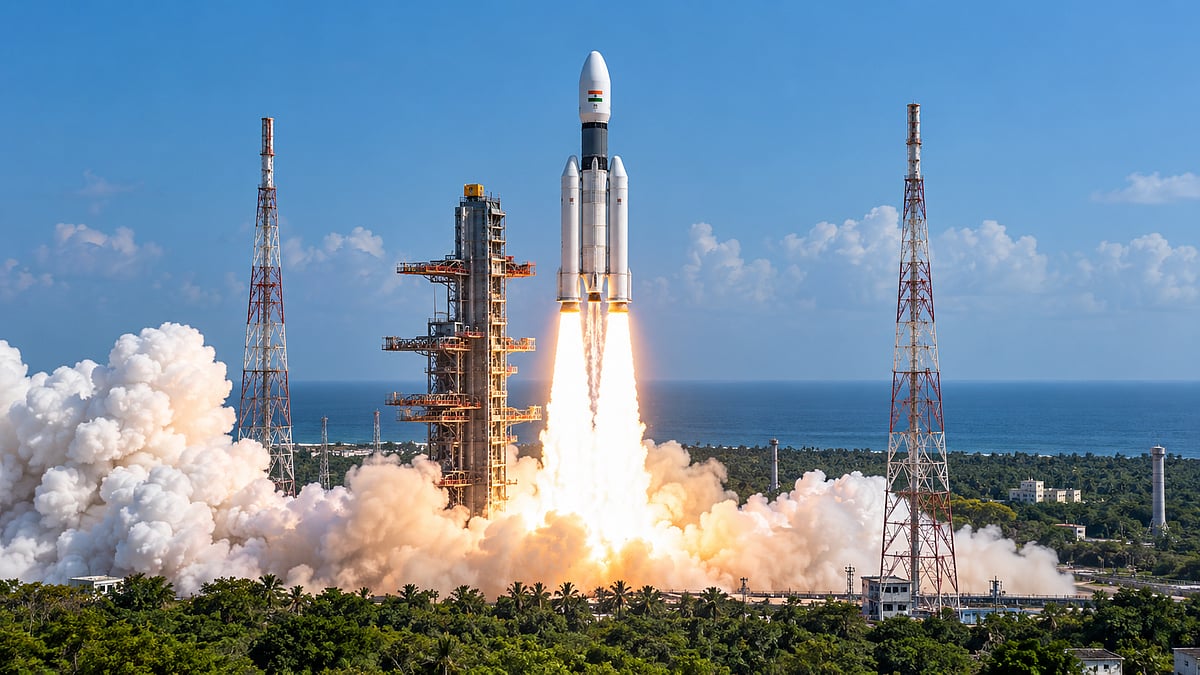
New Delhi: India is emerging as a global space power, with lunar exploration, solar research and human spaceflight plans expanding its capabilities, according to an article in Tanzania’s The Guardian newspaper.
The article traces India’s journey from Aryabhata in 1975 to missions including Chandrayaan-3 and Aditya-L1. It says the space programme is also supporting innovation, manufacturing, employment and public services.

Chandrayaan Missions Expand Lunar Ambitions
Chandrayaan-3’s successful Moon landing in 2023 demonstrated India’s ability to complete a complex lunar mission.
Chandrayaan-4, approved in 2024, aims to collect lunar samples and bring them back to Earth.
The article notes that sample return requires technologies beyond landing, including multiple launches, docking, lunar ascent and safe re-entry.
India’s SpaDeX mission has demonstrated orbital docking, an important capability for more ambitious space operations.
Gaganyaan And Indian Space Station Plans
Gaganyaan is preparing India for human spaceflight through a phased testing programme.
Uncrewed missions will validate essential systems before astronauts fly, including crew escape, life support, parachutes and re-entry technologies.
According to the article, the Bharatiya Antariksh Station’s first module is targeted for 2028, with the wider station envisaged by 2035.
India’s longer-term roadmap includes a crewed lunar mission by 2040.
Solar Research And Venus Exploration
Aditya-L1 studies solar activity and space weather from a position about 1.5 million kilometres from Earth.
The Venus Orbiter Mission, also called Shukrayaan, is targeted for March 2028, the article says.
It will examine Venus’s atmosphere, surface and subsurface to improve understanding of planetary evolution and habitability.

Space Technology Supports Everyday Development
Beyond exploration, satellites support weather forecasting, farming, navigation, communications and disaster preparedness.
Earth observation helps monitor forests, water resources, urban growth and environmental risks. Satellite connectivity can also improve healthcare access in remote communities.
The article says advances in electronics, sensors, materials and manufacturing benefit industries beyond space.
Technology transfers help Indian businesses enter advanced supply chains, creating commercial opportunities alongside scientific progress and strengthen domestic manufacturing.

