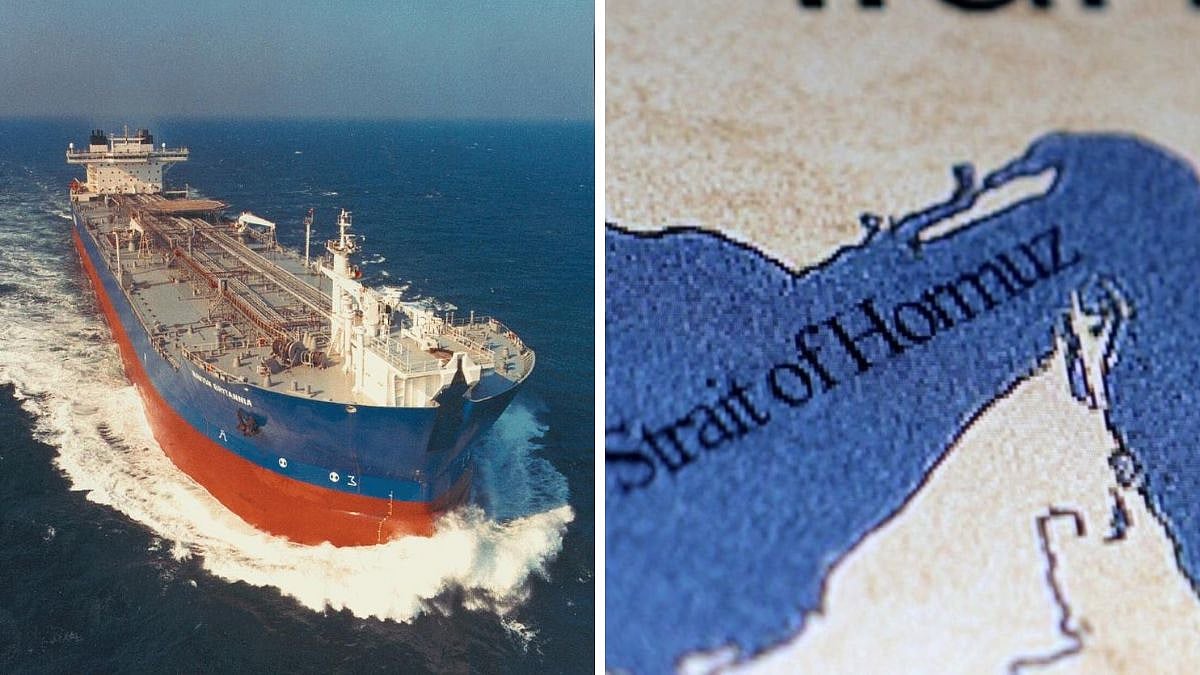
The government is planning to set up a Rs 1,000 crore fund for insurance companies providing war-risk cover to ships transiting from conflict-hit zones in the West Asian region, according to a report by The Economic Times.
The move has come after global insurers are avoiding risk coverage for ships due to the United States-Israel war in the region. This has made tanker shipping costlier.
The dedicated fund for ship insurers will act as a reinsurance backstop facility to cushion potential losses, the report said, citing sources. The fund is expected to cover ships carrying crude oil through the Strait of Hormuz.
“We are examining if a fund can be created as reinsurance is not available in the region,” a government official was quoted as saying in the report.
The proposal to set up the fund is under consideration by the Union Ministry of Finance. The fund, if approved, will enable domestic insurers to provide coverage to vessels sailing through high-risk zones such as the Strait of Hormuz.
The narrow but crucial waterway between the coasts of Oman and Iran used to provide transit to ships meeting 20 percent of the world’s oil demand.
Apart from crude, about 85 percent of India’s natural gas supplies used to transit through the strait. India imports over 80 percent of its energy requirements. The West Asian region was a major contributor to that.
The latest insurance fund could be on the lines of the Marine Cargo Excluded Territories Pool set up in 2022 after the Russia-Ukraine war and related sanctions, according to the report. This pool provides cover for cargo of fertilisers and other commodities from “excluded territories” like Belarus, Ukraine, and Russia.
The pool is managed by government-owned General Insurance Corporation of India.
However, such a facility by the government would be useful only if transit through the Strait of Hormuz is allowed. The development comes days after Union Commerce Minister Piyush Goyal indicated that the government was planning to come up with formal measures to ease trade through the conflict-hit region.
