Millions of taxpayers breathe a sigh of relief after hitting "submit" on the Income Tax portal before the due date. But does merely uploading your Income Tax Return (ITR) mean your tax duties for the year are officially over? The short answer is no.
Filing your return is only the first step. The Income Tax Department requires critical post-filing actions to consider your submission valid. The process is only truly complete once the department assesses your data and sends you a final, official confirmation i.e. an intimation.
Here is exactly what you need to do immediately after filing your ITR, and how to know when your tax filing process is officially closed.
The 30-Day Rule: Verify Your Return
An unverified ITR is legally treated as an invalid return—in the eyes of the taxman, it is as if you never filed it at all. While taxpayers previously had 120 days to verify their returns, the rules have been permanently tightened. You must now e-verify your ITR within 30 days of filing it.
The quickest way to do this is online via an Aadhaar-based OTP, Net Banking, or a pre-validated bank or demat account. Alternatively, you can take the traditional route by printing, physically signing, and sending the ITR-V acknowledgment via Speed Post to the Centralized Processing Centre (CPC) in Bengaluru within that same 30-days window. If you miss this deadline, your return becomes invalid i.e. non est. You would then be forced to file a belated return (attracting penalties) or formally request a condonation of delay.
Track Your Processing Status
Once successfully verified, your return enters the processing queue at the CPC. You can track its journey by logging into the e-filing portal and navigating to e-File > Income Tax Returns > View Filed Returns. Over the next few weeks, your status will sequentially change from "Successfully Verified" to "Processing," and finally to "Processed".
The Final Stamp: Intimation Under Section 143(1) of the Income Tax Act, 1961
When is the tax filing process officially complete? The curtain drops only when you receive an 'Intimation under Section 143(1)' on your registered email ID and SMS.
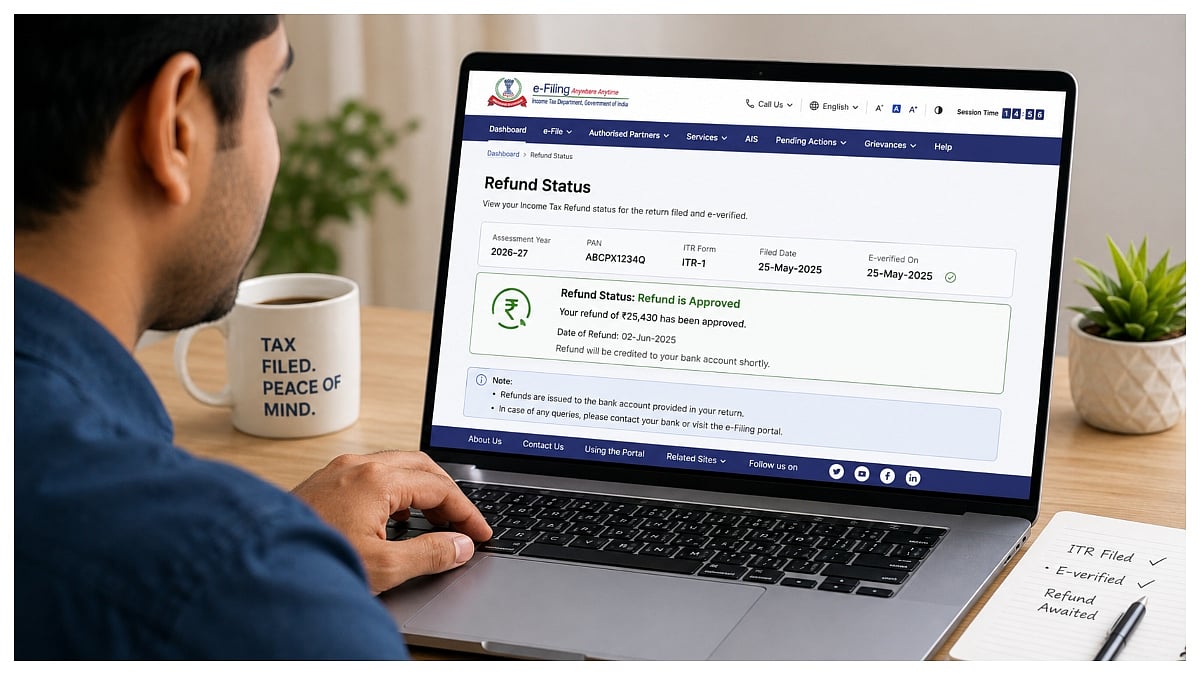
This computer-generated document is a preliminary assessment by the tax department. The CPC mathematically compares the income and deductions you declared against the data they already hold (like Form 26AS, the Annual Information Statement etc).
The 143(1) intimations will present one of three outcomes:
No Demand, No Refund: Your calculations matched the department’s perfectly. Your tax filing process for the year is successfully completed.
Refund Due: You paid excess tax, and a refund has been approved. It will automatically be credited to your pre-validated bank account.
Demand Raised: A discrepancy was found, meaning you owe additional taxes. You will need to either pay the outstanding amount or file a rectification request if you disagree with their assessment.
Note: The IT Department is duty bound to send this intimation within the prescribed period.

Safekeeping Your Records
Even after receiving a clean 143(1) intimation, your responsibilities aren’t entirely over. The Income Tax Department can reopen past assessments under certain conditions if they suspect income concealment. It is highly recommended to safely store your ITR-V, Form 16, bank statements, and investment proofs for a minimum of seven to eight years.
Do not just file and forget. Verify your return promptly, keep a watchful eye on your email for CPC communications, and ensure your bank account is pre-validated to receive any due refunds smoothly. Only when that final Intimation arrives with a "green flag" can you confidently close the books for the tax season.
(Authored By CA Pramod Prabhudesai, Partner at B D Jokhakar & Co, Chartered Accountants, Mumbai)

