
Mumbai: Shares of Coal India Ltd dropped nearly 5 percent on Friday, closing at Rs 432.35, down Rs 21.75 or 4.79 percent for the day. The fall came after the company announced a reduction in coal reserve prices under its single-window, mode-agnostic e-auction segment.
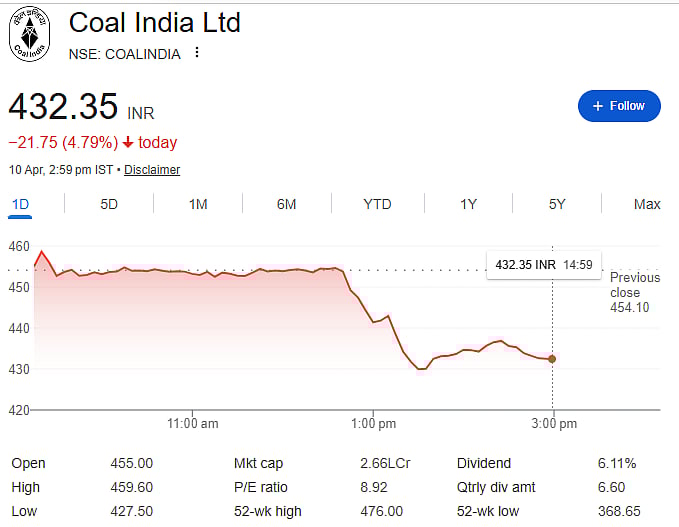
Investors reacted negatively as the move could impact margins.
Company Chooses To Keep Coal Affordable
Coal India said the decision was taken to keep coal prices reasonable for customers. The company wants to support industries that depend on coal and avoid passing on higher costs to them.
This shows that the company is focusing on affordability and stability in the market, even if it affects its own earnings in the short term.

Input Costs Rise Sharply
The price cut comes at a time when the company is facing strong cost pressures.
Ammonium nitrate prices jumped 44 percent, from Rs 50,500 to Rs 72,750 per tonne
Explosives costs rose 26 percent in just one month
Industrial diesel prices surged 54 percent, from Rs 92 to Rs 142 per litre
These increases have made coal production more expensive for the company.
Impact On Profit Expectations
By not passing on these higher costs, Coal India is likely to see pressure on its profit margins.
Investors usually expect companies to protect margins during cost increases. However, Coal India’s decision suggests it is prioritising long-term demand and customer support over short-term profits.

Market Sentiment Turns Negative
The stock decline reflects concerns among investors about lower earnings going forward.
While the move may help customers and support economic activity, it has created uncertainty about the company’s profitability in the near term.

