
Commerce and Industry Minister Piyush Goyal on Friday urged BRICS member countries to link their payment systems, promote trade in local currencies and make digital trade more accessible globally.
Addressing the opening session of the BRICS Business Forum 2026 in New Delhi, Goyal said India had taken significant initiatives in developing digital public infrastructure.
India’s Unified Payments Interface (UPI) has crossed 250 billion transactions annually and accounts for more than half of global transactions by volume.
"Today, it (UPI) is also accepted in 11 countries and I would urge the BRICS member countries and partner countries to link our payment systems, trade in each other's local currencies, make digital trade global and build together for the future emerging technologies," he said.
Focus on trade, supply chains and market access
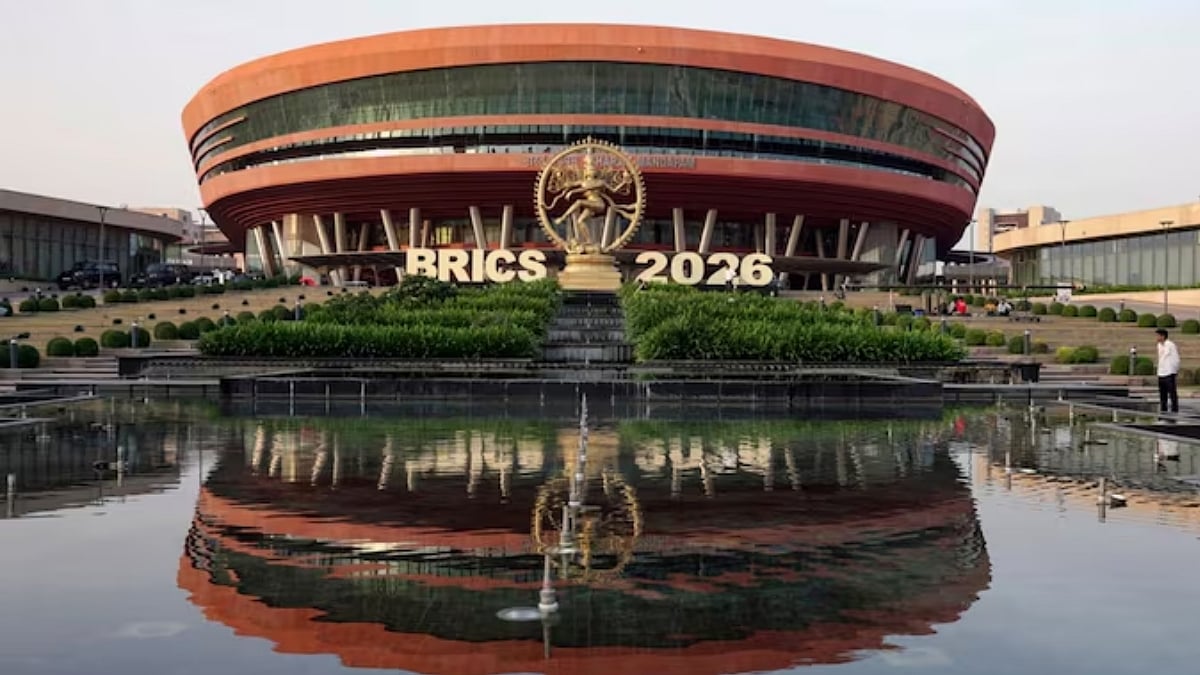
The business forum was held on the sidelines of the two-day BRICS summit, hosted by India from Saturday. The summit is being held amid global economic uncertainties triggered by the Russia-Ukraine war, the US-Iran conflict leading to the blockade of the Strait of Hormuz, and the Trump administration’s tariff policies.
Goyal said trade among partner countries should be deep and resilient, supported by diversified supply chains, ensuring that trade does not become an obstacle to growth and the well-being of people in member states.
"We should open our markets for each other's products, including for raw materials and critical minerals. Our supply chains will be resilient when they run both ways," he said, adding that non-tariff measures increase export costs, which are even higher than tariff measures.
He called for simpler market access for businesses and urged BRICS member states and partner countries to work towards simplifying regulatory procedures and ensuring faster clearance of consignments.
"I urge BRICS member states and partner countries to open their markets while working together to simplify regulatory procedures and facilitate faster clearance of consignments," the minister said.
Goyal also called for greater cooperation among BRICS countries in agriculture, pharmaceuticals, engineering, electronics, automobiles, auto components and services.
"Let us open our services markets to each other in a real sense. Let professionals move easily across borders and make it easier to recognise each other's professional qualifications," he said.
He also urged BRICS countries to encourage agri-tech startups to develop joint solutions for farmers and strengthen food security.
Russia highlights alternative financial system
Speaking at the session, Russian Economic Development Minister Maxim Reshetnikov said BRICS countries represent a quarter of the global economy and have a strong role in promoting sustainable growth.
"We stand for concrete steps to foster resilient supply chains, to accelerate green and digital transition...Russia strongly welcomes foreign businesses to enter our country. Today we are the economy of opportunities," Reshetnikov said.
He said Russia had taken measures to increase exports, boost economic growth and modernise infrastructure, adding that exports accounted for 18% of its GDP.
"Three years ago, dollar and euro totalled 85 per cent of settlements for Russian exports. The figure now stands at about 11 per cent. An alternative international financial system became our key leverage. Today it links thousands of banks from many countries and prospects are even greater," the Russian minister said.
Reshetnikov said active negotiations were underway for a trade agreement between India and the Eurasian Economic Union (EAEU).
He suggested that BRICS members focus on two initiatives: the BRICS grain exchange and the BRICS SEZs Association.
He said BRICS countries are among the world’s leading producers and consumers but continue to rely on price benchmarks shaped by other markets.
"We urgently need two independent mechanisms for strategic agricultural commodities," Reshetnikov said, adding that Russia had prepared a detailed plan to establish the BRICS grain exchange.
He described it as a unified trading platform where producers, traders and buyers could directly conclude transactions, adding, "we call upon partners' feedback at the public and the private level".
He also called for cooperation in developing the BRICS business navigator for investors and participation in SEZ rankings across BRICS countries.
"Today fragmentation divides, instability isolates, but together we endure. The strength of BRICS lies not in what each of us can achieve alone, but in what we can build side by side. That is resilient supply chains, shared prosperity and a more balanced global economy. Let us continue this work not as competitors, but as partners in shared economic future," he said.
Russia remains open to joint business ventures, investment projects and initiatives, Reshetnikov said, adding, "We welcome you in Russia, come and grow together".
Also Watch:
Trade finance gap and BRICS expansion
Commerce Secretary Rajesh Agarwal called for measures to address gaps in trade finance.
"With the global trade finance gap estimated at USD 2.5 trillion, we should enable exporters to access affordable working capital based on confirmed orders and reliable payment records," he said.
He said the Jaipur consensus provides an important foundation for exploring a common BRICS mechanism on trade finance.
Adopted at the 16th BRICS trade ministers’ meeting in August 2026 in Jaipur under India’s BRICS chairship, the Jaipur consensus focuses on easing trade finance constraints for micro, small and medium enterprises.
"The (BRICS) ministers further resolved to strengthen the global value chains through BRICS Connect, enhanced B2B partnerships, an annual BRICS Trade and Investment Expo, digital trade documentation and greater cooperation across multiple sectors, including healthcare," Agarwal said.
BRICS, originally comprising Brazil, Russia, India, China and South Africa, expanded in 2024 to include Egypt, Ethiopia, Iran, the United Arab Emirates and Saudi Arabia. Indonesia joined the grouping in 2025.
Belarus, Bolivia, Kazakhstan, Cuba, Malaysia, Nigeria, Thailand, Uganda, Uzbekistan and Vietnam became BRICS partner countries last year.
BRICS has emerged as an influential grouping, bringing together 11 major emerging economies that represent around 49.5% of the global population, around 40% of global GDP and around 26% of global trade.

