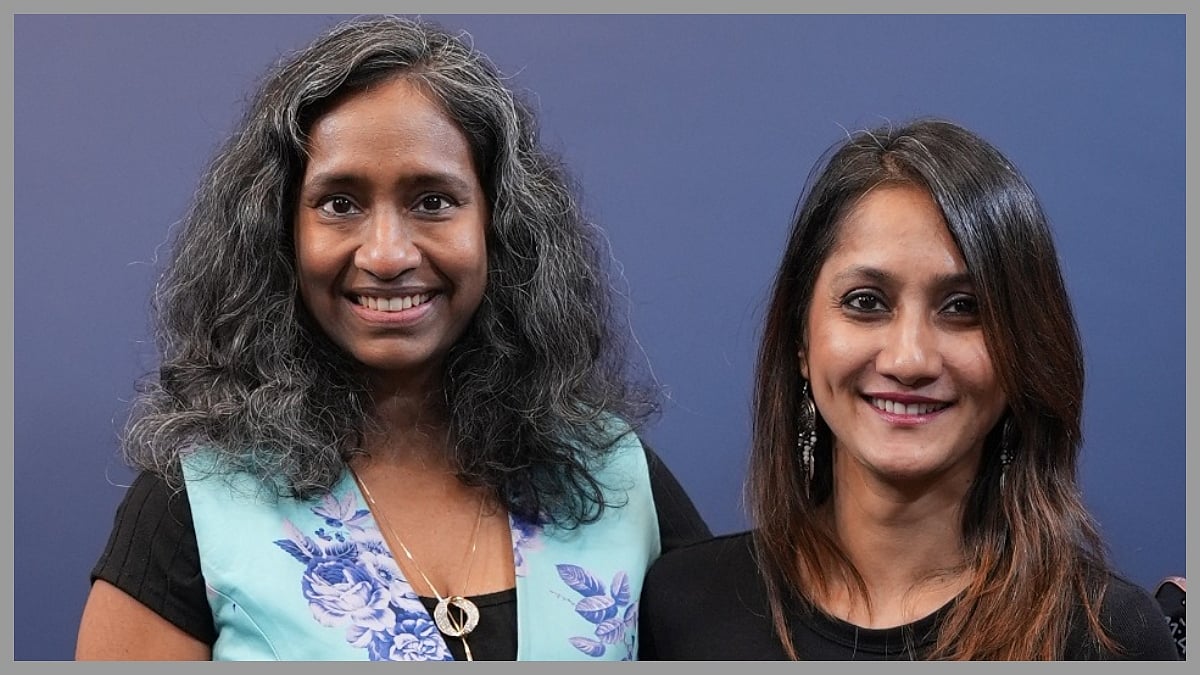
India’s investment landscape has transformed rapidly, with investors moving beyond traditional products to explore private markets, real estate and sophisticated equity strategies. Lakshmi Iyer, Group President–Investments, Bajaj Finserv, and MD and CEO, Bajaj Alternates, believes alternative investments could grow into a $1-trillion market within five years. In conversation with Sheryll D’Souza, Consulting Business Editor at The Free Press Journal, Iyer discusses the evolution of Indian investors, managing volatility, artificial intelligence and the changing face of wealth creation.
How has India’s investment landscape evolved over the past decade?
The evolution has been visible and beautiful. Mutual funds were the entry point for converting savers into investors. When I entered the industry in 1999, every Rs 100 crore raised was celebrated, while reaching Rs 1,000 crore in assets called for cake-cutting.
Today, these numbers appear relatively small for institutions allocating large pools of capital. More importantly, financial literacy has improved dramatically. Investors now understand products, risks and diversification far better than they did 10 or 20 years ago.
Who should consider alternative investments?
Alternatives are not necessarily the best starting point for a new investor. They are more suitable for evolved investors with larger portfolios who have already invested through traditional avenues.
Alternative Investment Funds allow participation in asset classes or strategies that may not be easily accessible through mutual funds or Portfolio Management Services. These can include structured credit, private equity, real estate and start-ups. Alternatives are like adding proteins and vitamins to a portfolio that already has its basic carbohydrates.
Has the meaning of asset allocation also changed?
Yes. Diversification is no longer limited to dividing money among equities, fixed income, gold and physical real estate. Even within equities, investors can consider absolute-return strategies designed to reduce portfolio volatility.
Systematic investing using machine learning and artificial intelligence is another emerging area. These are different approaches within the same asset class, but they provide additional diversification. Such strategies could become a major trend over the next five years.

Can alternatives protect investors from market volatility?
Volatility will remain the order of the day. No vehicle, including an AIF, can eliminate it. Alternatives, however, can provide access to uncorrelated or less-correlated assets, helping investors navigate volatility better.
There is no magic product offering zero risk. The underlying assets remain equities, fixed income, real estate, gold or commodities. The benefit comes from combining strategies that do not always move together.
How large could India’s alternatives industry become?
The market is currently a little under Rs 20 lakh crore, or approximately $200 billion. I would not be surprised if it reaches USD 1 trillion over the next five years.
New players and strategies are emerging across categories. India has talent, investment acumen and capital—a “Triveni Sangam” that creates an enormous opportunity for the industry.
What should investors assess before entering alternatives?
They must begin with their objective. Are they seeking higher returns, diversification or exposure to a missing asset class? They must also assess liquidity and investment tenure.
Private markets and start-ups may require commitments of five to 10 years. These are not suitable for investors with a one-to-three-year horizon. There cannot be a cookie-cutter answer because every investor’s needs and risk appetite are different.

Is demand restricted to wealthy investors in major cities?
It is becoming a mass awakening, although regulatory investment thresholds remain. A mutual fund may begin at Rs 5,000, PMS requires Rs 50 lakh, while an AIF typically requires Rs 1 crore.
We are witnessing impressive wealth creation in tier-two cities. Investors there are tracking start-ups, unicorns and companies progressing from private markets to stock exchanges. They also want to diversify.
How are family offices and younger generations approaching wealth?
We see three broad groups. Some next-generation members remain actively involved in family businesses. Others are more interested in managing investments than running the core business. The third group comprises families managing wealth after selling a business.
The younger generation is more experimental and willing to look beyond fixed income. However, wealth creation demands patience. Rome was not built in a day—you have to hustle for the muscle.

What role will AI play in investment management?
AI can be a thinking partner that enables faster and sharper decisions. But using a chatbot does not mean someone has mastered AI; that is only the tip of the iceberg.
India has significant potential in AI inferencing and applications. Risks must be managed through secure, enterprise-level systems. Investment managers are also risk managers. Not taking risk is not the solution; managing risk is.

