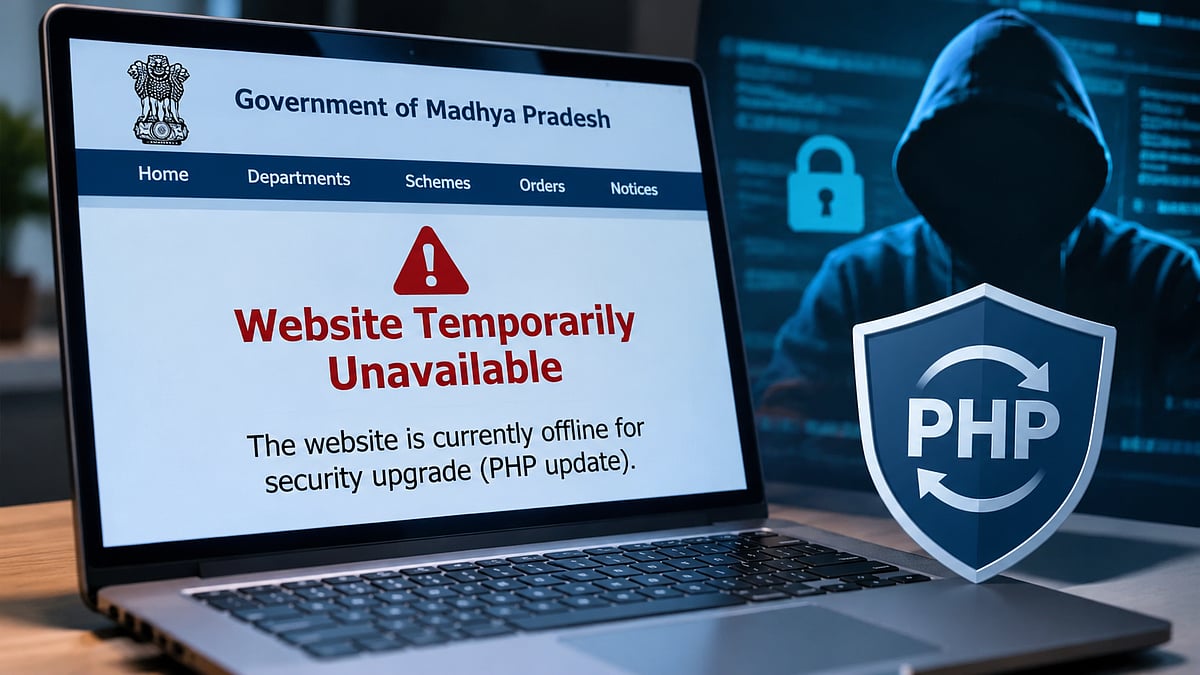
Bhopal (Madhya Pradesh): Websites of around 25 government departments in Madhya Pradesh have been temporarily shut down over fears of cyberattacks. Officials said the websites were taken offline to upgrade the PHP programming language and protect government data from hackers.
The move has raised questions about the functioning of government departments and the role of the National Informatics Centre (NIC), which provides technical support for government websites.
Several departments had reportedly failed to update information on public welfare schemes, government orders and important announcements for years. However, websites of departments that regularly uploaded information have also been shut down, affecting public access to essential services.
Security Vulnerabilities Raise Concerns
According to cybersecurity experts, two major vulnerabilities, referred to as PHP2Shell, have been identified in PHP, a programming language widely used to develop websites.
These vulnerabilities could allow hackers to execute malicious code on servers without authorisation and steal sensitive information, including passwords and application programming interface (API) keys.
Officials said PHP versions were being upgraded to prevent potential cyberattacks. Around 90% of government websites in Madhya Pradesh reportedly use PHP.
10-Year-Old Bug Raises Questions
The security issue is reportedly nearly 10 years old, raising questions about why necessary updates were delayed. The lapse has also brought NIC officials under scrutiny.
Departmental officials said upgrading PHP was essential to prevent unauthorised access to government computer systems.

Why PHP Updates Matter?
Cybersecurity experts said outdated PHP versions eventually stop receiving security updates and technical support, a stage known as End-of-Life (EOL).
Such websites become vulnerable to hacking, data theft and other cyber threats. Newer versions offer improved security, bug fixes and better performance.
Experts stressed that regular updates were necessary to safeguard sensitive government information while ensuring uninterrupted public access to online services.


