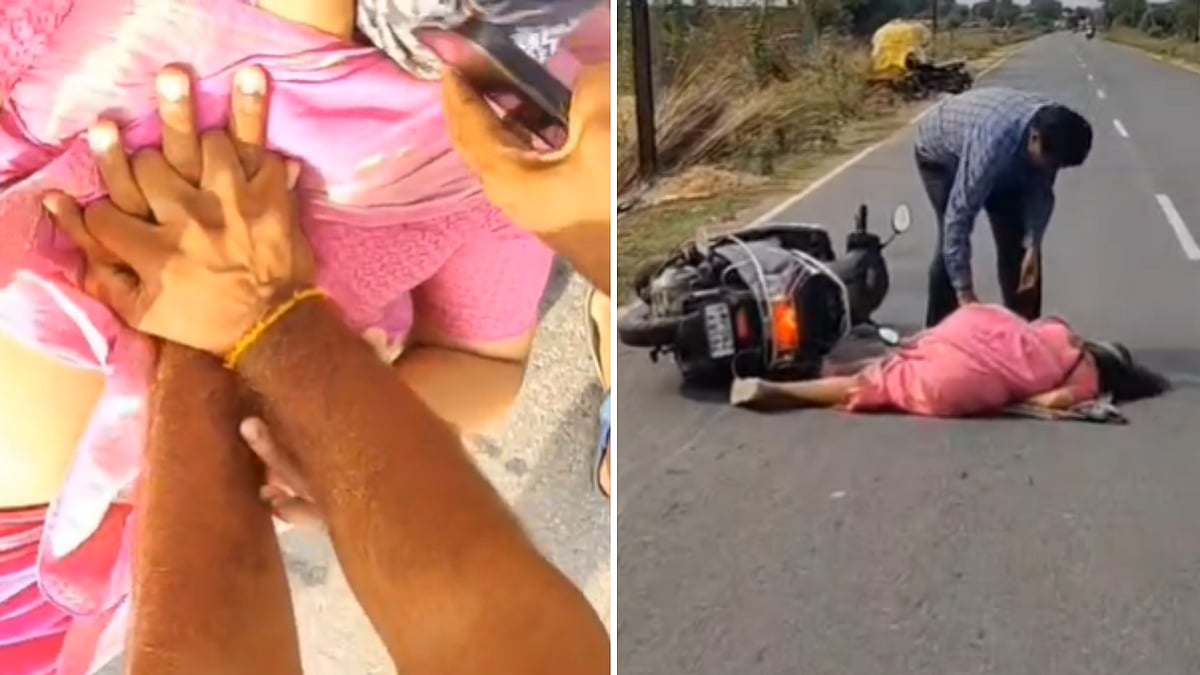
Morena (Madhya Pradesh): A school teacher in Madhya Pradesh’s Morena district suffered a heart attack on National Highway-552 and was fortunately saved after two youths promptly administered CPR.
The matter came to light through a video circulating on social media, which showed the woman lying on the road, half-conscious, while the youths administered CPR. Later, the teacher was rushed to the hospital and is said to be in stable condition at present.
What actually happened?
According to information, the incident took place around 9 am near Bhurabali crossing when teacher Lalita Dhakad, who was on her way to school on a scooter, suddenly collapsed by the roadside. The sudden fall created panic among people nearby.
At that moment, social worker Suraj Dhakad and his friend Pawan Gurjar happened to be passing by. Seeing the teacher in a serious condition, they immediately stopped and began CPR without wasting time. After a few minutes of effort, the woman’s breathing returned and her condition started to improve.
The two youths then rushed her to Kailaras Hospital in their vehicle. After first aid, doctors referred her to Gwalior for better treatment. Her family was also informed and reached the hospital soon after.
Doctors said that the first few minutes are extremely crucial in heart attack cases, and timely CPR can significantly increase the chances of survival.
The quick response and awareness shown by the two youths helped save a life, highlighting the importance of basic first-aid knowledge like CPR in emergency situations.
How to administer CPR?
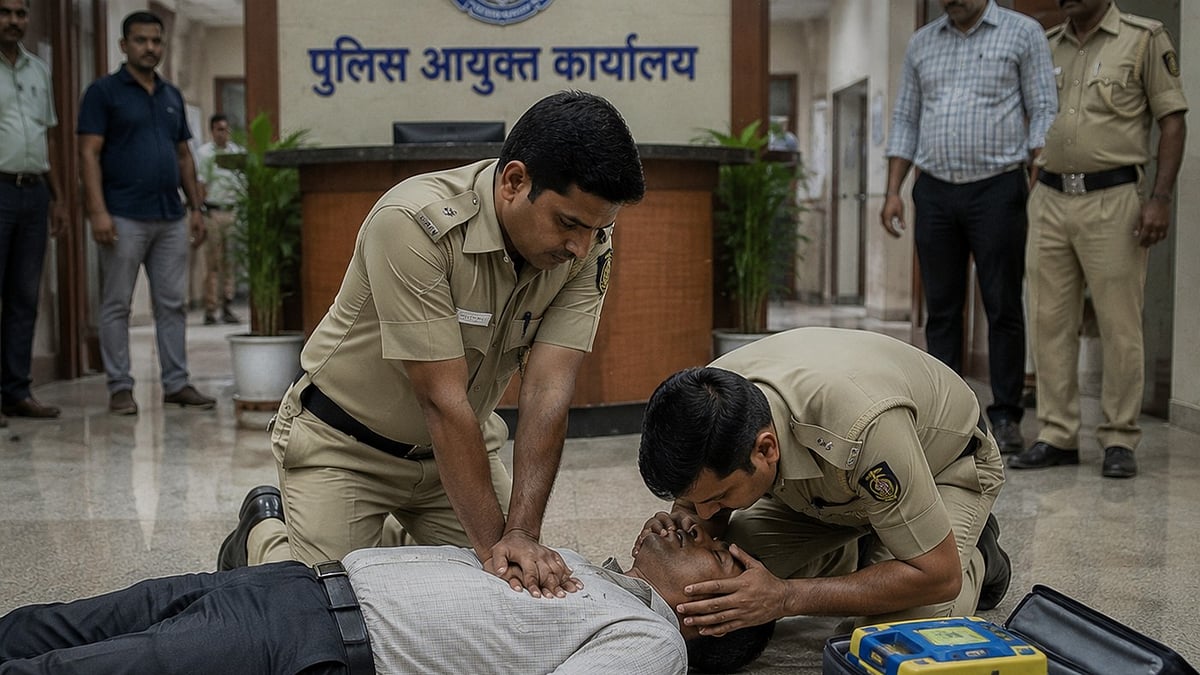
CPR begins by checking the scene for safety, tapping the person to check responsiveness, and calling emergency services immediately while seeking an AED.
The person should be placed on a firm surface, and chest compressions should be given by placing both hands in the center of the chest and pushing hard and fast at 100–120 compressions per minute.
If trained, two rescue breaths can be given after every 30 compressions; otherwise, hands-only CPR should continue.
CPR must be maintained without interruption until medical help arrives, an AED is available, the person shows signs of life, or the rescuer becomes too exhausted to continue.