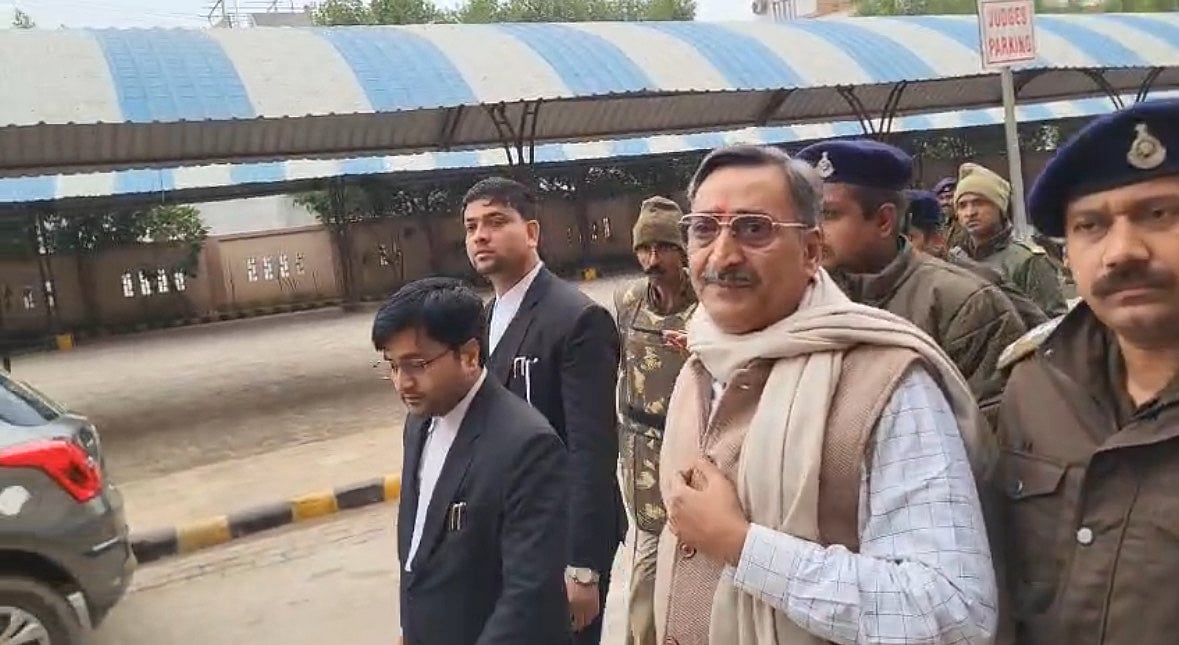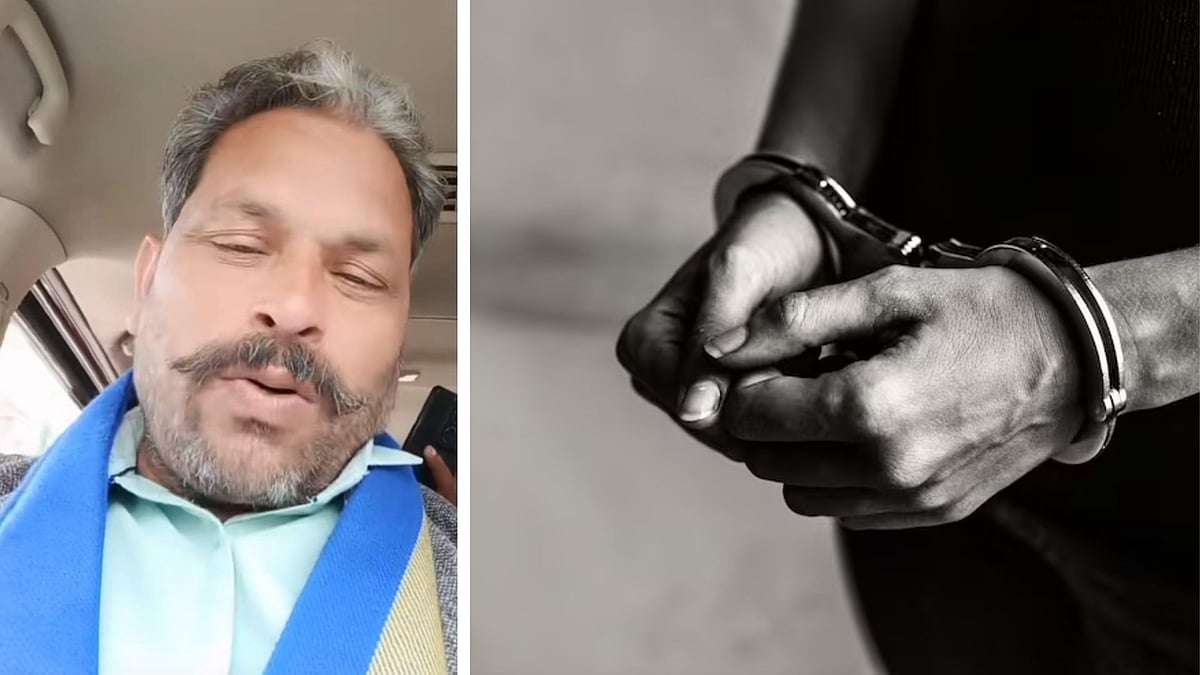
Gwalior (Madhya Pradesh): Dalit leader Makarand Baudh, the complainant in the FIR registered against advocate Anil Mishra in the Ambedkar post controversy, was arrested in Madhya Pradesh's Gwalior on Monday.
According to reports, the Gwalior police presented Baudh in court, and a warrant was issued for his imprisonment for participating in the protest.
With the Dalit leader now in jail, both sides in the Ambedkar poster controversy are now on equal footing. Speculation suggests the arrests from both the sides is a deliberate strategy adopted by the police to restore peace.
Dalit leader Makarand Baudh had gone to the university police station in Gwalior to discuss a case. A constable informed Station House Officer Ravindra Kumar that Baudh was an accused in a case under Sections 188 and 146 of the IPC from 2016-17. He had been consistently failing to appear in court in this case, leading to the issuance of warrants against him, and an arrest warrant had been issued just a few days ago.
The University Station House Officer, Ravindra Kumar immediately instructed his team to execute the arrest warrant against Makarand Baudh. However dalit organisations are calling Makarand's arrest and imprisonment a police conspiracy.
Since a long time now, both the factions have been at loggerheads in Gwalior over Bhimrao Ambedkar, the architect of the Indian Constitution. One faction is anti-Ambedkar, while the other is campaigning in support of Ambedkar.
On Wednesday, Dalit leader Makarand Baudh filed a complaint with the Crime Branch regarding the burning of a poster resembling Ambedkar. Following this, a case was registered against advocate Anil Mishra and seven others at the Crime Branch police station.

On Thursday night, the police arrested advocate Anil Mishra and four other accused.During a court hearing on Sunday, the judge observed that the complainant also has the right to be heard and directed the police to issue a notice to Baudh regarding the proceedings.
ASP Vidita Dagar stated that Baudh’s arrest was solely based on the execution of a pending warrant in the old case and was carried out as per legal procedure.