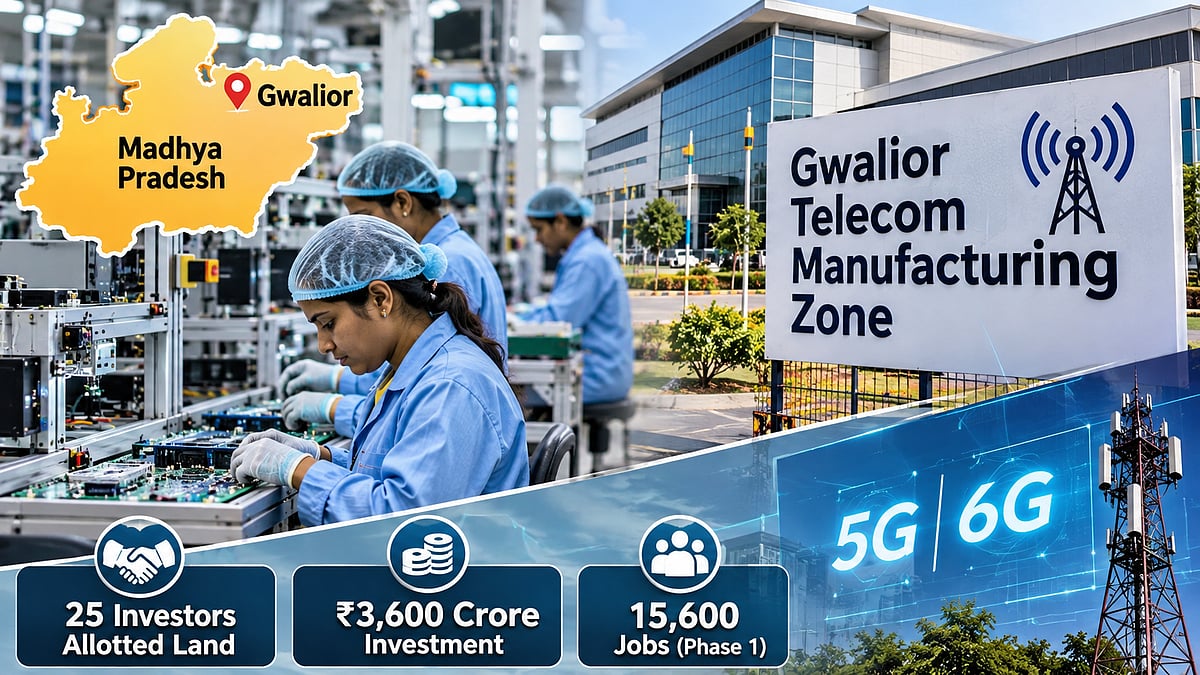
Bhopal (Madhya Pradesh): The Centre and the Madhya Pradesh government issued letters of intent for land allotment to 25 investors for the Telecom Manufacturing Zone in Gwalior, Union Communications Minister Jyotiraditya Scindia said on Thursday.
The first phase of the project secured investment commitments worth approximately ₹3,600 crore and was expected to generate 15,600 jobs, he said.
"The Department of Telecommunications and the Government of Madhya Pradesh have collaborated to issue land allotment approval letters to the first 25 investors," Scindia told reporters on the sidelines of an investors' meet held in Bhopal.
Madhya Pradesh Chief Minister Mohan Yadav also attended the event.
MP Cabinet Allocates Additional 450 Acres
Scindia said the Madhya Pradesh Cabinet allocated another 450 acres of land for the zone on Wednesday to accommodate six companies, in addition to the 170 acres already provided for the first phase.
"Their investment will amount to approximately ₹1,400 crore and is set to create another 2,000 to 3,000 jobs," he said.
Scindia estimated that the overall project would generate approximately 18,000 jobs.
Centre Allocates ₹493 Crore For Infrastructure
The Department of Telecommunications and the Madhya Pradesh government signed an agreement in July to establish the manufacturing zone.
The Centre allocated ₹493 crore to develop core infrastructure for the first phase.
According to the Ministry of Communications, the state government provided the initial 170 acres free of cost, comprising 100 acres in the SADA region and 70 acres in Gwalior IT Park.
Both governments established a joint entity to develop the project, with the Madhya Pradesh government holding a 51% stake and the Department of Telecommunications holding the remaining 49%.

Focus On 5G, 6G And Telecom Equipment Manufacturing
The Ministry of Communications said the zone would bring manufacturing and research activities together, covering products such as mobile devices, optical fibre and telecom equipment.
It would also support the development of 5G and 6G technologies as part of the government's efforts to reduce dependence on telecom imports and boost exports.