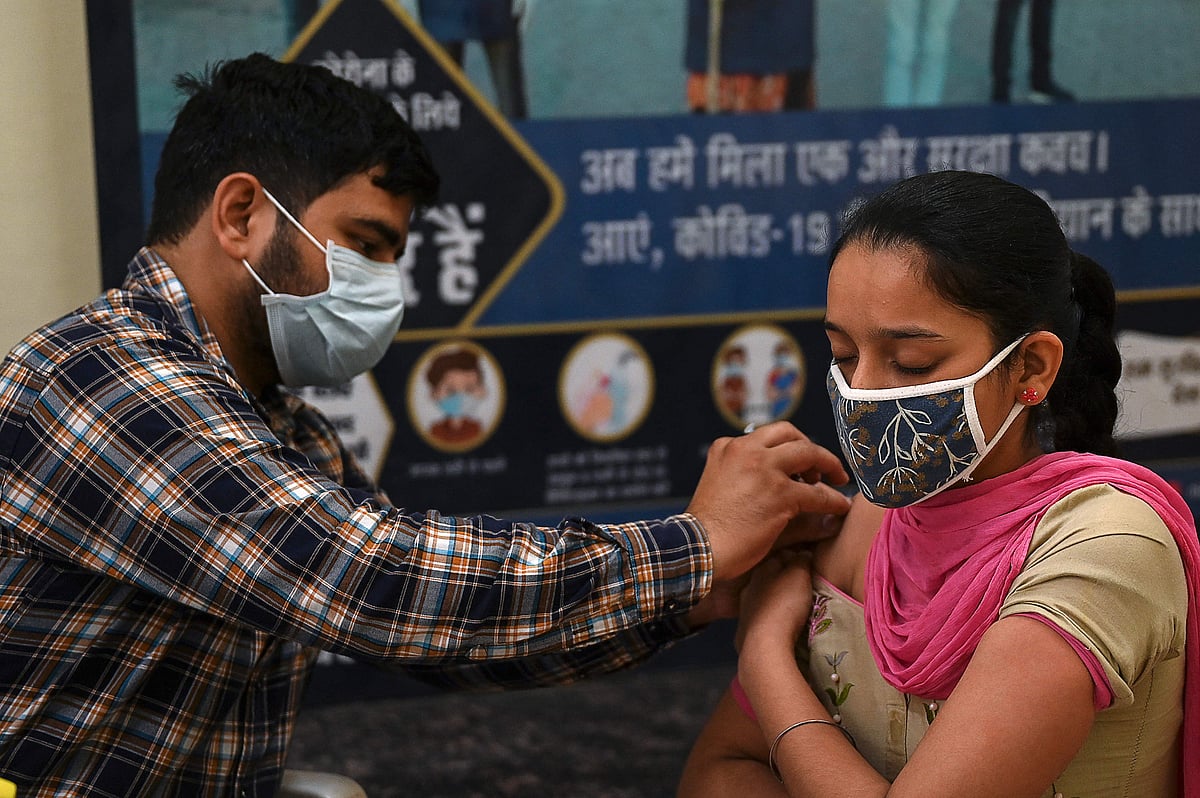
BHOPAL: A few NGOs have used working models, poems, songs, jingles, puppetry, pamphlets, slogans painted on the back of trucks, doctorsí helpline, webinars and group meetings to overcome vaccine hesitancy in the urban and the rural areas of the state.
They say that there are all sorts of misapprehensions about Covid-19 vaccination among the people, right from big cities to small towns to rural areas to tribal hamlets.
People fear that the jabs would kill them; make them infertile or infect them with the disease. They also have a long list of queries including which vaccine is better, whether menstruating women can get the jabs and so on.
Here is the take of NGO representatives and social activists on how they are countering the misinformation and persuading the people to get vaccinated.

Holding doctors' webinars to clear doubts
We are spreading awareness about vaccination through four different channels. First, we have our doctorsí helpline, on which about 30-40% questions are about vaccination. People ask which vaccine is better, whether they should get vaccinated if they have got infected, whether they should take the second dose if they got infected after the first and so on. Second, we are distributing three pamphlets - on vaccination, on Covid-19 symptoms and on black fungus - along with dry rations in the rural areas. Third, we organise webinars every week, in which doctors answer questions about vaccination. Fourth, the doctors at Community Health Clinics spread awareness. Vaccine hesitancy is there in both urban and rural areas, though the factors are different. In rural areas, they fear that they would die or get infected with the disease. In urban areas, the educated people start quoting studies which they have read. Covid-19 has changed the discourse around vaccination. We have to adopt different strategies for different classes of people." -Sarika Sinha, director Policy Campaigns & Communications Action Aid Association

Painting slogans on back of trucks
We have conducted awareness drives in 21 blocks of Bhopal, Hoshangabad, Sehore and Vidisha districts. We have an awareness vehicle fitted with a screen. The vehicle moves from one place to another. Earlier, we used to display messages on Covid-appropriate behaviour on the screen. Now we display messages on vaccination from doctors, scientists, dieticians and the district collectors on the need to take vaccines. We have also recorded songs, which we play. When our team reaches a village, they knock at the doors of the homes and ask the residents whether they are vaccinated. If the answer is no, we try to persuade them to go for vaccination. Our volunteers also help in managing things at vaccination centres. All this we have been doing since February. Since last week, we have started painting slogans on the back of trucks. The slogans are attractive. One of them is: ëDekho magar pyar se, corona darta hai vaccine ke maar seí. These slogans have also been painted on the back of the tankers of Sanchi Dugdh Sangh. These trucks are carrying the messages to different areas of the state and the country. There are all sorts of myths about vaccination, including that vaccines would make people infertile." -Monika Jain, director, Search and Research

Invite vaccinated peole to narrate their experience
There is so much resistance to vaccination in the rural areas and especially in the tribal villages that vaccination and awareness teams are driven away by the people. The people think that Covid-19 cannot enter their villages and that getting vaccinated would be like inviting the disease. So, what we are doing is that first we are persuading Panchayat members and educated youth to get vaccinated. And then we are going to the villages with them. We gather the villagers in small groups and the vaccinated person narrates his experience. Due to the lockdown, our awareness campaign was online in April and May. We have started a physical campaign from June 3." -Vimal Jat , director, Synergy Sansthan, Harda

Awareness through parodies, jingles
We have used parodies of film and folk songs to tell people why they should get vaccinated and why they should not fear vaccination. I have also written some poems and jingles. We are also using working models and puppetry. We have made 10-15 working models which talk about how things are before the vaccination and how they change after it. Our main focus is on tribal areas of Jhabua, Alirajpur, Betul and other districts as well as tourist places like Pachmarhi. There is a strong resistance to vaccination but I feel that if we hold a programme of an hour or more in a village, it does make some difference." -Sarika Gharu, science communicator

