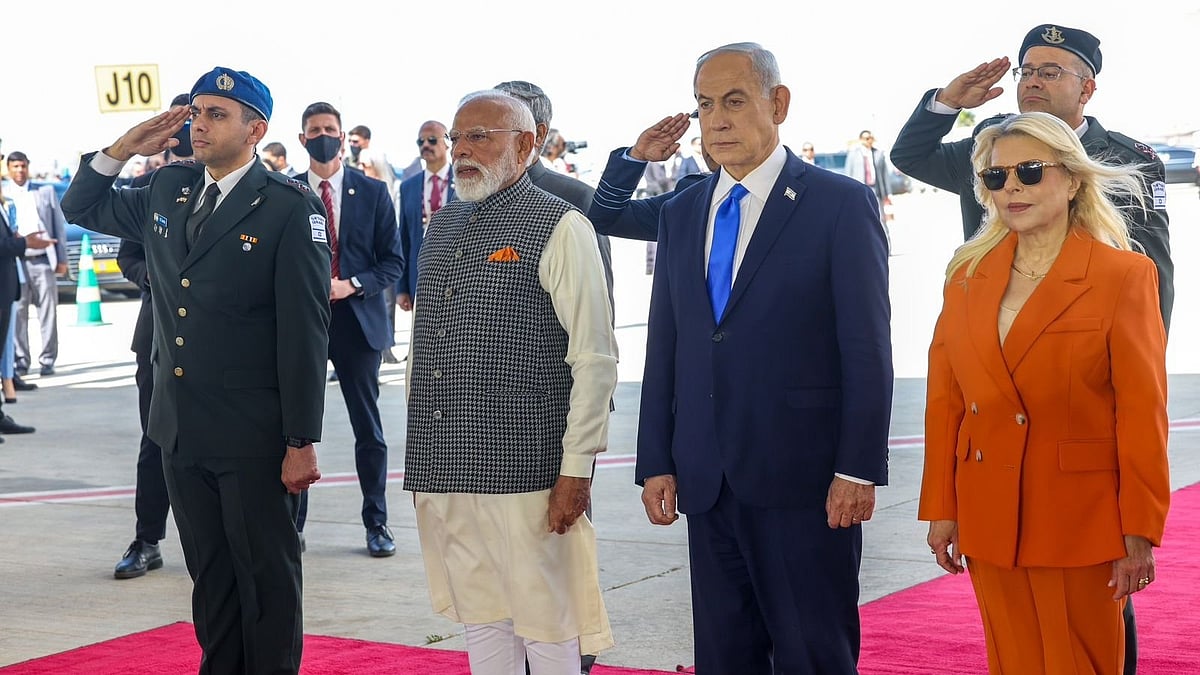
Prime Minister Modi’s recent visit to Israel marked a change from the traditional parameters by which India viewed the India-Israel relationship. The bonhomie was seen during the prime minister’s first visit in 2017 when ties between India and Israel were strengthened to a Strategic Partnership but this visit is different for a number of reasons, most notably the timing.
The fact that the prime minister chose to make the visit when Israel is largely isolated on the international stage and to do so when possible war is imminent between the US and Iran signals a personal commitment that has gone far beyond the traditional framework of defence cooperation. This fact was not lost on Israel, something that President Isaac Herzog made clear when he said Israel can be an “essential part of the great future of India.”

The Israeli president’s words sum up the way New Delhi feels about Tel Aviv. Not only does India see Israeli technology as crucial, but it also believes Tel Aviv can best help India navigate a West Asia that is in churn. The recently signed defence pact between Saudi Arabia, Turkey, and Pakistan has caused India to gravitate towards what it sees as its two natural partners in the region—Israel and the UAE. Both nations can help India in its goal to counter China’s BRI in the region, and though political realities render IMEC impossible, India is pushing for the next best thing, an I2U2, which will enable greater cooperation between the three nations without requiring physical infrastructure.
There is also a maritime defence component to the relationship. The UAE has economic influence over a number of ports belonging to Horn of African nations, and by partnering with it and Israel, India can better secure its interests in the Red Sea.
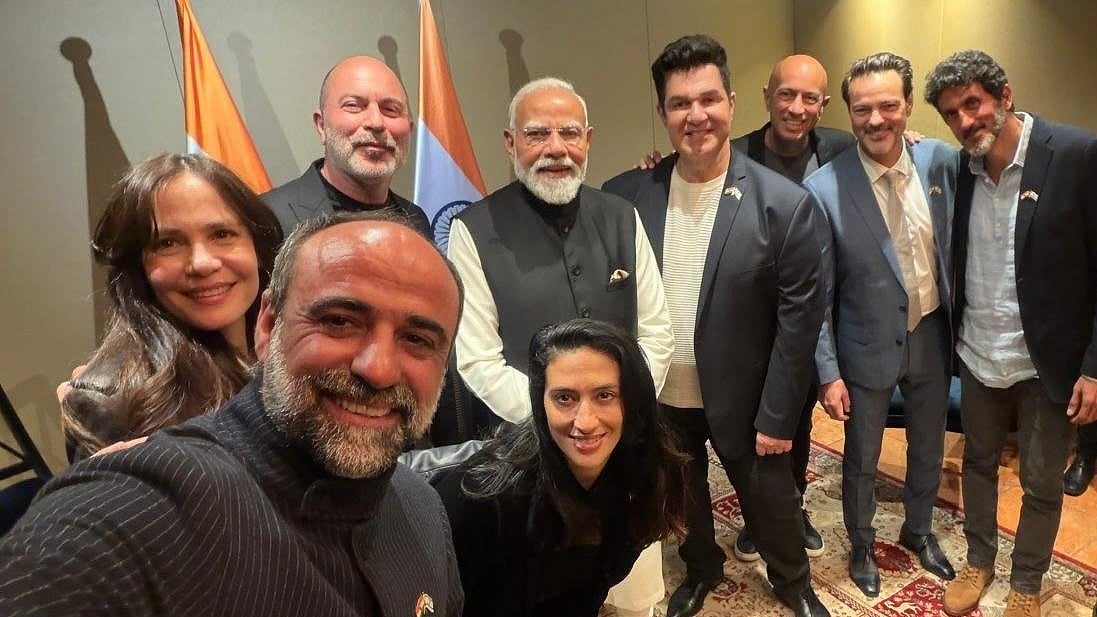
India’s pivot towards Israel will not come without challenges. Questions were asked about New Delhi’s stance on a two-state solution when India did not immediately sign on to a joint statement criticising Israeli actions in the West Bank. Such actions could hurt India’s credibility as a voice for peace among Arab nations, an image it built up when it became the first non-Arab nation to recognise the PLO in 1974. New Delhi also needs to balance the concerns of other Arab allies and Iran.
Despite being weakened, Iran remains crucial to India’s geostrategic concerns, and the prime minister’s visit will not have gone unnoticed in Tehran. Most notably, anger against Prime Minister Netanyahu over the Gaza war by Global South nations could hurt India’s bid to be a “voice for the Global South.” Prime Minister Modi’s Israel visit brings opportunities but many challenges as well, and India will have to navigate with care to ensure its energy security, the welfare of its diaspora, and its international standing remain unchallenged.

