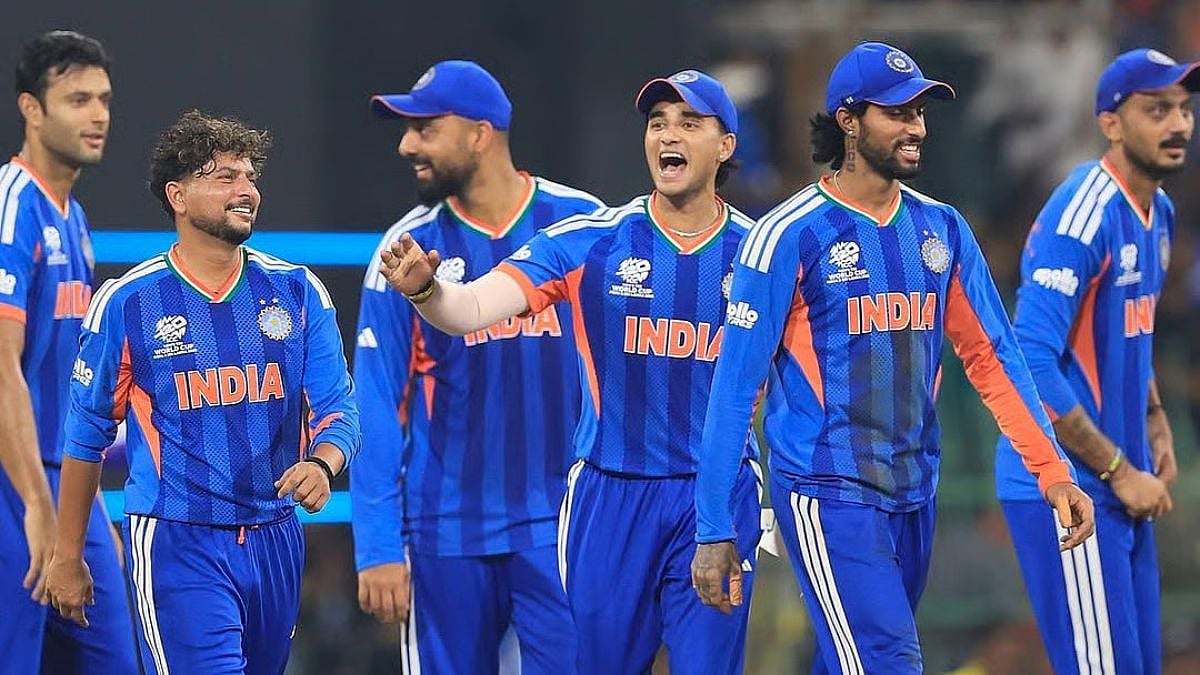
After all the political drama and grandstanding, the India/Pakistan group match in the ICC World T20 at Colombo on Sunday turned out to be another one-sided affair in favour of India, continuing a pattern in ICC white-ball tournaments.
The two subcontinental countries first met in the 1992 ODI World Cup at Sydney, and since then India has maintained a clean slate with an awesome 8-0 record. In the T20 version, India has lost just once in nine encounters, while in the Champions Trophy, it is locked at 3-3.
This is a far cry from the 1970s and 80s, when Imran Khan and Javed Miandad helped Pakistan maintain a stranglehold over Indian cricket in Sharjah in particular, all of which now lies in the distant past.
For decades, Indian cricket suffered trauma after Miandad’s last-ball 6 off the hapless Chetan Sharma to win the final of the Austral-Asia Cup at Sharjah forty years ago this April. Today, Indian cricket fans, most of whom were not even born back then, can rightly rejoice with the tables having been decisively turned.
Political drama and ICC intervention
Till last week, there was a cloud of uncertainty whether the match would be staged at all, with the PCB chief and interior minister, Mohsin Naqvi, who had spirited away the Asia Cup after India beat Pakistan in the final in Dubai last September, being the main protagonist in the unseemly drama.
It took some not-so-subtle arm-twisting by the ICC, including the threat of withering financial penalties, to get Naqvi and his prime minister to back down from their threat, which was ostensibly in support of Bangladesh, a decision they will probably now regret after the crushing 61-run defeat.
That too after winning the toss on a pitch that no batsman on either side, save for India’s dynamic wicketkeeper Ishan Kishan, was able to master. Even Colombo’s notoriously fickle rain, widely expected to disrupt the match, decided to stay away.
The other topic that was the focus of attention was whether the two captains would shake hands or not at the toss, with India refusing to do so with Pakistan at any level since the Asia Cup.
That it did not happen was just another sideshow in what is now becoming a predictable match with India’s so-called archrivals. Surely, it is time the ICC stopped this farce of clubbing them together in the same group.

