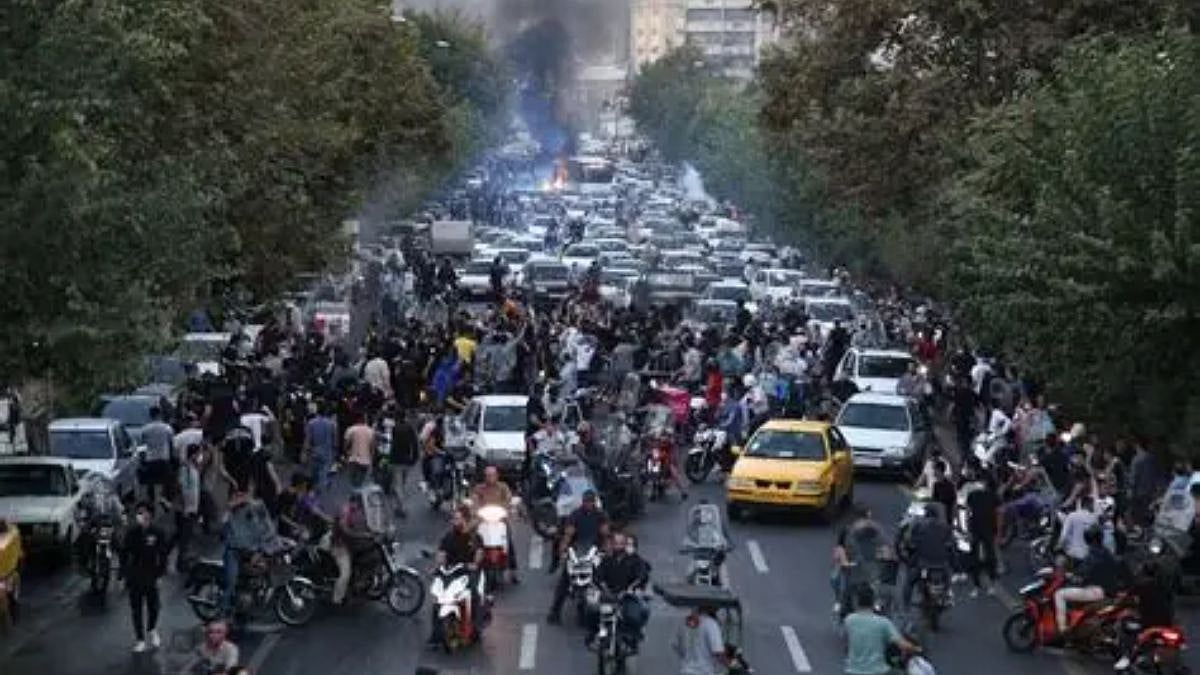
New Delhi: As the protests continue in Iran, the main question being asked in Delhi’s diplomatic circles is whether the Islamic regime will fall. As of now this doesn’t seem imminent. Experts say the protests have by and large been urban-led, and rural people, who are more religious, are still following the diktats of the clergy.
The clerical regime also maintains its power through the networks of clerics they have all over the country. These clerics have a powerful hold in rural communities, villages, and small towns where residents listen to the local imam. It isn’t just religion that drives loyalty towards the regime. Recruits for the Islamic Revolutionary Guards Corps (IRGC), the Pasdaran—Iran’s elite military force, and the Basij—the paramilitary volunteer militia working for the IRGC— are taken from this section of society, and great care has been taken by the regime to ensure that they do not suffer.

Therefore, they provide them with perks such as subsidised petrol and basic food, among other things. This social contract has ensured the Islamic regime’s power despite protests. At the same time three factors could play a crucial role. The first is that economic sanctions have put enormous pressure on the Islamic regime. The collapse of the Iranian rial and spiraling inflation have put pressure on the social contract, ensuring that sections of society such as the bazaaris, who would never have protested, are now protesting. Bazaaris are the traditional merchant class of Iran who have long-standing ties with the Islamic regime.
Their entry into the protests has made the situation more volatile. The second reason is Iran’s defeat at the hands of Israel in the 12-day war. This has added to the powder keg. Iranians see themselves as a civilizational state, and to be defeated is unthinkable for them. The third: Iranians are sick of the rampant corruption exercised by Iranian state officials, which has caused the protests to continue. Can the regime survive the protests? There is no mass opposition leader, with Iranian dissident Reza Pehlavi having no support in the country or even within the diaspora, which is highly critical of the regime.
Also, Iran's population comprises a number of ethnic groups. Only 50% of the people are Iranian, with the rest being Kurds, Balochis, and Gulf Arabs, making up the rest. How much of a mass opposition force could this comprise? Yet, each could pull in different ways in different directions. Presently, the regime seems to be able to handle things, but if more groups join, it could lead to fluidity. One key group to watch is the oil workers in Khuzestan. Located in southwestern Iran, Khuzestan is home to Iran’s largest and oldest oil fields.
Their work provides much of Iran’s revenue and the subsidies that state officials enjoy. This group overthrew the Shah of Iran with their protests and strikes and should they choose to protest here, it will make things very difficult for the regime. It remains to be seen what the US president plans. Iran is not Venezuela, it is a much larger country, and to control the oil sector in the country will be difficult. Even if Trump were to depose the regime, it would be very difficult to get US oil companies to invest in Iran. The US has not yet managed to do it in Iraq.
Trump may want regime change, but his citing of President Jimmy Carter, who lost the presidency after a failed operation by the US to rescue the 59 embassy staff kidnapped in Tehran, suggests he is aware of the dangers of achieving this militarily. Gulf nations are likely to reach out to the US, as they do not want the situation to deteriorate. Qatar or Oman could play a role in bringing about a deal. This is a likely outcome given that US envoy Steve Witkoff held Oman-mediated talks with Iranian officials in April last year. The question is : what kind of a deal?
The American president has chosen to adopt a wait-and-watch approach by levying 25% tariffs on countries that continue to do business with Iran. More tariffs are not likely to affect Iran unless the UAE takes an active part. Currently, Iranian exports, which include oil and non-oil goods, are routed through Iran’s main southern port of Bandar Abbas to Dubai. From there they are sold to the rest of the world. The US and European nations have sought to crack down on this practice through sanctions, but the use of paper companies, middlemen, and oil transfers at sea has complicated the task. Beijing currently imports 80% of Iranian oil.

