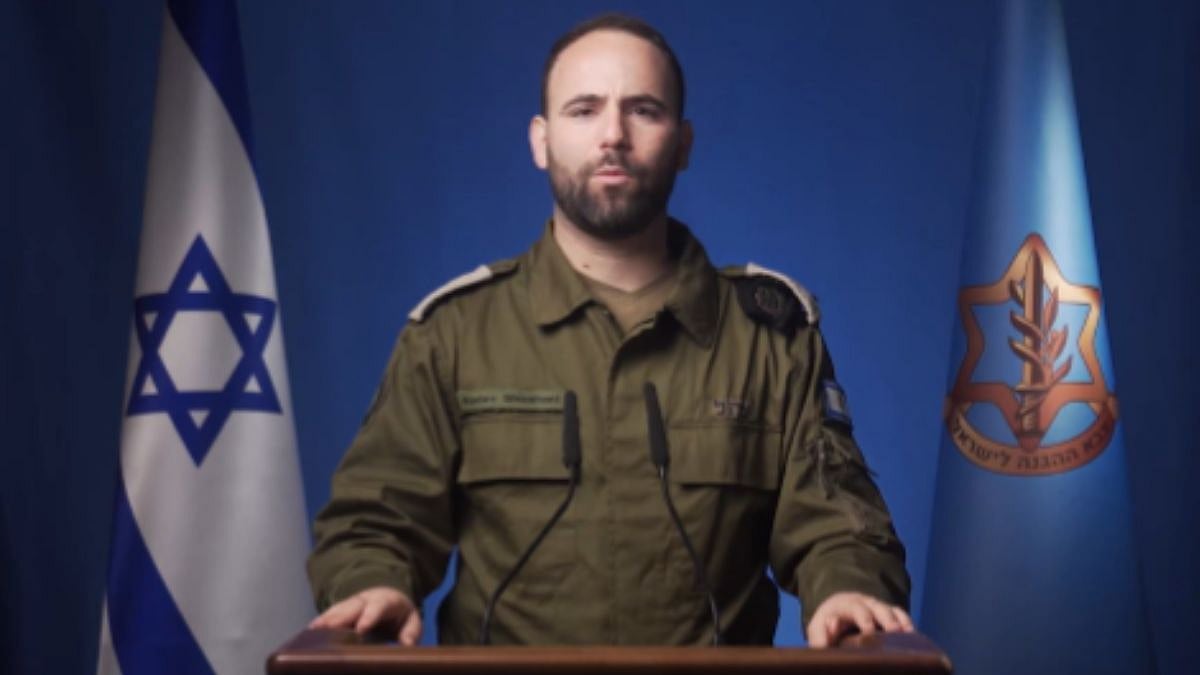
The Israel Defense Forces on Monday claimed it carried out precise strikes on top Hezbollah 'terrorists' in Beirut, along with dozens of Hezbollah and Iranian command centres. The IDF also said that that it hit a weapons storage site near Tyre, saying it is prepared for a multi-front scenario to counter threats to Israel and its civilians.
"In response to the rockets fired from Lebanon to Israel, the IDF precisely struck senior Hezbollah terrorists in Beirut, dozens of Hezbollah & Iranian terrorist regime command centers, and a site that was used by Hezbollah to store weapons in the Tyre," IDF Said.
"The IDF is prepared for a multiple-front scenario and to combat any threat posed to Israel and Israeli civilians," IDF added.
Lebanese Prime Minister Declares Hezbollah’s Military Activities 'Illegal'
Lebanese Prime Minister Nawaf Salam declared Hezbollah’s military activities “illegal acts” and called on the group to hand over its weapons. The development comes hours after fresh Israeli strikes in response to the militant group's missile attacks.
Salam said the government “absolutely rejects any military actions launched from Lebanese territory outside the framework of legitimate institutions,” according to Al Jazeera. He further said that Hezbollah’s role must be confined to the political sphere. He added that state military institutions should enforce the decision.
He also announced that Lebanon is ready to resume negotiations with Israel, with the participation of civilian experts and international backing, reaffirming Beirut’s commitment to the 2024 ceasefire agreement between the two sides.
The US–Iran–Israel conflict entered its third day on 2 March 2026, with sustained aerial bombardment and retaliatory action intensifying across the region.
The coordinated campaign, codenamed Operation Epic Fury by Washington and Operation Roaring Lion by Israel, began on 28 February with large-scale strikes targeting strategic Iranian military and leadership assets.
Iranian state media confirmed the death of Supreme Leader Ayatollah Ali Khamenei, 86, who was killed in a missile strike on his secure compound in Tehran. Reports indicate the operation was based on long-term intelligence assessments, including inputs reportedly shared by US agencies with Israeli counterparts.
In addition to Khamenei, multiple senior figures were killed during the opening wave and subsequent strikes, including high-ranking commanders of the Islamic Revolutionary Guard Corps and influential political leaders believed to be part of Iran’s succession framework. Among those reported killed was senior official Ali Shamkhani, further deepening the leadership vacuum within Tehran’s power structure.
The conflict remains largely air-driven, with missile and drone exchanges dominating the battlefield. However, its ripple effects are increasingly visible across West Asia, with allied militias and regional actors responding in ways that risk widening the confrontation.
Military analysts describe the situation as highly volatile and fast-moving, warning that the elimination of Iran’s top leadership has dramatically altered the strategic landscape. While the primary engagement remains aerial, the potential for a broader, multi-front escalation continues to grow as both sides signal readiness for sustained operations.

