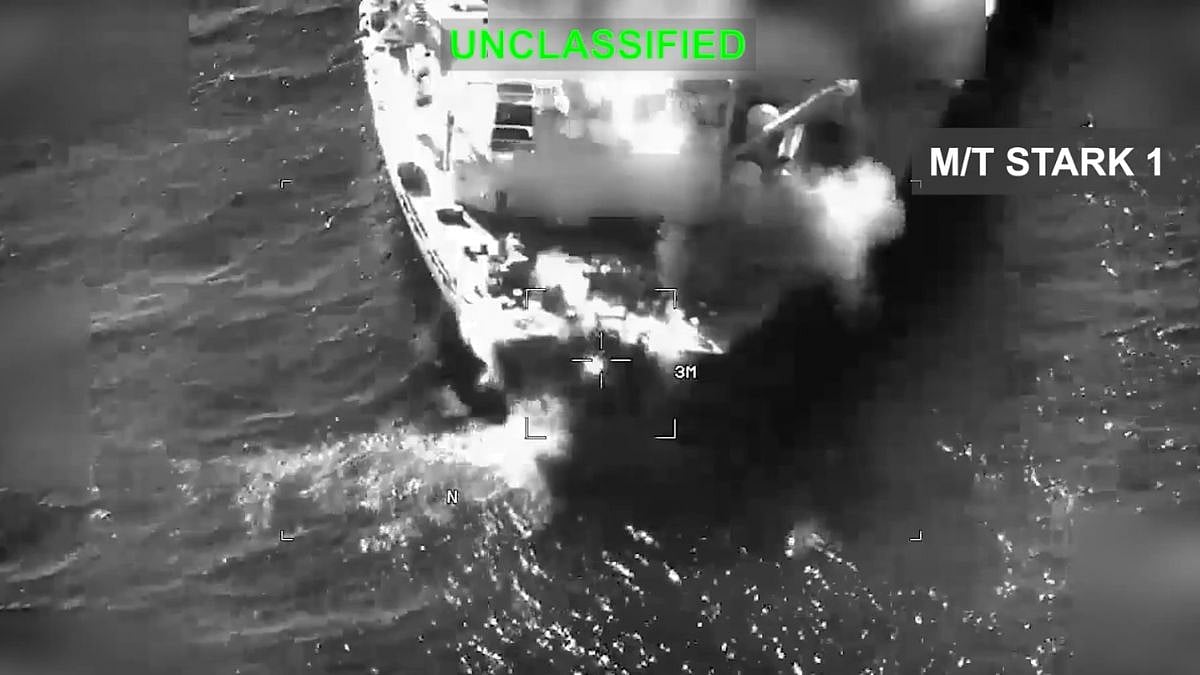
Cairo: The US military on Saturday said it struck three Iranian oil tankers after Navy warships were targeted with missiles, warning that it would “if necessary, destroy Iran’s limited and exposed oil fleet.”
The military’s statement said a US aircraft carrier and a destroyer evaded “multiple unprovoked Iranian attacks” while patrolling in the region and no US personnel were hurt. It said two Iranian oil carriers were “permanently disabled” and the third, unladen one, was destroyed.
The US statement said the tankers were part of a shadow network helping to fund Iran’s powerful Revolutionary Guard and its armed proxies in the region.

Earlier, Iran accused the US of attacking an Iranian tanker near Kharg Island in the Persian Gulf.
The US said one tanker was struck off Kharg Island and another was struck near Jask. The unladen tanker was hit in the Gulf of Oman. The statement shared what it called video footage of the strikes.
The strikes came nearly a week after the US and Iran resumed attacks following a month of relative calm in the on-again, off-again war that began with US and Israeli attacks on February 28. Both sides have sought to inflict both military and economic pain, and negotiations have collapsed.
(Except for the headline, this article has not been edited by FPJ's editorial team and is auto-generated from an agency feed.)

