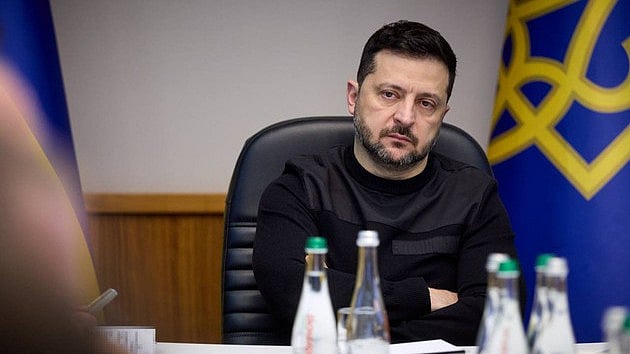
Kyiv [Ukraine], November 29: Ukraine on Saturday said it would restrict media outlets from publishing details about the impact of Russian strikes on critical infrastructure, tightening wartime reporting rules as Moscow steps up attacks on the country's energy grid ahead of the winter season.
Ukraine Tightens Wartime Media Restrictions
Under a decree signed by President Volodymyr Zelenskyy enacting a decision by the National Security and Defence Council (NSDC), the government was ordered to "take urgent measures to prohibit the media from covering information about the consequences of destruction and the timing of the restoration of critical infrastructure facilities".
The restrictions also bar news outlets from reporting on "the stages and status of the construction of protective structures at critical infrastructure facilities in the fuel and energy sector and the population's livelihoods sector, in particular, those provided for by the Comprehensive Resilience Plans of regions and individual cities".
Since Russia launched its full-scale invasion in 2022, Kyiv has enforced strict wartime censorship, with officials repeatedly arguing that publicising strike damage and repair schedules helps Moscow assess the effectiveness of its barrages and plan follow-up attacks.
However, the decree did not specify how the ban would be enforced or what penalties outlets could face for violations.
Security Measures Ahead Of Winter
In justifying the heightened secrecy for the 2026/27 heating season, the security council pointed to ongoing "damage and destruction as a result of the military aggression of the Russian Federation throughout the territory of Ukraine" against energy and life-support systems "critically important for the functioning of society".
Officials also warned of "the high probability of the aggressor's further use of the tactics of massive air strikes on these facilities".
Alongside the media curbs, Zelenskyy's order directs the Cabinet of Ministers to deploy electronic warfare and active defence systems at priority energy sites within a month, while instructing regional administrations to expand backup power supplies and prepare residential buildings for winter blackouts.
The crackdown comes amid a renewed wave of Russian bombardments targeting power substations and grids across Ukraine in recent weeks, triggering widespread outages in regions including Kyiv, Odesa, and Mykolaiv.
Trump Calls For De-Escalation
Earlier on Thursday, US President Donald Trump said he wants Russian President Vladimir Putin to "pull back military aggression" across Europe, expressing hope that a peace agreement between Moscow and Kyiv could be reached soon.
Trump's remarks followed a day after his meeting with NATO Secretary General Mark Rutte at his Mar-a-Lago residence in Florida.
This comes amid renewed US diplomatic efforts to bring an end to the Russia-Ukraine conflict and establish a broader security framework for Europe, including discussions involving Moscow, Kyiv and European partners.
US-Led Diplomatic Efforts To End Conflict
In November, the Trump administration initiated a fresh round of US-mediated diplomatic engagement between Russia and Ukraine, with delegations from the two countries holding talks in Abu Dhabi on November 10 and 11. The discussions focused on security guarantees and possible steps towards ending the conflict.
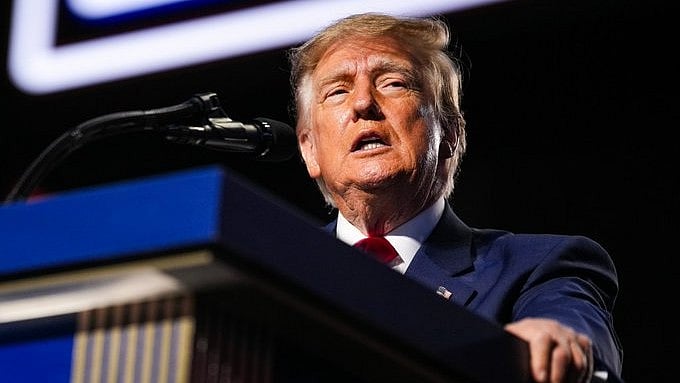
Following the Abu Dhabi discussions, US President Donald Trump's special envoys Steve Witkoff and Jared Kushner held talks with Russian President Vladimir Putin in Moscow and subsequently met Ukrainian President Volodymyr Zelenskyy in Dublin.
The US administration has also sought to bring European representatives into the wider negotiating process, with discussions involving officials from Germany, France, the United Kingdom, Italy, NATO and the European Union on Ukraine's security guarantees and Europe's future security arrangements.
India And EU Call For Peace
Meanwhile, India and the European Union on Friday called for a comprehensive, just and lasting peace in Ukraine, strongly condemned terrorism and cross-border terrorism, and stressed the need for a free, open and peaceful Indo-Pacific during the 12th India-EU Foreign Policy and Security Consultations (FPSC) held in the national capital.
Also Watch:
The consultations were co-chaired by Secretary (West) in the Ministry of External Affairs (MEA), Sibi George, and Olof Skoog, Deputy Secretary General for Political Affairs of the European External Action Service.
According to the joint press release issued after the meeting, both sides "underscored the need for a comprehensive, just and lasting peace in Ukraine in accordance with international law and the principles of the UN Charter".
Level up your brain the fun way. Play daily games and quizzes on FPJ Smart!
(Except for the headline, this article has not been edited by FPJ's editorial team and is auto-generated from an agency feed.)

