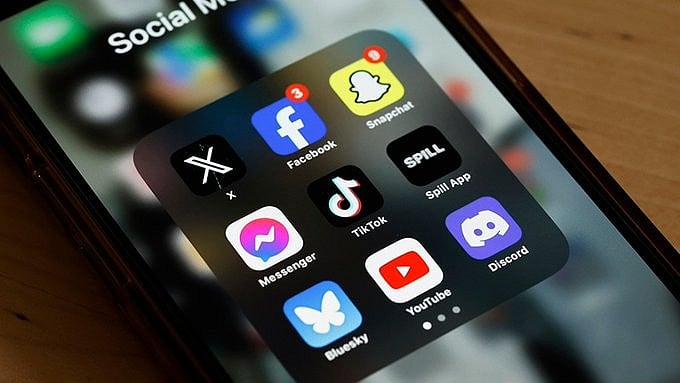
The UK government on Wednesday announced plans to introduce a voluntary overnight social media curfew for 16 and 17-year-olds as part of its efforts to reduce online harm among children. It also proposed disabling features that encourage prolonged use, such as autoplay videos, by default for older teenagers.
The measures follow last month's announcement of a social media ban for children under 16. The ban, expected to take effect from next spring, will cover platforms including Snapchat, TikTok, YouTube, Instagram, Facebook and X, but will exclude messaging services such as WhatsApp and Signal.
The proposals, among the final initiatives of the government led by Prime Minister Keir Starmer, will require legislation. It is widely expected that his anticipated successor, Andy Burnham, will continue with the plans, AP reports.
Government Defends Voluntary Measures
Critics have questioned whether the proposals will be effective, noting that teenagers can simply disable the default settings.
However, Online Safety Minister Kanishka Narayan rejected that argument, saying it is a "disservice" to assume teenagers would ignore the safeguards. He cited a recent pilot programme involving more than 300 teenagers and parents across the UK, which found that overnight social media use declined significantly while sleep and concentration improved.
"In October, for example, some platforms introduced these defaults of this sort – 90%-plus teenagers said to us that they've maintained those defaults as well," he told Sky News. "And so the evidence base is clear, the motivation is very clear and I wouldn't do the disservice to teenagers of saying they're all going to switch it off."
Child Welfare Groups Seek Stronger Action
The NSPCC, the UK's leading children's charity, welcomed the proposals but said they would not be sufficient without tougher measures to address addictive platform features.
"Unless they're followed up with further, stronger measures they will be a sticking plaster that fails to address the addictive design features which are driving high screentime and undermining children's wellbeing," said NSPCC chief executive Chris Sherwood.
Also Watch:
Rachel de Souza, the Children's Commissioner for England, described the move as a "positive step", saying many young people want to reduce their social media use but struggle to do so.
"I want to know more about how the policies, such as a curfew, will be delivered and will be watching closely to make sure they are effective," she said.

