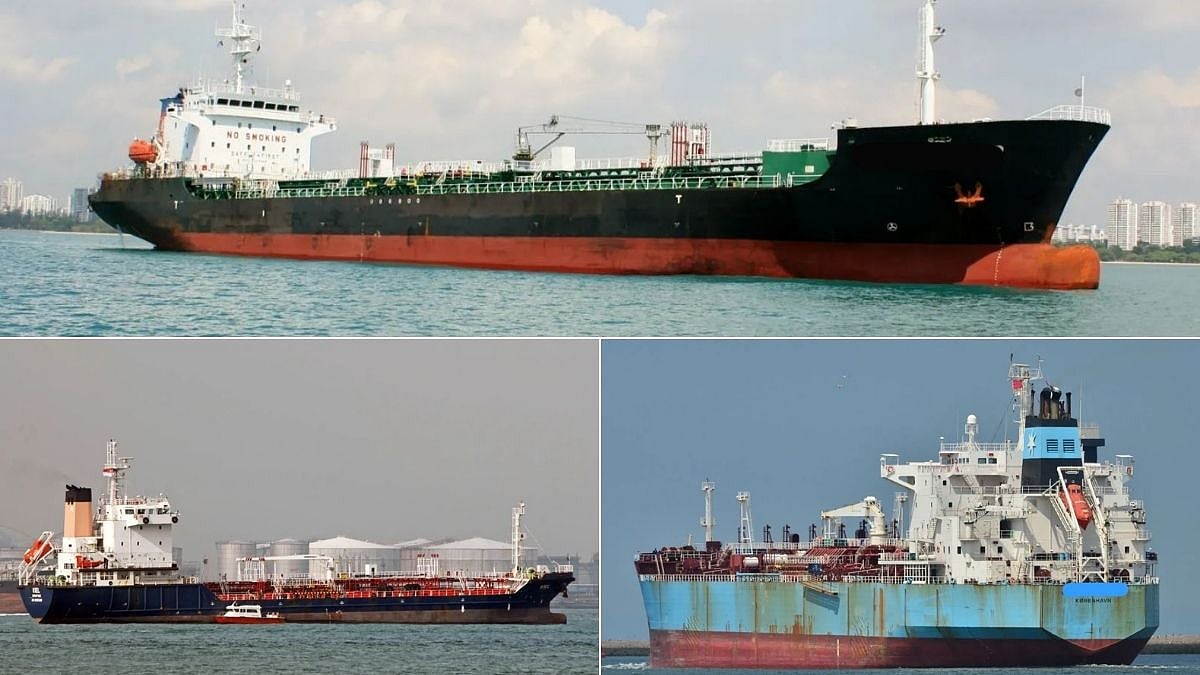
New Delhi: The Indian Coast Guard’s seizure of three tankers carrying Iranian oil is a first for New Delhi. Diplomats say that while more details are needed of the government action, some questions come to light. One senior diplomat pointed out, shadow or dark fleets normally operate in 200 nautical miles which is considered international waters, to avoid being nabbed. Why then did these tankers seemingly move beyond that into India’s territorial waters? Were they heading for India?
The diplomat pointed out that the tweet by the Coast Guard announcing the interdictions made no mention of whether it was a stateless vessel. A stateless vessel is one where a ship hides its registration and flies multiple flags during a voyage. Seizing stateless vessels is acceptable under international law, and India would have mentioned it if that had been the case. He said while India grounded the case in domestic law a tacit reference was made to the “rules-based international order.”
The phrasing is often used by the US, NATO nations and the EU and avoided by China, Russia, and many Global South nations, who see it as the “rules” as, being applied by the West, most notably the US. By applying this phrase India seemed to be signifying its acceptance of it “It appears through this action the Indian coast guard have been active roleplayers in curbing the sale of Iranian oil, which has been sanctioned by the Americans. Iran has been selling its oil for last several years, which till recently was with the knowledge and approval of the Americans,” said a senior diplomat.
He added that it was also important to remember that the recent sanctions come under the embargo of trade, which are US and not UN sanctions. “India seems to be wanting to get into the good books of the Americans by upholding US sanctions on Iran. US sanctions on Iran should be upheld by the US, not India. Is India seeking to be in the good books of the Americans so they condone the purchase of Russian oil?” Significantly, on February 6, the US State Department stated that the US Department of State identified as “blocked property 14 shadow fleet vessels involved in the transport of Iranian petroleum, petroleum products, and petrochemical products. Iran’s exports of these energy commodities, are enabled by a network of illicit shipping facilitators in multiple jurisdictions who, through obfuscation and deception, load and transport Iranian commodities to buyers in third countries.”

The action came after Iran detained two foreign vessels in the Gulf, accusing them of carrying smuggled fuel. The Islamic Revolutionary Guard Corps (IRGC) alleged that the vessels had been operating as “part of an organized network engaged in fuel smuggling” over recent months and were identified and seized following “surveillance, tracking, and intelligence operations” carried out by its personnel. Iran experts say Tehran has often seized ships in the past during times of heightened tension with the US.
A senior diplomat said. “Iran’s maritime seizures have tended to rise during periods of diplomatic or military friction with the United States. This is an old playbook of theirs. They do this to gain leverage during talks and provide asymmetric signalling warning the US as to what it is capable of. The US action via India may have been a tit-for-tat reaction. However, there is a danger of us damaging the Iran relationship for a fight that is essentially between Iran and the US.”

