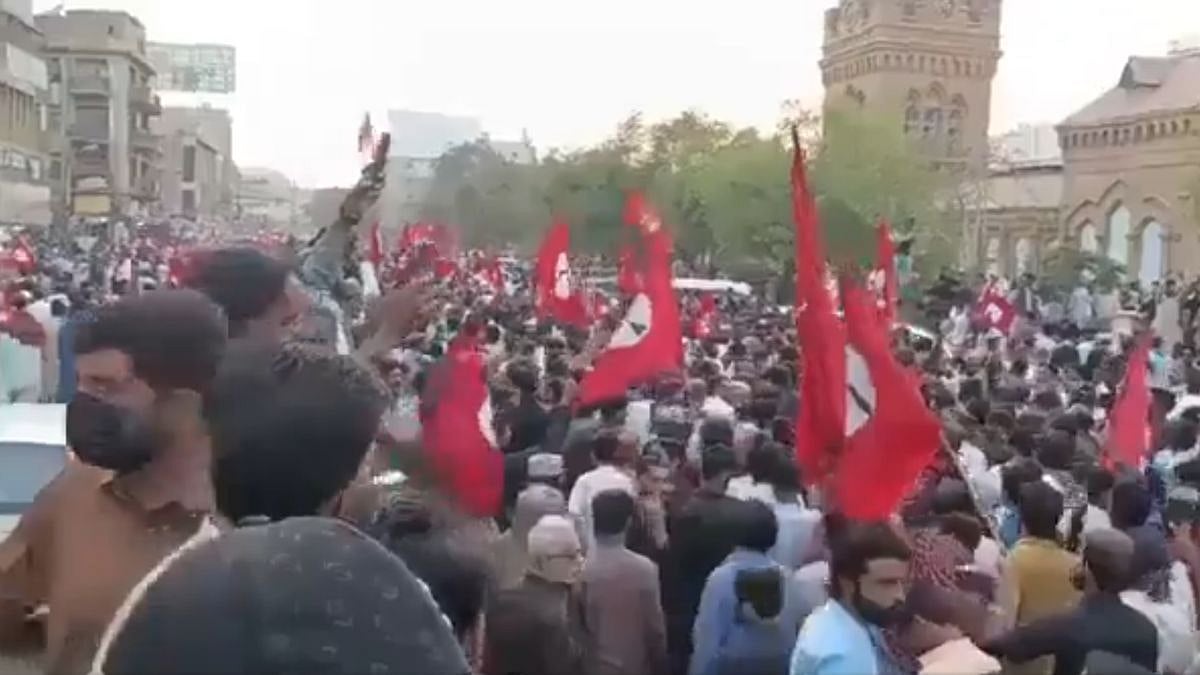
Pakistan's reported proposal to reorganise its four major administrative provinces - Punjab, Sindh, Khyber Pakhtunkhwa and Balochistan —-has triggered growing political opposition, particularly in Sindh. Thousands of people took to the streets of Karachi this week, wearing traditional ajrak scarves and caps, to protest against the proposed division of Sindh or the creation of additional administrative units.
The demonstration was organised by the Jeay Sindh Rahbar Committee and saw the participation of nationalist leaders, political activists, lawyers and civil society members, Pakistan Today reported.
Sindh Protesters Reject Proposal To Alter Province's Boundaries
Addressing the gathering, speakers firmly rejected any proposal to alter Sindh's existing geographical boundaries. They maintained that the province's territorial integrity could not be compromised and that any decision concerning its geographical or administrative divisions must reflect the will of its residents.
The protesters also emphasised that Sindh's distinct identity was rooted in its history, culture and civilisation, rather than being merely an administrative arrangement. They opposed the possibility of conducting a referendum on the formation of new provinces or administrative units, Pakistan Today reported.
The speakers urged the federal government led by Prime Minister Shehbaz Sharif and other relevant institutions to refrain from decisions that could aggravate political tensions or deepen divisions within Sindh. They warned that any attempt to enforce administrative changes without public consent would be resisted through constitutional, legal and democratic channels, including province-wide demonstrations.
Pakistan's Proposed Plan To Create 12 Or More Administrative Units
The proposed restructuring reportedly seeks to divide Pakistan's four existing provinces into 12 or more administrative units. The initiative has been associated with the country's powerful military chief, Field Marshal Asim Munir, who is widely perceived to exercise considerable influence over the country's political establishment, despite the formal positions held by the president and prime minister. However, no official blueprint carrying Munir's endorsement has been made public so far.
Supporters of the proposed restructuring have reportedly projected it as a measure to improve governance, decentralise administrative powers and make government services more accessible to citizens. However, experts have cautioned that implementing such a plan could significantly reshape Pakistan's federal framework.
In an editorial published on October 8, The Economist described the proposed initiative as an effort to weaken political opposition by fragmenting existing power structures and strengthening the military chief's influence.
Bilawal Bhutto-Zardari Warns Of Unrest, Bloodshed Over Sindh's Division
The controversy also drew a strong response from Pakistan Peoples Party (PPP) Chairman Bilawal Bhutto-Zardari. On November 17, he warned that forcibly dividing Sindh could trigger widespread unrest, with people potentially taking up arms, Pakistan-based Geo TV reported.
Speaking at an event organised at the Karachi Press Club, Bilawal said, "If the province is divided by force, society will be divided; it will lead to enmity, ordinary people will take up arms, and the bloodshed will not be limited to a single death."

He clarified that the PPP was not opposed to the creation of new provinces if such a move was backed by public consent and carried out in accordance with constitutional and legal provisions. However, he strongly objected to any attempt to impose such changes through coercion.
"Where we are opposing, it is overforce and coercion. We do not want division through force," Geo TV quoted Bilawal Bhutto Zardari as saying.
The PPP chairman further argued that Pakistan's Constitution already lays down the procedure for creating new provinces. He questioned the suggestion of holding a referendum, describing it as an attempt to pursue an unconstitutional route. Bilawal also pointed out that referendums had previously been used in Pakistan for undemocratic purposes.
Level up your brain the fun way. Play daily games and quizzes on FPJ Smart!

