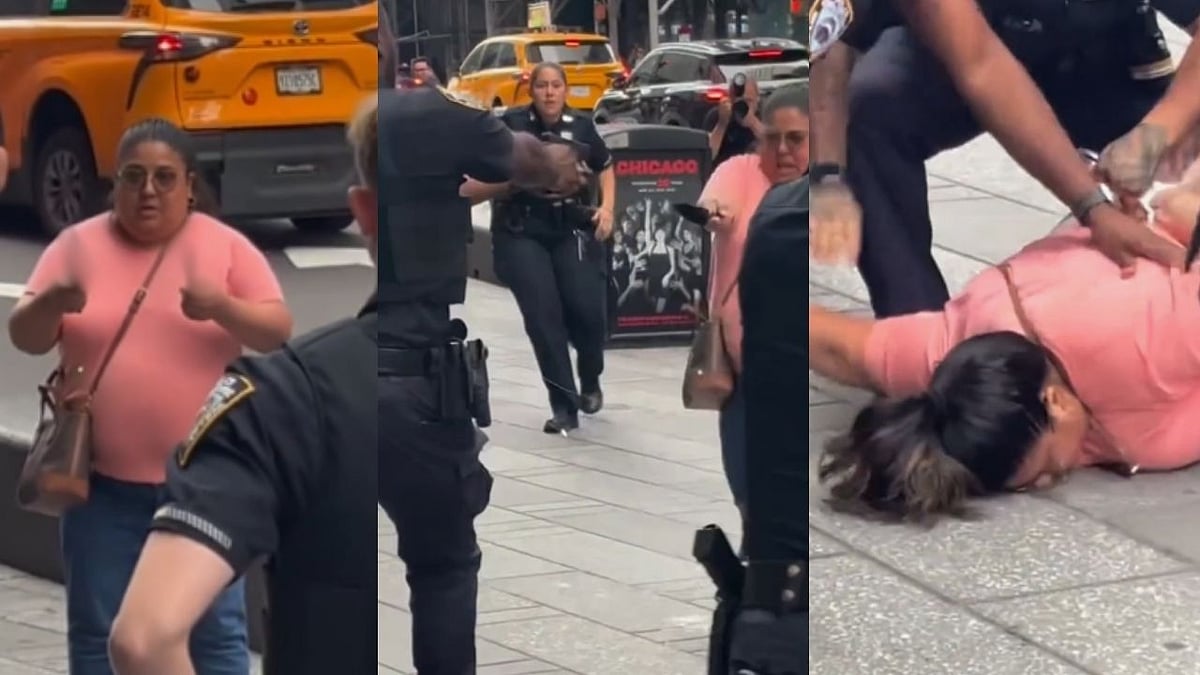
The fatal shooting of 49-year-old Pamela Cisneros by NYPD officers in Times Square has raised a central question: why did police shoot her instead of physically restraining her after she allegedly stabbed two people? The answer, based on preliminary police accounts, lies in what officers say was an immediate threat involving two knives, failed attempts at de-escalation and a suspect who continued moving toward them.
The incident unfolded on Monday, August 31, when Cisneros allegedly stabbed a 68-year-old man and about 20 seconds later, a 32-year-old woman in what police described as a random and unprovoked attack. The woman later died, while the man remained in stable condition. Cisneros then moved toward the NYPD substation in Times Square, still carrying two knives.
Four-Minute Standoff Before Officers Opened Fire
According to NYPD Commissioner Jessica Tisch, officers confronted Cisneros near West 43rd Street after she moved north from the stabbing locations. Police repeatedly ordered her to drop the knives during an encounter that lasted roughly four minutes.
Tisch said Cisneros refused and threatened the officers, telling them, “I’m not dropping anything,” before saying she would rather kill them. Police said she continued waving the knives and advancing toward the officers.
Multiple officers then deployed Tasers, but the less-lethal option failed to stop her. Two officers subsequently fired their service weapons, striking Cisneros. She was taken to Bellevue Hospital, where she was pronounced dead. Two knives were recovered from the scene.
Could Officers Have Tackled or Physically Restrained Her?
That is likely to become one of the key questions in the investigation.
In theory, officers have several options when dealing with an armed person, including verbal commands, creating distance, less-lethal weapons and physical restraint. But physically closing the distance with a person holding two knives can expose officers and nearby civilians to a potentially lethal attack.
NYPD's own use-of-force policy says officers should use de-escalation techniques when doing so is safe and appropriate, but it does not require officers to move through force options in a fixed sequence. The policy specifically allows officers to escalate or de-escalate depending on how an encounter develops. Deadly force may be used to protect officers or members of the public from an imminent threat of death or serious physical injury.
That distinction is important in this case. Police say Cisneros had already stabbed two people, was still armed with two knives, had refused repeated commands and continued advancing while threatening officers. On those preliminary facts, authorities have argued that the situation had moved beyond one in which physical restraint could safely be attempted.
What Does New York Law Say?
New York Penal Law Section 35.30 governs the use of physical force by police officers while making an arrest or preventing an escape. Separately, Section 35.15 provides the broader justification framework for the use of deadly physical force in defense of a person.
Under Section 35.15, deadly physical force can be justified when a person reasonably believes another person is using or is about to use deadly physical force. The law also specifically provides that a police officer acting under Section 35.30 has no duty to retreat in circumstances covered by that provision.
New York law defines deadly physical force as force that, under the circumstances in which it is used, is readily capable of causing death or serious physical injury. An ordinary object can also constitute a dangerous instrument when it is used in a way capable of causing such harm.
In practical terms, the legal question is not simply whether Cisneros actually stabbed an officer. Investigators and prosecutors would examine whether the officers reasonably believed that she posed an imminent threat of death or serious physical injury at the moment they fired.
Does NYPD Policy Require Officers to Try Every Non-Lethal Option First?
No.
NYPD policy places significant emphasis on preserving life, using reasonable force and attempting de-escalation where possible. However, the department states that officers are not required to progress mechanically from verbal commands to less-lethal weapons and only then to firearms.
The policy allows officers to move between force options based on the circumstances and their assessment of safety. It also says deadly force can be used to protect officers or civilians from an imminent threat of serious physical injury or death.
That means the fact that Tasers were used before the shooting is relevant, but the legal justification ultimately turns on whether the officers reasonably perceived an imminent deadly threat not on whether every conceivable restraint technique had been attempted.
What About the Officer's Race?
Questions about the race of one of the officers have circulated online following videos of the confrontation. However, as of the latest official statements and major news reports reviewed, the NYPD has not publicly identified the officers involved by name or officially confirmed their race.
Social-media users appear to be drawing conclusions about the identity or race of an officer from circulating footage. Those claims should therefore be treated as unverified speculation, rather than established fact.
The officer's race could become part of broader public discussion about policing and use-of-force disparities, but it does not by itself determine whether the shooting was lawful. The legal analysis focuses on the circumstances confronting the officer and whether the use of deadly force was objectively and reasonably justified.
What Is the Latest Update on the Officers?
The NYPD has not announced charges against the officers involved. Commissioner Tisch has publicly defended their response, saying officers acted as they were trained to do after Cisneros continued approaching them with two knives despite commands and unsuccessful Taser deployments. Mayor Zohran Mamdani also thanked the officers, saying they intervened to prevent the attack from becoming worse.
At the same time, the shooting remains under investigation. Mamdani said an internal investigation would take place, while officials have said body-camera footage will eventually be released. NYPD policy identifies firearm discharges that hit or could hit another person as critical incidents for body-camera review and potential public release.
Why the Body-Camera Footage Matters
The publicly circulating videos show important portions of the confrontation, but the full body-camera record could provide a much clearer picture of the officers' positions, the distance between them and Cisneros, the exact sequence of commands, the timing of the Tasers and the moments immediately before the shooting.
Those details could determine whether the officers had a realistic opportunity to disengage, contain her or use another form of restraint or whether the threat had become sufficiently immediate that firing was the only reasonable option available at that moment.
For now, the preliminary official account points to an escalating armed confrontation rather than an immediate decision to use lethal force. But the final assessment will depend on the ongoing investigation, evidence and body-camera footage.
What Happened in Times Square?
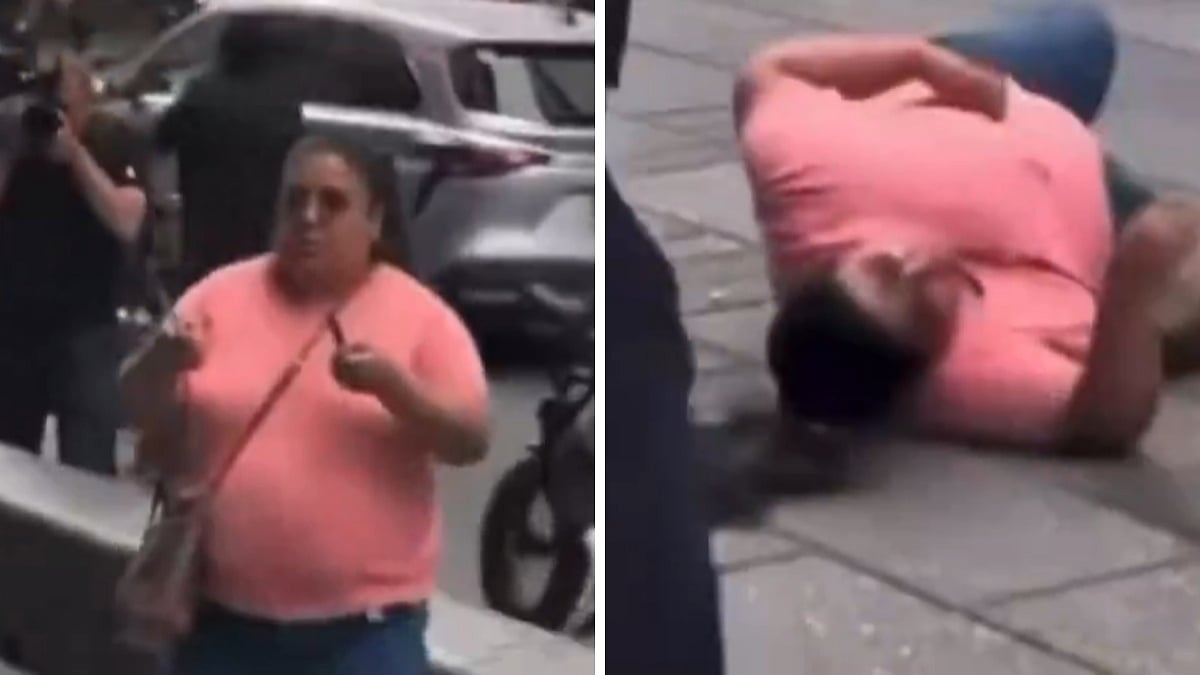
Police said the incident began around 4:24 p.m. near West 41st Street and Seventh Avenue. Cisneros allegedly pulled two knives from a bag and stabbed the 68-year-old man before attacking the 32-year-old woman moments later.
She then moved toward the Times Square NYPD substation, where officers confronted her. After several minutes of commands and unsuccessful Taser deployments, officers fired. Cisneros and the female victim died, while the male victim survived and was reported stable. Authorities have said there is currently no indication that the attack was terrorism-related.
The case now rests on a crucial question: did the officers reasonably believe, at the instant they fired, that Cisneros posed an imminent threat of death or serious physical injury to them or others? Under New York law and NYPD policy, that is the central issue not simply whether another restraint method can be imagined in hindsight.

