Italy's parliament has given final approval to a controversial school decree banning face-covering garments, including the burqa and niqab, in schools and introducing a 30 per cent cap on certain foreign students in first-year classrooms. The measures, introduced under Prime Minister Giorgia Meloni's government, have drawn criticism from opposition parties, which have accused the administration of promoting discriminatory policies.
The Chamber of Deputies approved the legislation on November 26–27, 2026, with 142 votes in favour and 112 against, following its passage through the Senate. The decree, known as the Decreto Scuola, forms part of Decree-Law 170 of September 30, 2026.
The legislation introduces new rules on face coverings, the composition of school classrooms and Italian-language support for foreign families, with the government arguing that the measures will strengthen integration and ensure equal opportunities in education.
Burqa, Niqab Banned In Schools
Under the new provisions, students, parents and others participating in school activities or parent meetings will not be allowed to cover their faces in a manner that prevents identification.
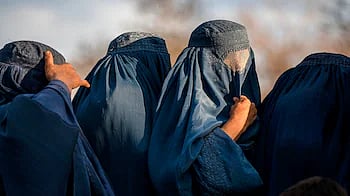
The restriction effectively targets full-face veils such as the burqa and niqab, while the hijab, which leaves the face visible, is not affected. Exceptions have been provided for specific medical reasons and circumstances related to teaching or educational activities.
Violations can attract administrative fines ranging from €200 to €1,000. The penalties will be imposed by the prefect following a report from the school headteacher. In cases involving minors, parents will be held responsible.
The Meloni government has defended the restriction on grounds of security, integration and gender equality. The Prime Minister has argued that covering a young woman's face in the name of tradition undermines her fundamental rights.
Italy Introduces 30% Cap On Foreign Students
Another significant provision introduces a 30 per cent limit on certain foreign students in first-year primary and secondary school classrooms from the 2027–28 academic year.
The restriction will apply to non-Italian citizens who were not born in Italy and do not meet specified prior-schooling requirements. These include completing at least two years of preschool in Italy for primary school admissions or successfully completing at least three years in the Italian education system for secondary school admissions.
However, the cap will not apply to students born in Italy, those with adequate Italian-language proficiency or those who fulfil the prescribed schooling criteria.
The measure will primarily affect the formation of new first-year classes rather than existing classrooms. Where schools exceed the prescribed limit, local education authorities will coordinate the redistribution of students to nearby institutions, taking into account distance and family circumstances.
Schools unable to meet the requirements may also receive additional funding to strengthen Italian-language support for students.
Italian Language Courses For Foreign Parents
The legislation also provides for Italian-language courses for foreign parents in cases where language barriers are considered an obstacle to their children's integration into the education system.
The government has maintained that the measures are aimed at preventing the formation of isolated classrooms, improving communication between schools and families, and ensuring that students have equal access to educational opportunities.
Although a 30 per cent guideline for foreign students existed under a 2010 circular, the latest legislation gives the limit a stronger legal footing.
Opposition Calls Measures Discriminatory
The legislation has triggered strong criticism from opposition parties, including the Democratic Party, which has accused the Meloni government of introducing divisive measures targeting migrant communities and Muslim students.
During the parliamentary vote, opposition lawmakers displayed placards carrying the message, "At school no one is a foreigner."
Critics have argued that the 30 per cent cap risks treating children as numbers rather than considering their individual circumstances, while redistributing students between schools could stigmatise migrant families.


The face-covering restriction has also been criticised for disproportionately targeting Muslim students and their religious practices.
The government, however, maintains that the legislation will promote integration, prevent the formation of segregated classrooms and strengthen language learning among foreign students.
The implementation of the new rules, particularly the redistribution of students in areas with high immigrant populations and enforcement of the face-covering restriction, is expected to remain under scrutiny.

