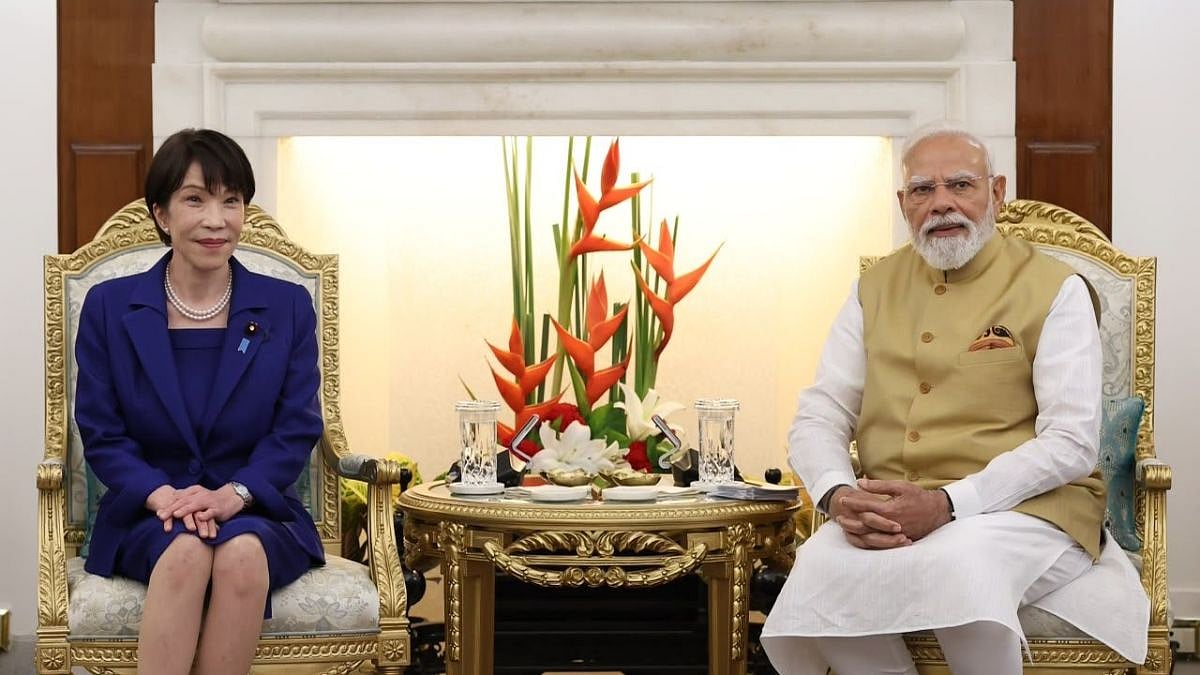
China on Friday said bilateral cooperation between countries should not target or undermine the interests of any third party, a day after India and Japan announced a series of strategic initiatives during Japanese Prime Minister Sanae Takaichi's visit to New Delhi.
Responding to a question on India and Japan's cooperation on critical minerals aimed at strengthening supply chain resilience following talks between Prime Minister Narendra Modi and Takaichi, Chinese Foreign Ministry spokesperson Guo Jiakun said such partnerships should contribute to regional stability.
"Cooperation between countries should be conducive to enhancing the understanding and trust among regional countries and safeguarding peace and stability in the region," Guo told a media briefing in Beijing.
He added, "Such cooperation should not target any third party or harm the interests of any third party, still less be used as an excuse to patch up exclusive small groupings and stoke division and confrontation."
Guo further said, "It is the common responsibility of all countries to keep the global industrial and supply chains safe and stable. All parties should champion openness and cooperation and play a constructive role in the process."
Beijing cautions against exclusive groupings
China's remarks came after India and Japan agreed to deepen cooperation in critical minerals as part of broader efforts to strengthen supply chain resilience. Beijing reiterated that international partnerships should foster trust and stability rather than create divisions or exclusive blocs.
India, Japan unveil major strategic initiatives
Following summit talks on Thursday, Modi and Takaichi unveiled several major initiatives, including an economic partnership framework, a defence agreement to co-develop military hardware and measures to strengthen energy cooperation against global oil shocks.
The two leaders also expressed "serious concern" over developments in the East China Sea and South China Sea. In a joint statement, they opposed unilateral actions that threaten freedom of navigation and attempts to alter the status quo by force.
Takaichi's visit was closely watched by Beijing as ties between China and Japan have deteriorated significantly since her remarks in November 2025 that Japan could respond if China attacked Taiwan.
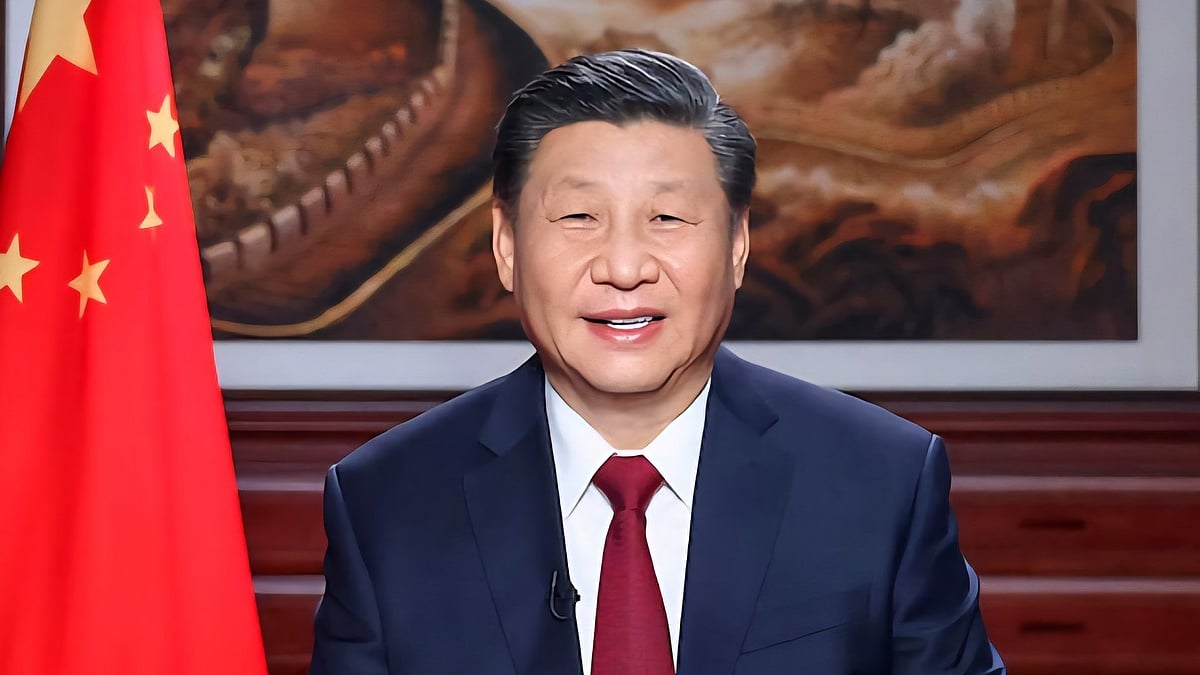
zxChina considers Taiwan, a self-governed island, a renegade province that should be reunified with the mainland by force if necessary. Takaichi's comments had drawn a strong response from Beijing.
Rare earth exports remain key point of leverage
China has tightened exports of rare earth minerals to Japan, the US, India and several other countries, using its dominance in the sector to advance its trade interests.
The country accounts for about 70% of global rare earth mining and nearly 90% of processing capacity. These minerals are essential for manufacturing electronics, automobiles, defence equipment, wind energy systems and a wide range of modern technologies.

