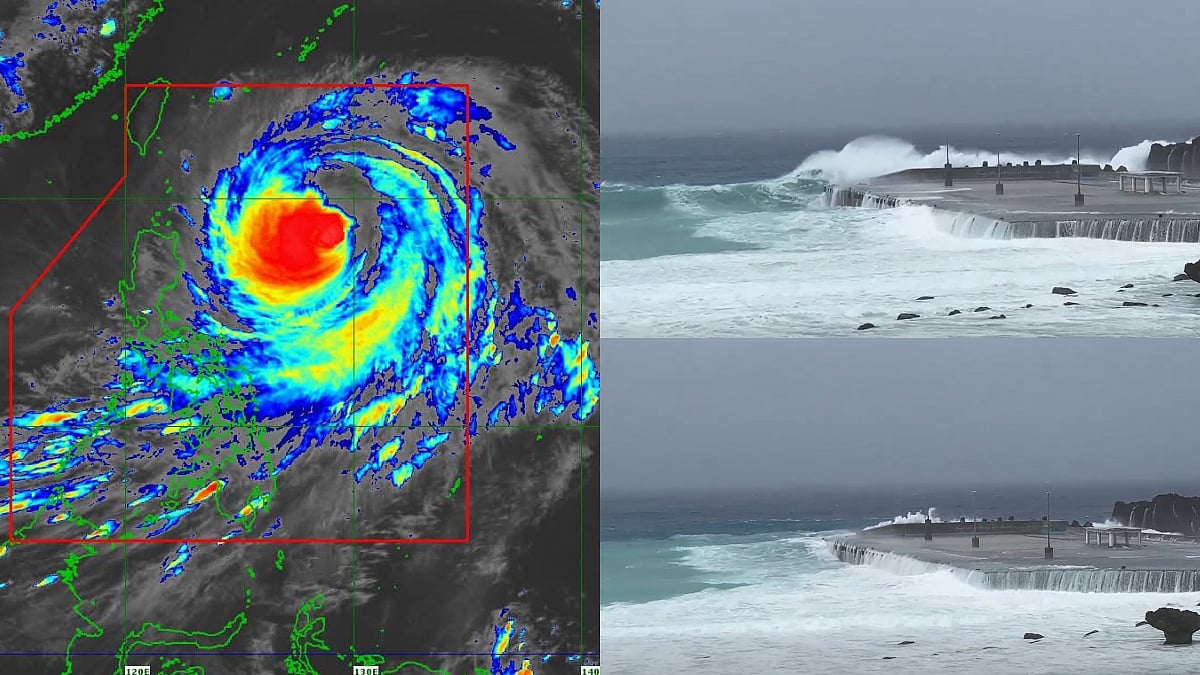
China on Friday issued a heavy storm alert for capital Beijing and neighbouring Hebei Province, directing government departments to prepare for emergency responses to possible geological disasters.
Torrential rains are expected to hit parts of northern China from Friday to Monday due to the influence of the southwest monsoon and Typhoon Bavi. Some areas of Beijing and Hebei are likely to receive 300-350 mm of rainfall, the Ministry of Emergency Management (MEM) said, citing meteorological forecasts.
The ministry asked authorities in affected regions to deploy rescue teams, supplies and equipment, and step up inspections and early warning measures, state-run Xinhua News Agency reported.
Typhoon Bavi moves towards China's east coast
A powerful typhoon was moving towards China's east coast on Friday, becoming the latest in a series of deadly storms that have claimed 50 lives this week in two other parts of the country.
Typhoon Bavi, carrying maximum sustained winds of 155 kmph, was initially expected to pass north of Taiwan, bringing heavy rains to the island of 23 million people from Friday night to Saturday.
Schools were closed on Friday in Taipei, Taiwan's capital, while fishing boats were secured close together at ports in northern Taiwan. Many flights to Japan, Hong Kong and other destinations were cancelled until Saturday, though some services remained scheduled, Taiwan's Central News Agency said.
The typhoon's current north-western track is expected to take it over remote Japanese islands before passing north of Taiwan on Saturday. It is forecast to make landfall in China on Saturday night, south of Shanghai, near the border between Fujian and Zhejiang provinces.
China prepares for impact as storms leave trail of destruction
More than 17,000 people have been evacuated in Zhejiang, while 170,000 rescue workers have been placed on standby, the official Xinhua News Agency said. Fujian has suspended some ferry routes due to strong winds and rough seas and called on fishing boats to return to ports.

Bavi weakened after reaching super typhoon strength earlier this week, when it brought violent winds to Saipan and other US territories in the Pacific.
In southern China, authorities on Thursday said 39 people had died in flooding caused by Tropical Storm Maysak, which drenched parts of the Guangxi region for days with record rainfall.
The rains breached reservoirs, including the collapse of part of a dam in Hengzhou that flooded a wide area with fast-flowing muddy water. The floods left people stranded on the second and higher floors of buildings for days, with many without power until rescuers reached them.
Another 11 people died in central China after severe thunderstorms and tornadoes hit Hubei province on Monday night.
Separately, a landslide killed 21 forestry workers in western China's Gansu province on Tuesday in a disaster unrelated to the storms.

