Washington DC: A letter of intent or memorandum of understanding between Washington and Tehran is expected to be finalised early next week, paving the way for advanced diplomatic talks towards a long-term bilateral accord, CBS News reported, citing two sources familiar with the ongoing manoeuvres.
Signing to initiate negotiations
The signing of the memorandum would kick off 60 days of talks to negotiate details of a US-Iran agreement, CBS News reported. According to multiple sources, that initial negotiating window could be extended as needed.
Early measures and trade focus
Early measures outlined in the text focus on securing "freedom of trade" by conducting demining operations to clear and reopen the strategic Strait of Hormuz.
Iran’s position on nuclear commitments
Iran's foreign ministry spokesperson said that major sections of a potential understanding aimed at ending the imposed war are close to completion, despite Washington's contradictory positions and repeated acts of military aggression aimed at disrupting the diplomatic process.
In principle, Tehran would commit to a lockout of 15-20 years during which it would not enrich uranium and would dismantle its nuclear sites. In exchange for taking these steps, Iran would receive financial relief staggered over time and sequenced to correspond with compliance.
US intelligence assessment
Regarding regional threat capabilities, the US intelligence community does not assess that Iran has a nuclear weapon or sought one, but rather that it sought to be at the threshold of one, CBS News reported.
The Iranian establishment has additionally refused to allow International Atomic Energy Agency nuclear inspectors into Iran to verify what it claimed was the peaceful nature of its programme, though Israeli intelligence maintains a different assessment.
Trump announcement accelerates process
The diplomatic process gained sudden momentum on Thursday when President Donald Trump announced on Truth Social that he had "canceled the scheduled strikes and bombings against Iran this evening."
The president noted that the decision followed confirmation that the final points of a potential deal have been approved by "all parties involved." He added that this consensus included the US and a specific list of Middle East countries, though Iran was not among them.
The president indicated that a "time and place" for a signing would be "announced shortly." He is scheduled to travel next week to France for the G7 summit, where the widespread disruption to global trade caused by the war is expected to be a primary topic of discussion among world leaders.
Vice president to attend signing
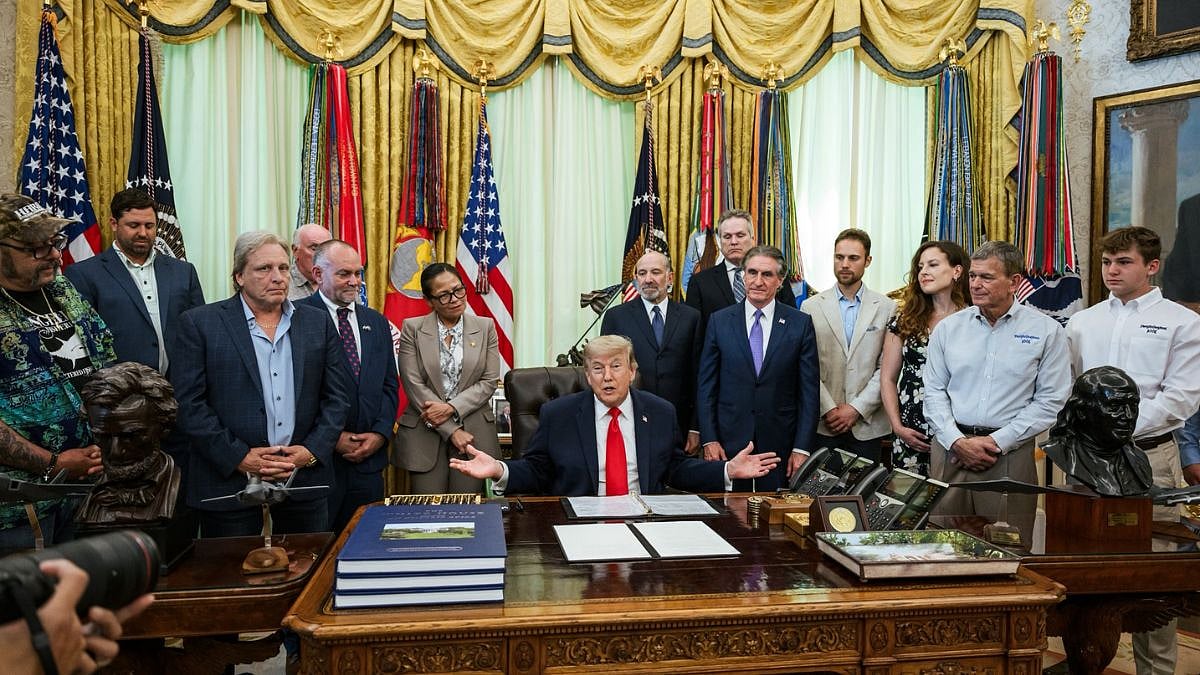
President Trump previously highlighted the impending diplomatic breakthrough during an unrelated Oval Office event on Thursday afternoon, clarifying that he would not be present for the signing ceremony, but Vice President JD Vance would attend.
The president noted that the high-level meeting could take place as early as this weekend in Europe. While the vice president's office referred policy questions to the White House, the administration did not immediately respond to a request for comment.
"The strait will open as soon as we have it signed," the president emphasised.
Tehran disputes claims
However, the narrative coming out of Washington was quickly contested by Tehran.
Shortly after President Trump's social media post on the potential deal, the Fars News Agency, which is associated with the Iran Revolutionary Guard Corps, quoted a "knowledgeable source close to the Iranian negotiating team."
The source flatly denied the president's claims regarding an initial agreement, stating that "no text of the initial memorandum of understanding with the United States has been approved."
Israel and regional consultations
While Israeli authorities have not yet commented on the developments, the president confirmed he had held direct consultations with Israeli Prime Minister Benjamin Netanyahu, alongside discussions with several Arab leaders.
The understanding between the US and Iran would mandate United Nations inspectors from the IAEA to dispose of what President Trump refers to as "nuclear dust" and to inspect the nuclear sites.
This follows a joint military action last June when the US and Israel bombed three nuclear sites, at Fordow, Natanz and Isfahan. Intelligence analysts assess that the enriched nuclear material remains buried under the rubble at those specific locations.
Trump reiterates firm stance
Reiterating Washington's firm stance from the Oval Office, the president said of Iran, "They will not have a nuclear weapon -- they've agreed to that," adding that the regime would not purchase or develop a nuclear weapon "in any way shape or form."
Lebanon conflict considerations
The draft memorandum also factors in the ongoing war in Lebanon involving Iranian proxy Hezbollah, though specific details remain scarce, multiple sources told CBS News.
Israel launched a ground invasion into Lebanon in March after Hezbollah launched rockets across the border, and just this past week, Israeli forces bombed outside Beirut.
The persisting violence has threatened to disrupt US diplomatic attempts to get the Lebanese and Israeli governments to normalise relations and work together against the Hezbollah militia.
Alignment with strategic parameters
The framework aligns with broader strategic parameters laid out earlier this month by US Secretary of State Marco Rubio during his testimony before the Senate Foreign Relations Committee.

Detailing the core requirements for a baseline deal, US Secretary of State Marco Rubio stated that Iran must reopen the Strait of Hormuz and allow international ships to sail through "without being fired upon without paying a toll."
Addressing the panel on the subsequent stages of the roadmap, he added that in phase 2, Iran must commit to "very specific negotiations on highly enriched disposition of the highly enriched uranium that still is buried deep in a mountain somewhere."
US Secretary of State Marco Rubio stated that the regime must "agree on negotiating severe and long-term limitations, and or cancellation of enrichment in activity," stipulating that any prospective sanctions relief would be "associated with their commitment and compliance."
(Except for the headline, this article has not been edited by FPJ's editorial team and is auto-generated from an agency feed.)

