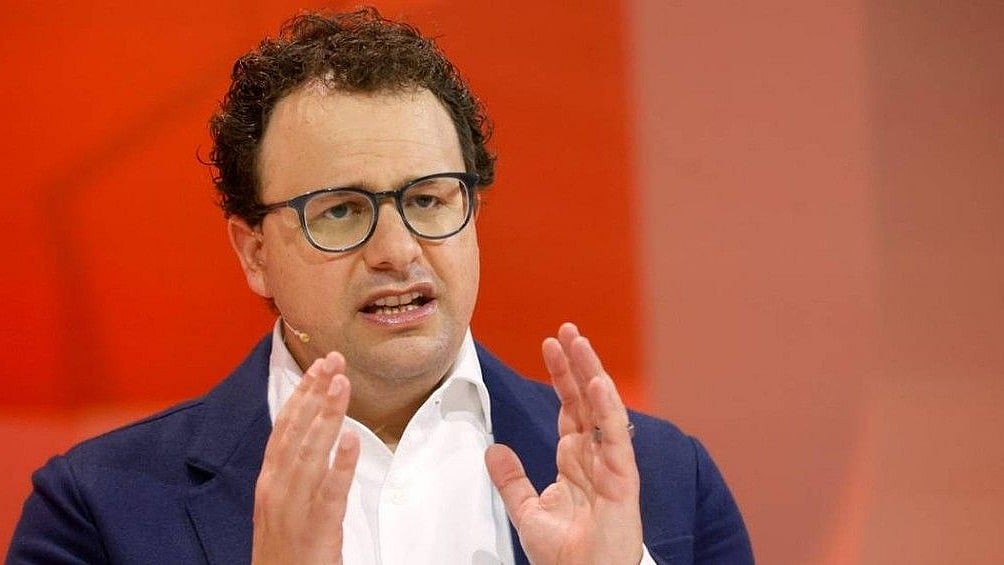
Claude creator Anthropic's CEO Dario Amodei recently said that, "Cancer, Alzheimer's, heart disease, mental illness, these will be relics of the past in, I think, less than a decade."
These are widespread medical conditions that affect millions of people and their families, with several continuing to pose some of the biggest challenges to modern medicine.
"I think if we do this right, we can create an age of miracles where humanity is able to solve problems that have eluded us for millennia," Amodei added.
Amodei believes artificial intelligence (AI) could transform medical science by significantly speeding up biological research, pharmaceutical development and the discovery of new treatments.

Similar optimism has been expressed by other prominent figures in the technology industry, including Elon Musk and Demis Hassabis, who heads Google's AI division.
Hassabis has argued that AI could reduce what traditionally takes a decade in drug discovery to just a few weeks. He has also spoken about the possibility of reaching an "end of disease" by developing cures for all illnesses within the next decade.
He has cited achievements such as AlphaFold, which has predicted the structures of more than 200 million proteins, as an indication of AI's potential to accelerate scientific research. However, while the development represents a major advancement in biology, it does not establish that AI will be able to deliver cures for complex conditions such as cancer and Alzheimer's within the same timeframe.
Musk has also made ambitious predictions about AI's role in healthcare, suggesting that technological advancements could eventually give everyone access to medical treatment of the same standard enjoyed by the President of the United States.

However, the pharmaceutical industry's assessment of these predictions is considerably more cautious. Those involved in developing and testing medicines have questioned whether AI can deliver such dramatic results within the proposed timelines.
Jeff Leiden, executive chairman of Vertex Pharmaceuticals, has dismissed these projections as "complete BS." He pointed out that his company had evaluated approximately 50 AI firms tasked with analysing 10,000 drug compounds, but none independently produced a viable drug.
Pharmaceutical experts stress that identifying a potential drug candidate is only one part of an extremely lengthy process. Promising discoveries must still undergo laboratory experiments, animal testing, human clinical trials and regulatory assessments before they can be approved for medical use. These stages account for much of the 10-to-12-year drug development cycle.
In other words, identifying a molecule with promising properties through AI does not mean it is ready to become a medicine. Researchers must establish whether it is safe, effective and suitable for treating patients through several rounds of rigorous testing. Although AI could make the initial discovery process more efficient, it cannot eliminate the scientific and regulatory requirements that follow.

Scepticism has also come from cognitive scientist Gary Marcus and cardiologist and digital medicine expert Eric Topol. They have questioned whether existing AI systems possess the deeper understanding of biological mechanisms and cause-and-effect relationships needed to deliver transformative medical breakthroughs. Furthermore, as of 2026, no AI-designed drug has achieved full clinical adoption.

