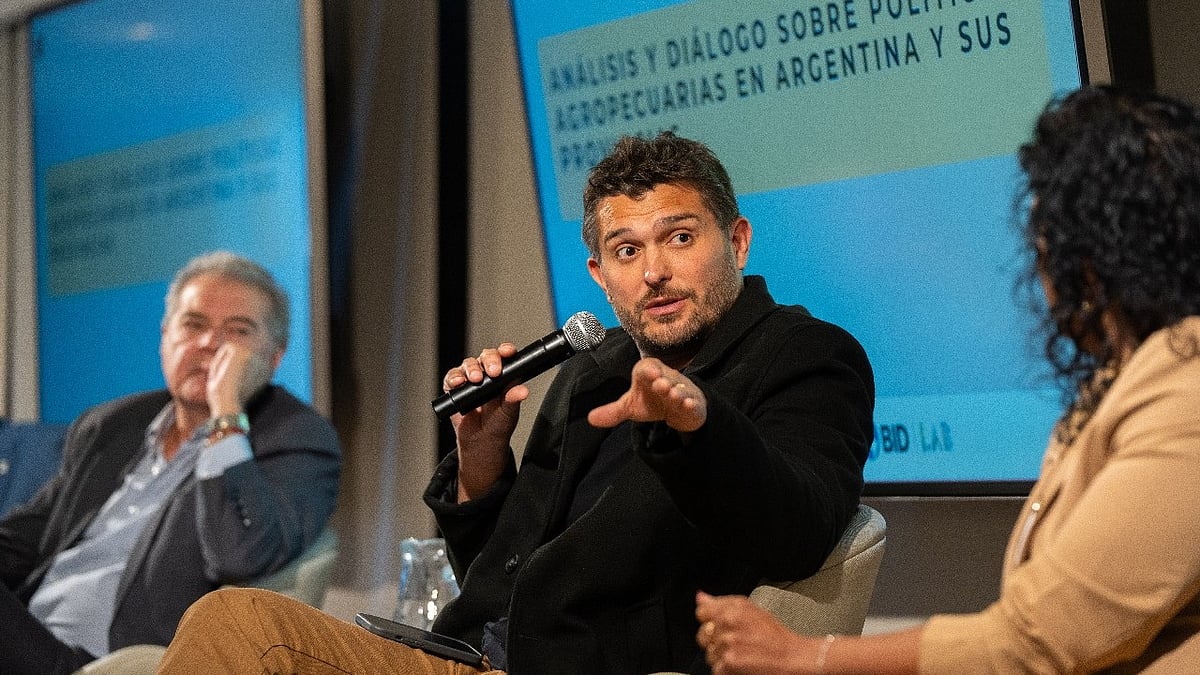
Facundo Lopez Sartori, Minister of Agriculture and Production, Argentina, has an amazing academic background. He has done graduation in Political Communication and post-graduation in Public Policy and Neuroscience. His political career started as President of a City Council at Misones; prior to which he taught political science. He takes pride in the culture of Argentina, its produce and especially Yerba Mate. In India on a visit, he spoke to The Free Press Journal.
Excerpts from the interview:
You have specialised in political communication and neuroscience – two totally different subjects – that’s intriguing. Can you tell us more about these interests that seem poles apart?
I don’t see political communication and neuroscience as opposites. Political communication seeks to understand how people think, feel, and connect with messages and public decisions. Neuroscience helps us understand how the brain responds to those stimuli. What interests me is the intersection between the two — how scientific knowledge can help build more empathetic leadership and more human-centered public policies.
Minister of Agriculture is absolutely different from your educational training. How do you connect the dots?
Misiones, the province I grew in, has a development model deeply tied to agriculture and production, but also to innovation. From communication and neuroscience, I learned to listen, interpret diverse realities, and work collaboratively. At the Ministry, we apply that same mindset: it’s not only about producing more, but about understanding those who produce — their habits, motivations, and challenges. Management also has a lot to do with communication and empathy.

Argentina is solely responsible for the awareness about Yerba Mate, though it is produced in quite a few other countries. Who do you credit that to?
The credit goes to the people of Misiones. Yerba mate is part of our identity, our daily life, and the way we connect with others. We proudly bring mate to the world as a symbol of friendship, hard work, and nature. Cooperatives, small producers, and companies committed to quality and sustainability also deserve recognition.

As a neuroscience specialist, why would you recommend Yerba Mate to people on a regular basis?
Yerba mate combines three unique virtues: it stimulates, focuses, and connects. From a neurological point of view, it enhances attention and memory without the sudden effects of coffee. But it also has an emotional component — sharing mate strengthens social bonds, reduces stress, and promotes well-being. It’s a drink that activates both body and soul.
Do you think it is possible to grow Yerba Mate in India if you share your expertise with farmers here? Do you plan to?
I believe it’s possible to grow yerba mate in some southern regions of India with similar climatic conditions to Misiones. Sharing knowledge with local farmers would be a great cultural and economic exchange. Beyond exporting the product, I’m interested in sharing the philosophy behind it — a way of producing in balance with nature and with a sense of community.

Why Messi as the global ambassador for Yerba Mate?
Messi should be the global ambassador of Yerba Mate because he represents everything mate stands for: effort, humility, perseverance, and connection. He’s a natural ambassador — he takes it everywhere, promoting it simply by being himself. He’s the perfect example of how something so simple can unite the world.
