
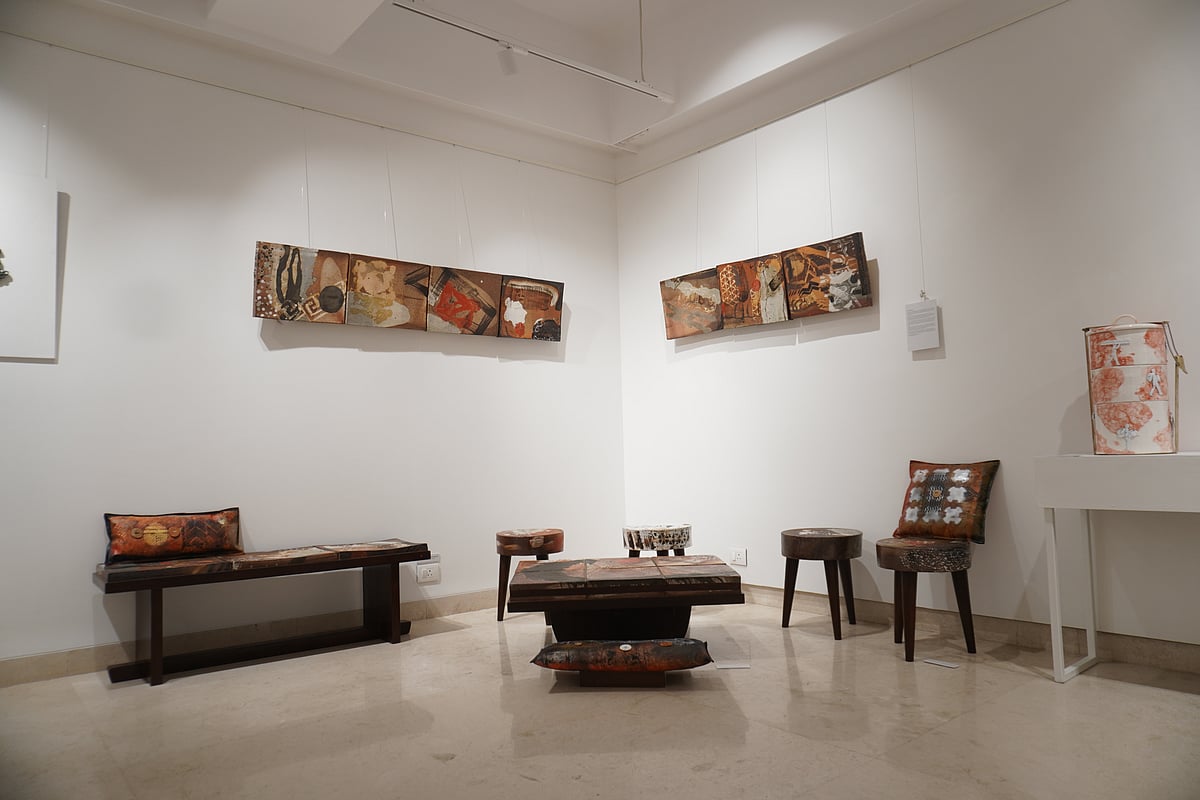
‘Fuel to the Fire’ is a collection that celebrates the sheer magnitude of artisanship, where different media sit in unexpected harmony. Each work carries the imprint of multiple sensibilities, shaped by artists who stepped into one another’s spaces with new rhythms of material and expression. The exhibition is on till December 11 at Art & Soul Gallery, Mumbai.
Dr Tarana Khubchandani, Founder & Director of Art & Soul Gallery, talks about the organicity and unpredictability of ceramics.
Excerpts from the interview:
What inspired the decision to name the 21st anniversary collection ‘Fuel to the Fire’?
This collaboration embodies the spirit of adding fuel to a fire - literally and symbolically. The ceramic artworks, created in various mediums such as terracotta, stoneware, and even porcelain, are fired in kilns at high temperatures, reaching up to 1300 degrees. This makes the firing process taxing and unpredictable. Curated by Adil Writer and Shayonti Salvi, the collection is an exciting breakaway from the singular technique that both Ceramicists and non-ceramic artists typically employ. It was a meeting of minds with the only common ground being a shared desire to explore.

Pic credit: Eric Wong

Pic credit: Eric Wong
How does traditional Indian maximalism translate into contemporary sculptures? How does the gallery strategically contextualise this maximalist complexity?
Bold use of form and colour is very much in our genetic code. The form and format only follow. Indian art is poised for flight and is being consumed in all its glory by international collectors and galleries. Every single artist worked outside their comfort zone and literally broke the mould in the interest of collaboration. With wall-mounted works, video projections, functional ware, porcelain tiffin wala Dabbas, and even furniture pieces, the entire gamut of works is utterly fascinating.

Pic credit: Eric Wong

Pic credit: Eric Wong
Given the onset of digital art forms, how does the tangible presence of a sculpture affirm itself in today's discourse?
India is a country with a rich history of sculptures that date back to the Indus Valley Civilisation. Every Temple, every Church bears testimony to the power of this form and demands our homage. A small sculpture will bring intimacy to the engagement. In a larger format, it becomes spellbinding and has the capacity to stun the viewer. It signals a sense of permanence and timelessness. This collection affirms that visual experimentation is here to stay.
Pic credit: Eric Wong

Pic credit: Eric Wong
What does the gallery’s legacy mean to you personally, and what principles help you safeguard its authentic spirit?
We do shows that we believe in—to support our artist community, present exhibits that hold value, nurture long-standing relations and goodwill with our patrons, keep pushing the envelope towards excellence, and to do so with the same integrity that has been our hallmark over the decades. We have held countless workshops, talks and seminars at our space, all in the interest of raising art awareness and consciousness. I personally feel very grateful for the opportunities we have had.

Pic credit: Eric Wong
Beyond the sales, what is the ultimate measure of success?
Sales have never been the measure of our success. We run a business and always hope to be successful, but that is never a consideration when we conceptualise a show. We strive for a great event, and when that happens, the rest follows. Art is not a liquid asset and perceptions colour choices, as long as we can bridge the distance between an artist and a viewer, we are successful.

Pic credit: Eric Wong
What are your plans for the gallery moving forward?
To keep walking the path, some trodden, some not.

