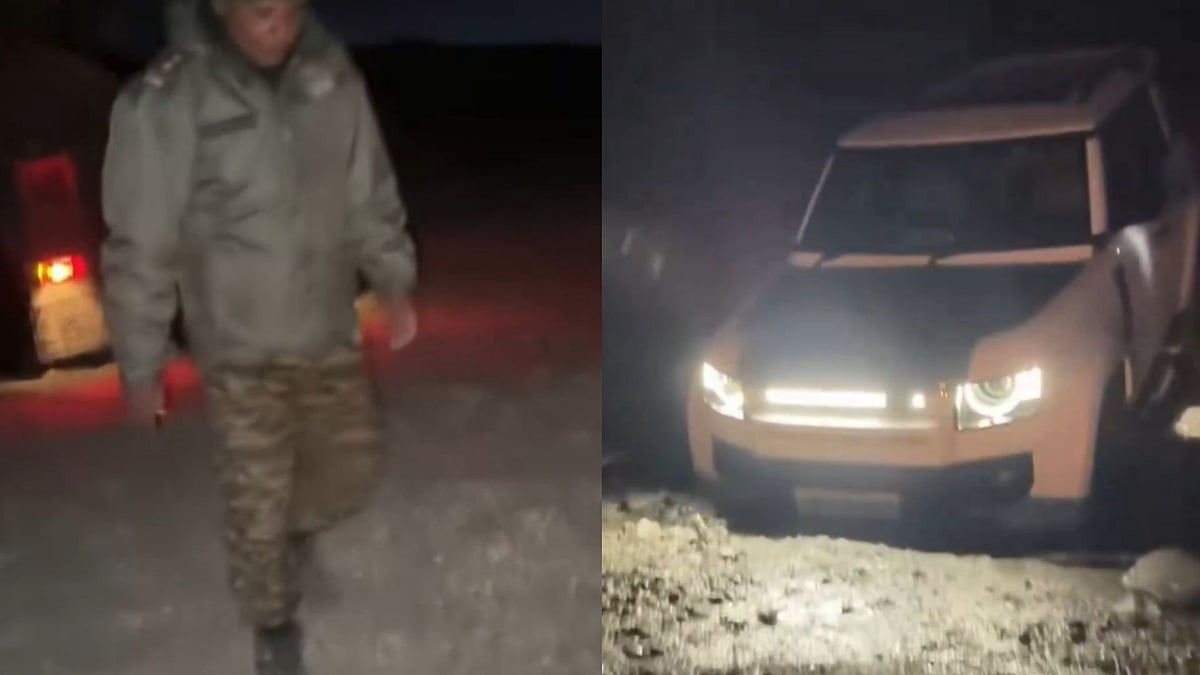
A dramatic rescue at Umling La Pass, the world’s highest motorable road, has reignited an uncomfortable debate online: are social media stunts becoming a burden on India’s armed forces? An X user Rattan Dhillon shared a video of an incident involved a YouTuber whose luxury SUV reportedly got stuck on black ice in Ladakh, forcing the Indian Army to step in yet again.
A Rescue That Sparked Outrage
YouTuber 'Ajju 0008' himself acknowledged in his video that the road was coated with black ice, visibility was poor, and there were no other vehicles or people around. Despite these obvious red flags, he ventured ahead, alone. When his car got stuck, the Indian Army had to divert manpower and resources to rescue him in extreme conditions.
For many, this was not an act of adventure but of recklessness.
‘Is This Really Adventure?’
Rattan Dhillon called out what he described as irresponsible behaviour masked as content creation. His post struck a nerve, questioning why individuals with no proven high-altitude driving experience are granted permission to access such dangerous passes, especially during risky seasons.
“Why should the Army be repeatedly pulled into avoidable rescues?” he implied, echoing a sentiment that resonated widely online.
Netizens back the Army
Social media users overwhelmingly agreed with Dhillon. One comment summed it up sharply: “Adventure shouldn’t come at the cost of Army lives and resources. Strict permissions and seasonal bans are necessary.” Another user questioned the very mindset driving such trips: “Why challenge nature at all? Why turn untouched places into content and ruin them?”
The anger wasn’t just about one YouTuber, it was about a growing trend.
One X user pointed out to the YouTuber who posted the video and exposed him. He mentioned how he uses same 'cheap' tactics in the name of adventure to get views on his videos.
A growing pattern of risky content
From snowbound passes to fragile ecosystems, extreme locations are increasingly being treated as backdrops for viral videos. Critics argue that the chase for views often ignores ground realities, unpredictable weather, lack of support systems, and the human cost of rescues carried out by soldiers stationed in hostile terrain.
Time for accountability?
Many are now asking whether permission systems need tighter scrutiny. Should seasonal bans be enforced more strictly? Should influencers be held accountable for risking not just their own lives, but also those of soldiers deployed for national security?

