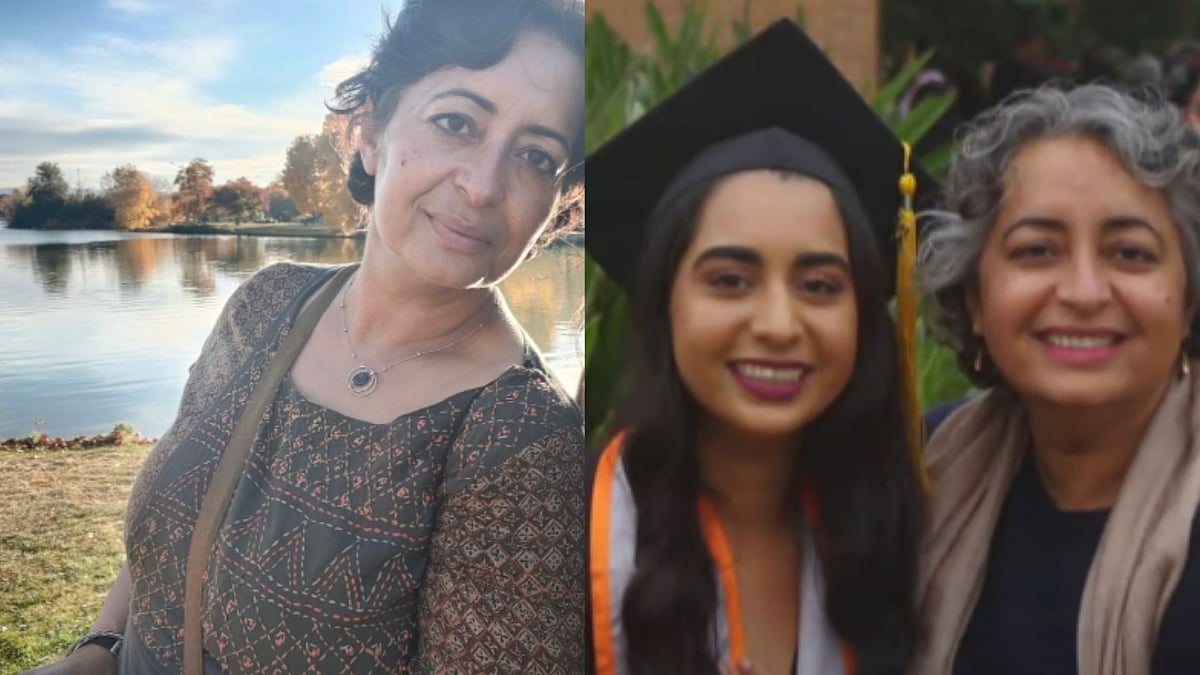
Meenu Batra, a 53-year-old Indian-origin legal interpreter and reportedly the only Texas court-certified professional fluent in Hindi, Punjabi, and Urdu, has been detained by U.S. Immigration and Customs Enforcement (ICE), sparking debate over immigration enforcement and humanitarian protections.
Batra was arrested on March 17 at Harlingen International Airport while travelling for a court assignment. Immigration authorities claim she is subject to a final deportation order issued in 2000. Her lawyers, however, argue she has legally lived and worked in the United States for decades under withholding of removal, a protection granted after she fled violence in India.
She is currently being held at the El Valle Detention Center, where her legal team says she has not received consistent medical care following recent surgery.
DHS position vs defence claims
In a statement provided to CBS News, the U.S. Department of Homeland Security described Batra as an “illegal alien,” stating that “employment authorization does not confer any type of legal status.” Officials added that she would remain in custody while removal proceedings continue.
Batra’s attorneys strongly dispute the detention, arguing she was never informed of any imminent deportation despite maintaining lawful work authorisation for years. They claim ICE is detaining individuals without proper notice or new court motions, raising serious due process concerns.
Legal experts note that withholding of removal creates a complicated immigration situation, individuals are protected from being sent back to a country where they face danger but remain without permanent residency.
Fleeing anti-Sikh violence in India
Batra, a Sikh, left India after her parents were killed during anti-Sikh violence in the 1980s. Because she missed the one-year deadline required for asylum applications, she was instead granted withholding of removal.
The status allowed her to live and work legally in the United States but did not provide a pathway to citizenship or permanent residency. Over the past two decades, she built a career assisting South Asian immigrants in courtrooms across Texas, helping individuals understand complex legal proceedings in their native languages.
Her lawyers say she later chose to work exclusively with immigrant clients after witnessing harsh detention conditions faced by vulnerable detainees.
Family speaks out as legal battle continues
The case has drawn national attention partly because of Batra’s family circumstances. Her youngest son, Jasper, recently enlisted in the U.S. Army and has submitted a humanitarian parole request that could allow his mother to remain in the country in renewable one-year periods.
Speaking to CBS News, Jasper said the situation felt deeply personal and painful. "I thought, you know, I would serve my country and serve my people," he said. "But I didn't know the people was everyone except my mom. I thought she was included, but I guess not."
Batra herself described the emotional toll of detention, saying uncertainty has been the hardest part. "Every single day, you can't sleep because you're afraid when you go to bed, where you're going to wake up," she said.

Emergency court motions filed
Her legal team has filed a habeas corpus petition challenging the legality of her detention, supported by community letters advocating for her release. Attorneys have also sought a temporary restraining order to prevent her transfer to another detention facility, arguing that relocation could disrupt legal access and medical care.
The Department of Homeland Security has until April 21 to respond to the habeas petition, leaving Batra’s immediate future uncertain.

