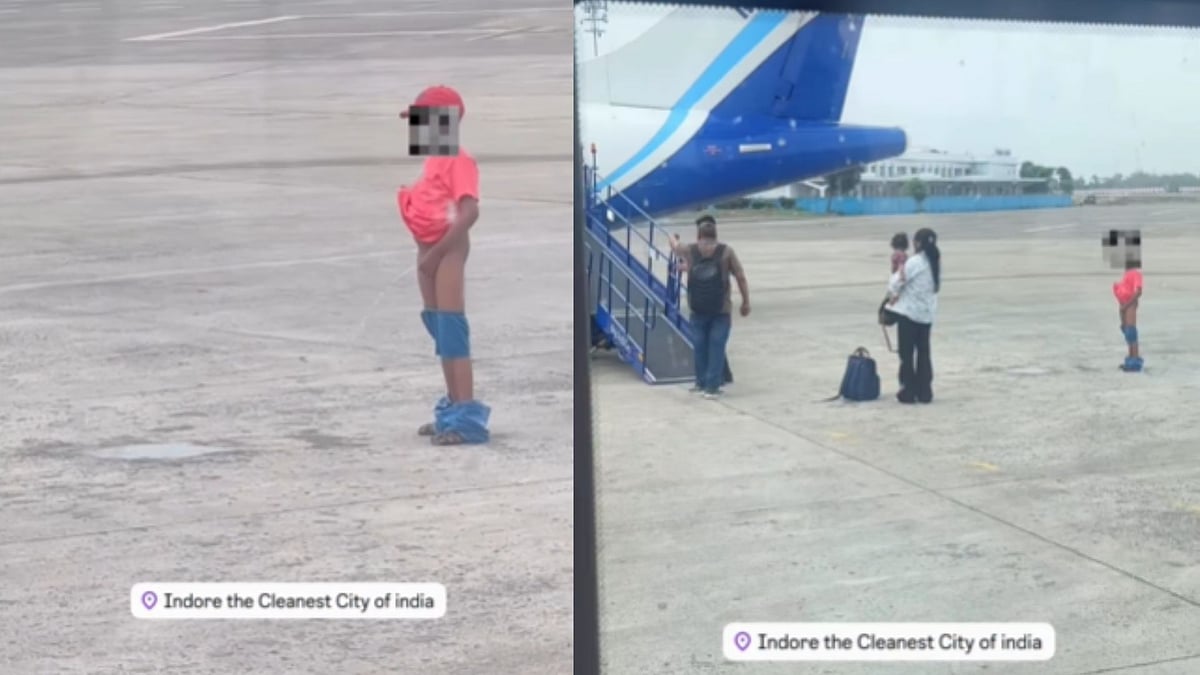
A viral video from Indore Airport has ignited a nationwide discussion on civic responsibility, public sanitation and the importance of teaching children proper public behaviour. The clip, which shows a young boy urinating on the airport tarmac while his parents stand nearby, has drawn widespread reactions across social media.
While many users criticised the incident, entrepreneur and Chai Sutta Bar co-founder Anubhav Dubey, who shared the video on Instagram, urged people not to blame the child. Instead, he said the episode reflects a much deeper issue rooted in social habits and parenting.
"Children are innocent," says Anubhav Dubey
Reacting to the viral clip, Dubey said the child should not be held responsible for the incident because young children simply imitate what they see around them.
“Children are innocent. He is just a kid. It is a basic parenting issue,” he said.
According to Dubey, parents and guardians play the biggest role in shaping children's understanding of hygiene, civic sense and respect for public spaces.
A reflection of long-standing social habits
Dubey explained that public urination has become a common sight in many parts of India, making the behaviour appear acceptable to many people.
“Sometimes, people come from villages, where this is very common. Male urination is already very common not just in rural areas but in urban areas as well,” he said.
He further noted that when a behaviour becomes widespread, society often begins to accept it as normal.
“If something becomes common, it gets validation for acceptance,” he added.
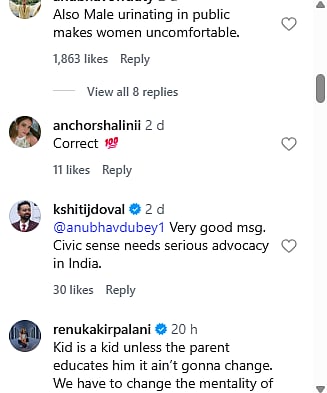
His remarks shifted the conversation from blaming an individual child to examining broader societal attitudes towards sanitation and civic responsibility.
Concerns over India's public image
Dubey also questioned how such incidents could influence the perception of visitors arriving in the country, especially considering Indore's reputation as one of India's cleanest cities.
“Just think, if an outsider had seen this, what would he think of the country?” he said.
His comments resonated with many social media users who argued that maintaining cleanliness is not solely the responsibility of municipal authorities but also of every citizen.
Cleanliness requires more than infrastructure
While acknowledging government efforts to improve sanitation through large-scale cleanliness initiatives and increased public toilet infrastructure, Dubey stressed that facilities alone cannot solve the problem.
He said real progress comes when people voluntarily adopt responsible habits and teach them to the next generation.
“In developed countries, it is not just about GDP. Behaviour and civic sense among people are much stronger. That is the real difference,” he said.
His remarks highlighted that civic awareness, discipline and respect for shared public spaces are equally important indicators of a nation's development.

