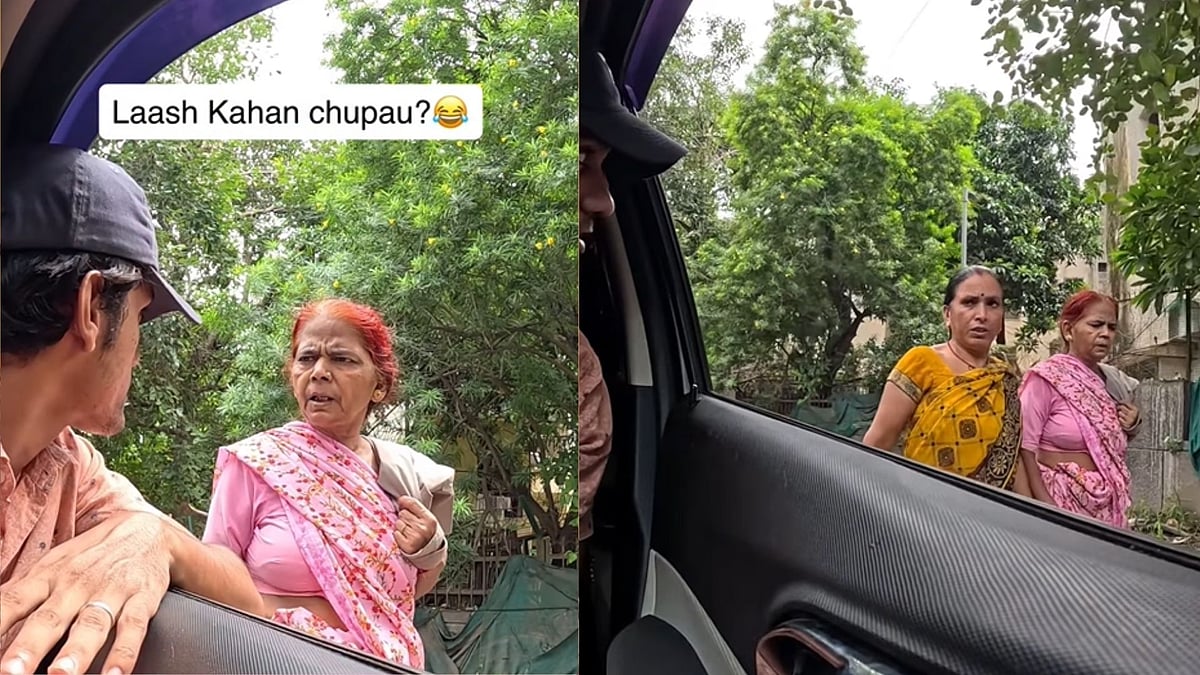
A prank video circulating widely on social media has triggered a wave of mixed reactions, ranging from amusement to sharp criticism. The clip shows a man startling an elderly woman by suddenly asking her, “Laash kaha chupaun?” (“Where should I hide a dead body?”), leaving her visibly shocked and confused.
Shocking question leaves elderly woman startled
Shared on Instagram by user @kunalmasivlogs_, the video captures the man slowing his car beside an elderly woman walking on the roadside. Without warning, he asks her if she knows a place to hide a body. Taken aback, the woman responds nervously, “Kya chupa de?” (“Hide what?”), clearly trying to process what she just heard.
When he repeats “Laash, laash,” she immediately reacts in irritation and shock, replying, “Mereko kya pata,” (“How would I know?”) before attempting to walk away.
‘It’s an Animal’s Body’
Sensing her discomfort, the man quickly adds, “Arre janwar ki laash hai,” (“It’s an animal’s carcass”). However, the tension remains. Another woman soon joins the elderly lady, and both firmly respond, “Humko nahi pata bhaiya,” (“We don’t know, brother”), making it clear they want no part in the conversation.
The prankster then drives off, later laughing inside the car and commenting, “Darr gayi aunty,” (“Aunty got scared”).
Comments
Internet divided over prank content
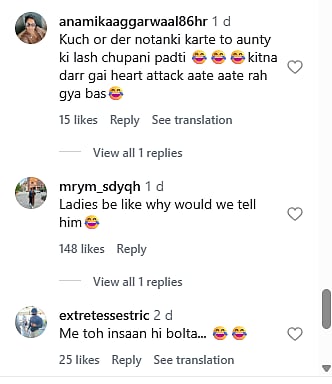
The video, tagged with hashtags like #prank and #comedy, has since gone viral, sparking debate among users. While some found the clip entertaining, many criticised the prank for being insensitive and distressing, especially toward elderly individuals.
One user jokingly wrote, “Savdhaan India vibes.” Another commented, “Aunty log ko dara diya tumne.” On the other hand, a concerned viewer said, “Aisa mat karo mere bhai,” urging content creators to be more responsible.

Growing debate over prank culture on social media
With prank videos becoming increasingly popular on platforms like Instagram and YouTube, concerns about boundaries, consent, and emotional impact are growing. Experts often stress that content created for entertainment should not cause fear, distress, or psychological discomfort, particularly among vulnerable individuals.
As social media continues to shape entertainment trends, this viral video has once again raised an important question, where should creators draw the line between humour and harm?

