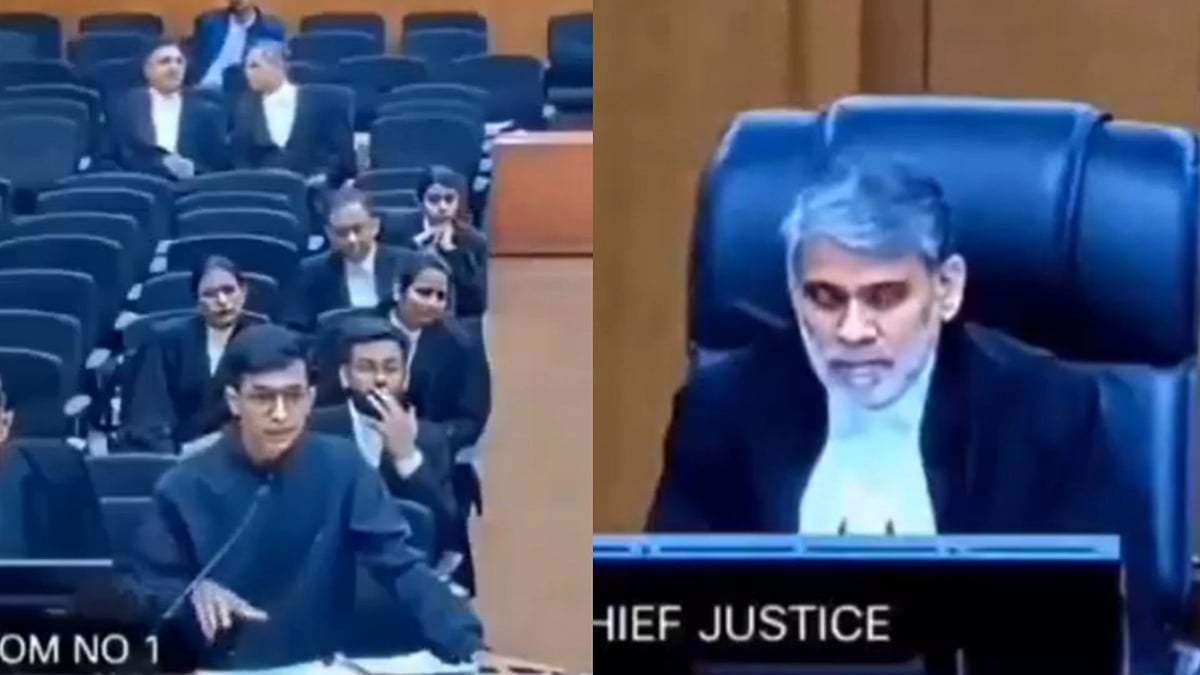
In a remarkable display of determination, 19-year-old NEET aspirant Atharva Chaturvedi from Jabalpur successfully argued his own case before the Supreme Court of India and secured a provisional MBBS seat after being denied admission under the Economically Weaker Section (EWS) quota.
Atharva cleared NEET 2024–25 with 530 marks out of 720 and secured an EWS rank of 164. Despite qualifying, he was left out of the admission process because Madhya Pradesh had not implemented the mandatory 10 per cent EWS reservation in private, non-minority medical colleges. The EWS quota was introduced through the 103rd Constitutional Amendment, which inserted Articles 15(6) and 16(6) into the Constitution, enabling reservation for economically weaker sections in educational institutions and government jobs.
Refusing to accept the setback, Atharva began studying constitutional provisions and previous court orders on his own, despite having no formal legal background. He first approached the Madhya Pradesh High Court, which directed the state to implement EWS reservations in private medical colleges within a year. However, when the policy was not enforced in the following admission cycle, Atharva escalated the matter to the Supreme Court through an online petition.
When his case was listed before a three-judge bench led by Chief Justice Surya Kant, the teenager stood alone in a courtroom filled with senior lawyers. As the bench was about to rise, he gathered the courage to request 10 minutes to present his arguments. Drawing upon constitutional amendments and earlier judicial directions, he explained how the state’s inaction had unfairly cost him a medical seat.
The Supreme Court ruled that Atharva had been denied admission due to circumstances beyond his control and directed the National Medical Commission and the state government to ensure his admission to an MBBS course in a private medical college.
While many have praised his legal clarity, Atharva remains focused on his ultimate goal, becoming a doctor.
