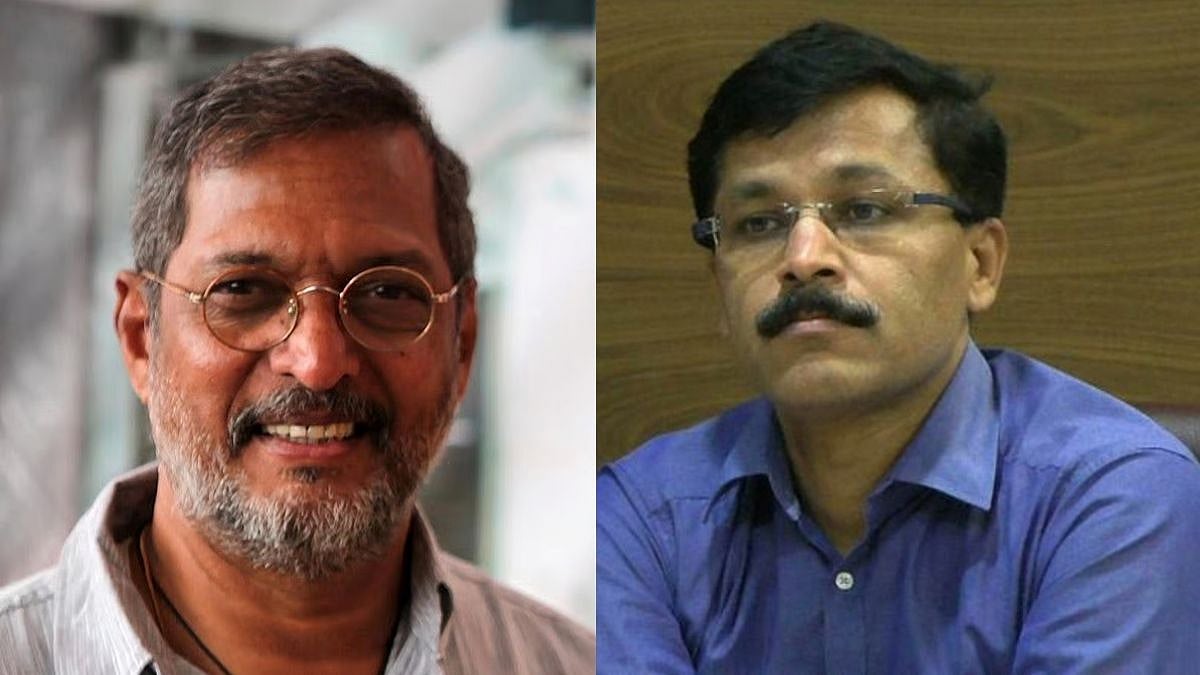
Veteran Bollywood actor Nana Patekar died at the age of 75 after suffering a cardiac arrest at his residence in Goa on Thursday morning. Following the actor's death, tributes poured in from across the film industry and beyond. Among those remembering Patekar was Maharashtra Commissioner of Food and Drug Administration Tukaram Mundhe, who described the actor as not just a remarkable artist but also a close friend.
Mundhe shared a photograph of Patekar and revealed that the two had spoken just eight days before the actor's death. Recalling their final conversation, he wrote:
“Nana Patekar is no more. I have lost not merely an exceptional artist, but an extraordinary human being and a dear friend, someone whose warmth and affection touched everyone around him. We spoke just eight days ago. I could never have imagined that it would be our last conversation. His last words to me were: 'Love you, Bala.' Those words will stay with me for the rest of my life.”
Mundhe further described the lasting impact Patekar had on people close to him, adding:
“Some people leave behind memories. A few leave behind a part of themselves in our lives. Nana was one of them. Goodbye, my friend. You will be deeply missed, and forever remembered.”
Nana Patekar's Four-Decade Acting Journey
Patekar's career spanned more than four decades across Hindi cinema and theatre. Known for his powerful dialogue delivery and intense performances, the actor built a reputation for portraying complex and often unconventional characters.
He earned widespread acclaim for films such as Parinda, Salaam Bombay!, Krantiveer, Agneepath, Ab Tak Chhappan and The Attacks of 26/11. His performance in Krantiveer earned him the National Film Award for Best Actor, while his work in Parinda further cemented his position as one of Hindi cinema's most distinctive performers.
Patekar, however, was not limited to serious and hard-hitting roles. His comic timing and ability to bring warmth to a character were also evident in popular films such as Welcome, where his performance became particularly memorable among mainstream audiences.

